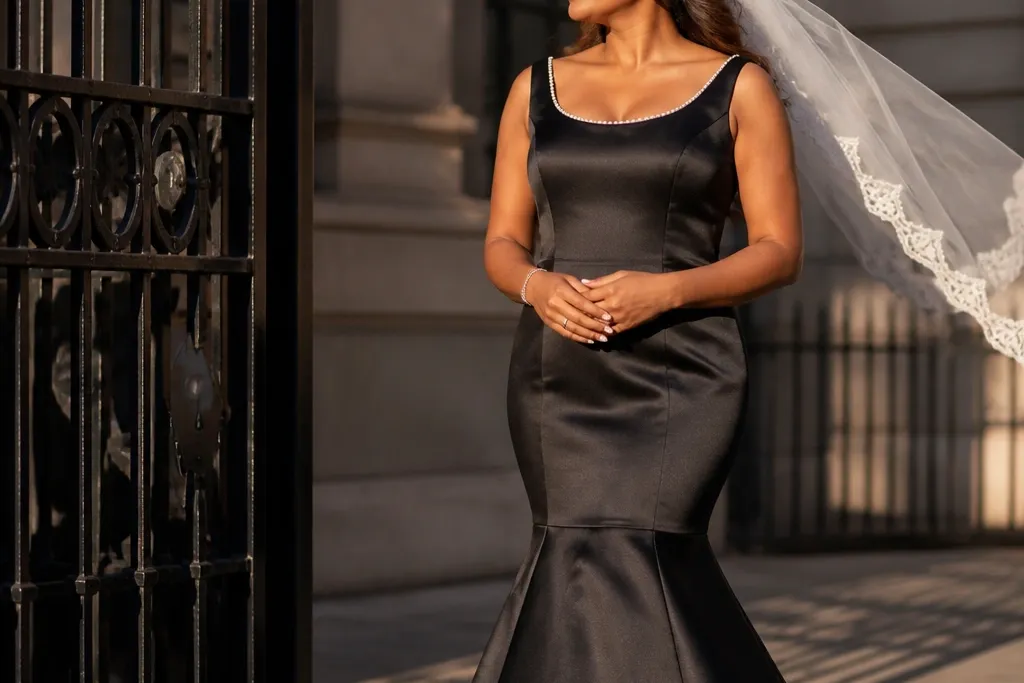
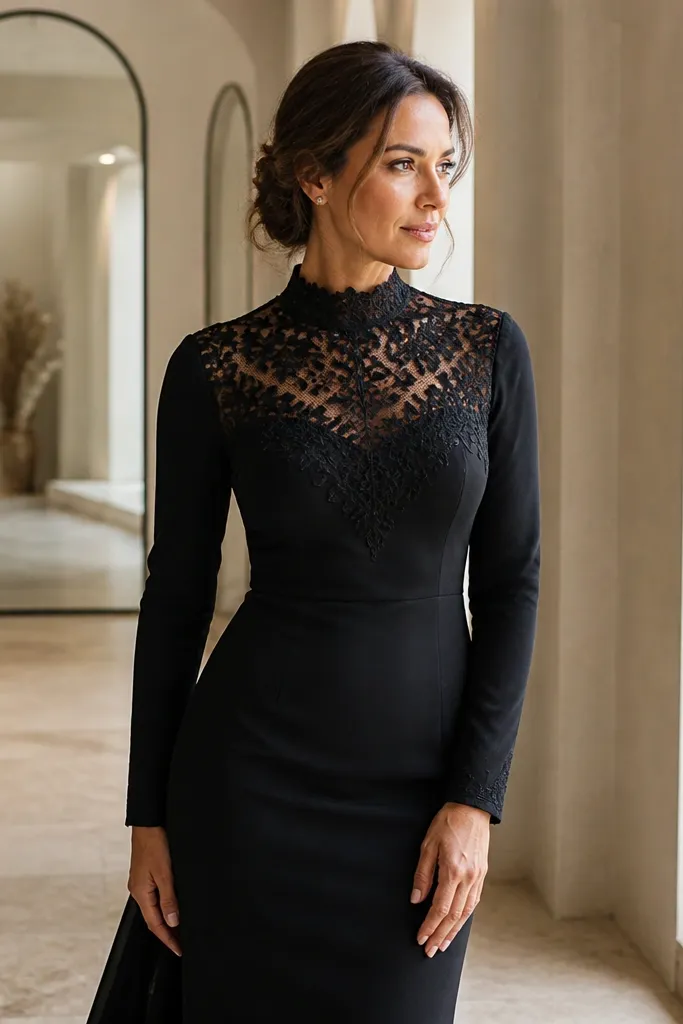
1. Satin Corset Bodice with Square Neck and Clean Mermaid Skirt
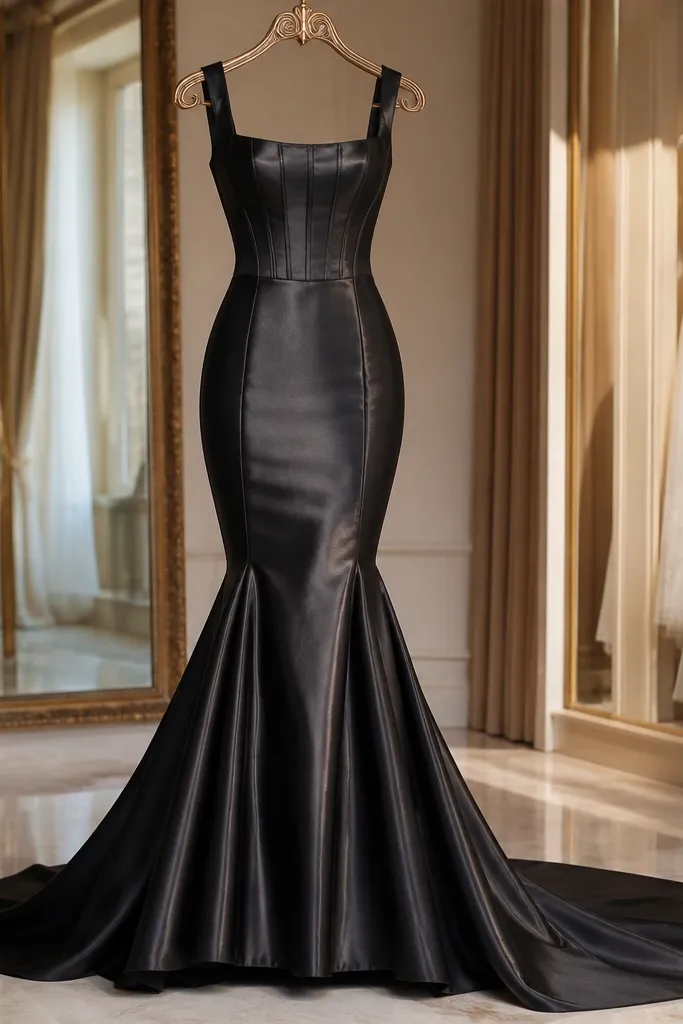
This look wins because the corset structure gives black a crisp outline on camera. The square neck is sharp and flattering, especially if you want a bold, stylish vibe without going too covered. A clean mermaid skirt keeps the silhouette controlled — it clings through the knee and flares just enough to move. Choose satin with a medium sheen so it looks bridal in daylight and still pops under indoor lighting. It suits brides who want a confident shape and don’t want heavy lace everywhere.
Start by sourcing a dress or custom bodice with visible boning lines or corset seaming. Then check the skirt construction: it should have a separate flare panel or a shaped pattern, not just a straight tube that “pretends” to be a mermaid. Finally, style with a short veil or hair comb so the neckline stays the star; add silver or clear-stone earrings to keep the look bright.
Quick tipIf your venue is dim, add a satin-bound edge at the neckline or straps so highlights land where you want attention.
Skip thisSkip ultra-matte black satin — it can look like a formal gown for a party rather than a bridal dress.
2. Black Lace Illusion High-Neck with Long Sleeves and Soft A-Line
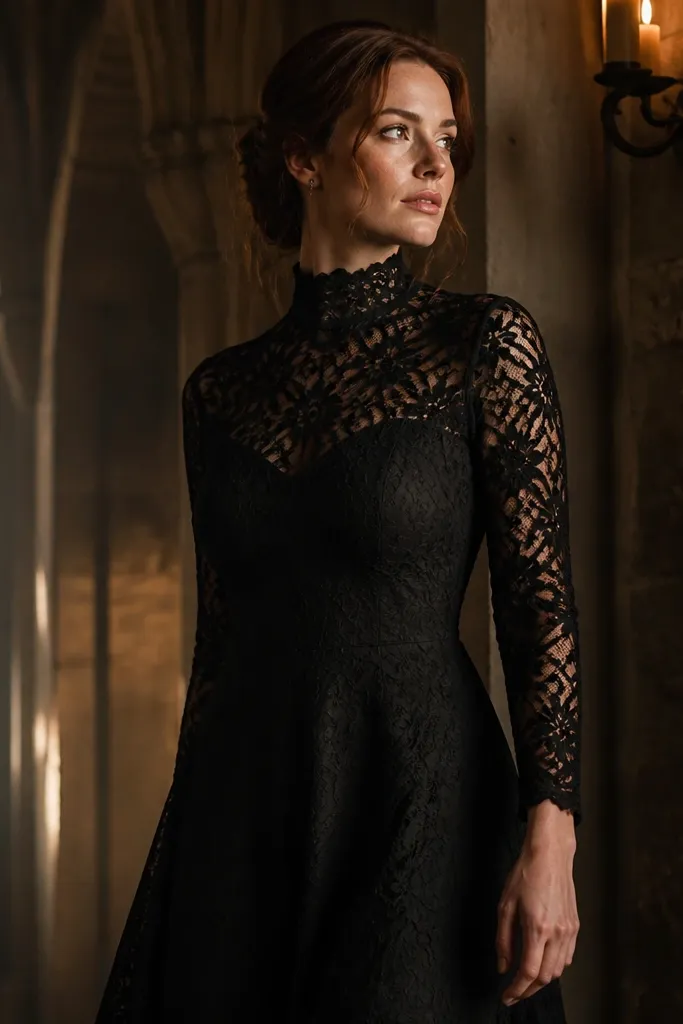
High-neck illusion lace reads elegant and bold because the transparency sits strategically over black. Long sleeves keep it wedding-appropriate, while the soft A-line prevents the look from feeling too intense. Look for lace that has raised texture rather than flat printed patterns; raised lace catches light and lifts the whole dress in photos. This is a strong pick for brides who want coverage but still want their silhouette to feel feminine and modern. It also photographs well in churches, courthouses, and indoor halls with directional lighting.
Start by verifying the illusion panel is the same black tone as the lace base, so it doesn’t look gray or patchy. Then choose an A-line skirt with a gentle flare and a lining that doesn’t cling to the legs. Finally, keep accessories light: a small pearl drop earring or a simple bracelet beats a chunky necklace with this neckline.
Quick tipBring a small mirror and check the lace pattern alignment at the collarbone — misalignment shows up in close photos.
Skip thisAvoid lace that’s too “ghostly” sheer — if the illusion is much lighter than the dress, the whole effect turns dusty.
3. Off-Shoulder Mikado with Statement Bust Seaming
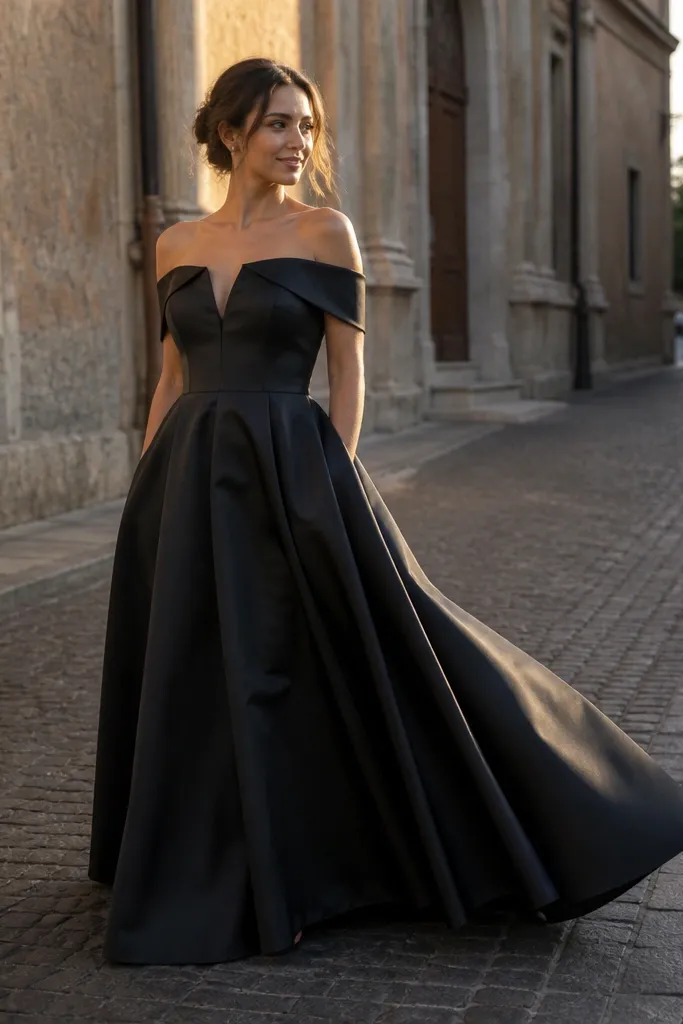
Mikado is your friend for black wedding dresses because it stands up. Off-shoulder plus structured bust seaming creates a bold frame for your shoulders and collarbone, and that structure makes photos look intentional. The skirt can be A-line or lightly flared, but the key is that the bodice should hold its shape without pinching. This look suits brides who want a fashion-forward silhouette that doesn’t rely on heavy lace. It’s especially photogenic outdoors where sunlight creates crisp edges.
Start by choosing mikado with a weight that doesn’t collapse when you lift the fabric. Then make sure the off-shoulder neckline has boning or clear shaping so it stays level in photos. Finally, style with minimal jewelry and consider a sleek updo so the neckline stays clean and graphic.
Quick tipIf you’re doing an outdoor ceremony, plan for a lightweight veil — mikado holds shape, but a heavy veil can tug the neckline.
Skip thisSkip off-shoulder styles with thin straps and no structure; black fabric will sag and look unfinished.
4. Velvet Column Dress with High Slit and Backless Finish
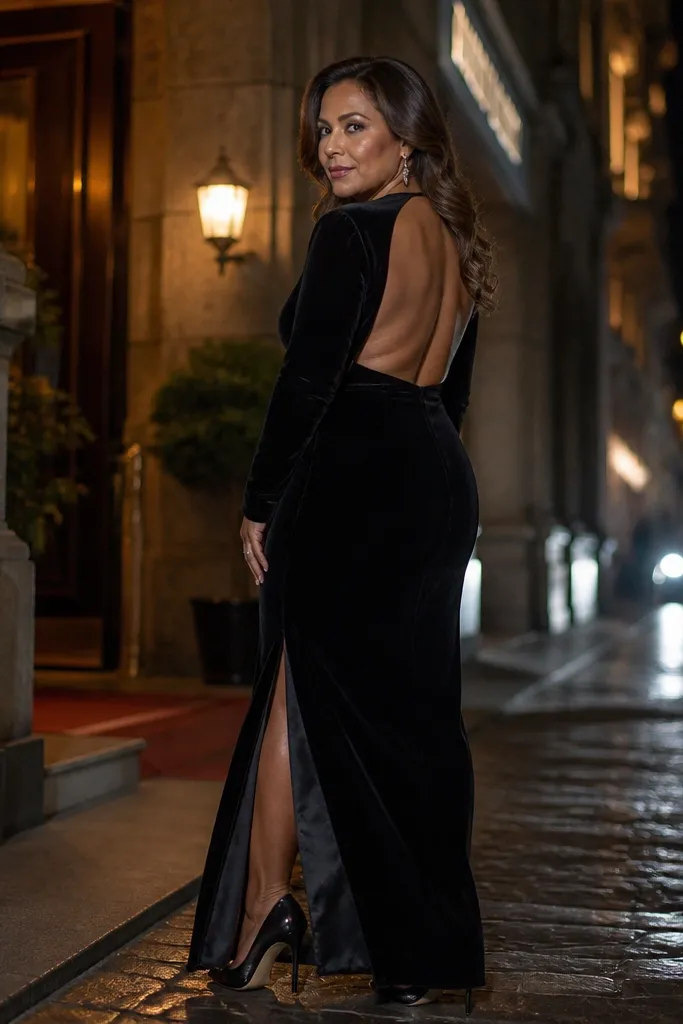
Velvet makes black feel luxurious and bold without needing extra decoration. A column silhouette keeps the line sleek, while a high slit adds movement and drama in photos when you turn or walk. The backless finish is where the look becomes stylish — it gives you a second “hero angle” that looks great in wedding photos. Choose velvet with a short, even pile so the sheen doesn’t stripe as you move. This is ideal for evening weddings, city rooftops, and indoor receptions with warm lighting.
Start by checking the slit placement: it should open comfortably when you step, not feel restrictive at the knee. Then look for a backless design with clear support — a structured corset or internal boning keeps the shape. Finally, add a veil only if it’s light; otherwise, use a hair accessory like a comb or a simple hair pin to keep focus on the back.
Quick tipBring a lint roller — velvet shows fuzz quickly, and a quick pass fixes it before photos.
Skip thisAvoid velvet that looks crushed or uneven; it photographs with patchy shine.
5. Black Crepe Strapless with Detachable Draped Cape Overlay
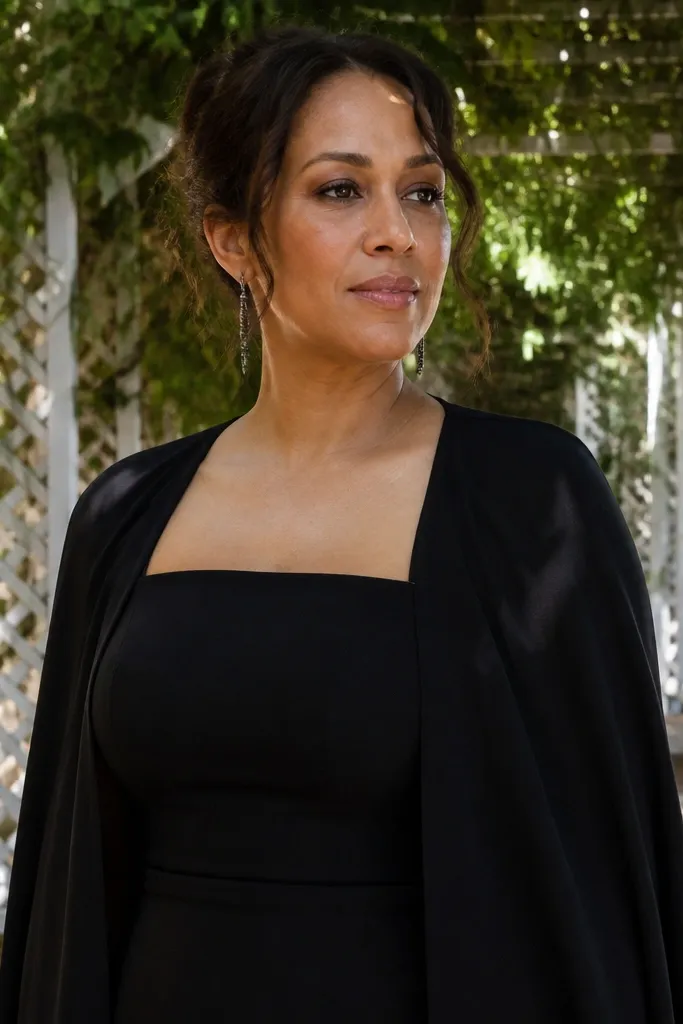
This is a smart way to get two looks from one dress without changing outfits. The strapless crepe keeps the base sleek and modern, while the detachable draped cape adds movement and drama for ceremony photos. Crepe has a matte finish that looks clean on camera, and the cape brings the “bold” element with soft folds. It’s great for brides who want black to feel romantic, not costume-like. This also works if you’re moving between a ceremony and a reception and want your photos to show variety.
Start by choosing a detachable cape that clips or hooks at the shoulders, not one that needs complicated tie-back adjustments. Then check that the cape overlay doesn’t hide the waist seam — you want the silhouette defined even when it’s draped. Finally, plan your photo sequence: cape-on for ceremony portraits, cape-off for dinner-party shots so the dress line stays visible.
If your venue has stairs, keep cape clips accessible so you’re not fumbling in photos.
Skip capes that are too long and heavy; they drag and can make the strapless portion look saggy.
6. Illusion Bodice with Floral 3D Appliqué on a Matte Black Base
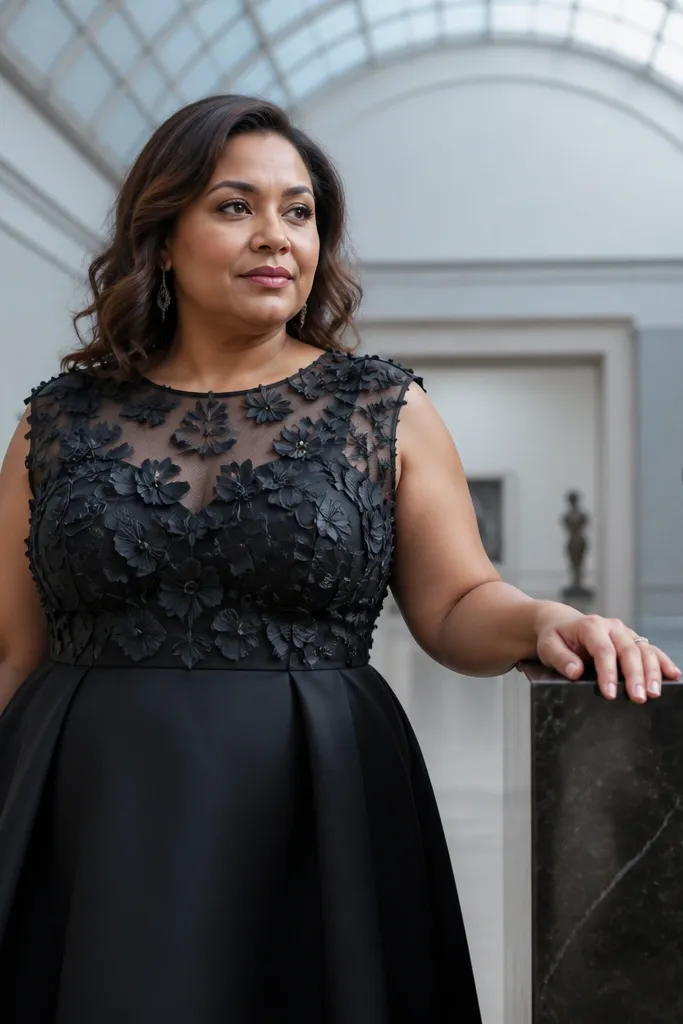
3D appliqué turns black from “plain” to “designed.” An illusion bodice gives you a delicate, airy effect on top of a matte base, and the raised florals create depth that looks great even when lighting isn’t perfect. This look is bold because you’re not hiding texture — you’re placing it where the camera naturally looks: chest, waist, and sometimes down the skirt. Choose appliqué that is stitched firmly so it doesn’t lift or wobble. It suits brides who want drama but still want a bridal feel.
Start by checking the appliqué edge finish — it should be clean and stitched down, not fuzzy or peeling. Then choose a skirt that stays simple so the 3D elements don’t fight with busy patterning. Finally, style with a veil that doesn’t compete: a short tulle veil or a simple fingertip veil works better than a lace-fully-covered veil.
For outdoor photos, stand where you get side light; 3D appliqué pops when light skims the raised surface.
Avoid appliqué that’s scattered randomly — you want a clear cluster pattern that guides the eye.
7. Black Satin Slip Dress with Tulle Overskirt for Ceremony
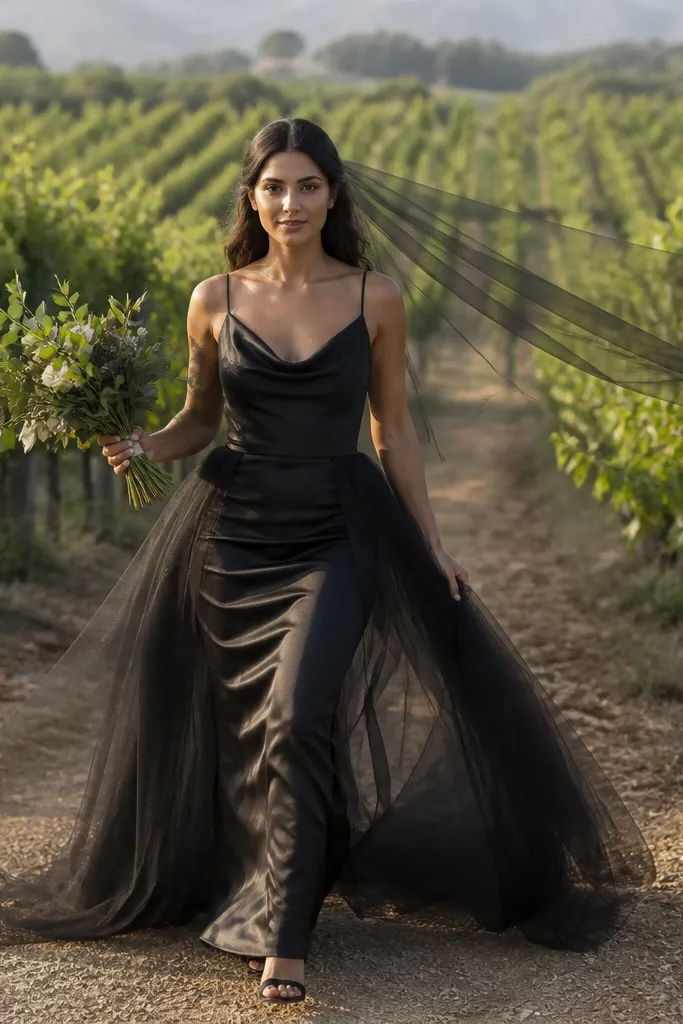
A satin slip base is sleek, but adding a tulle overskirt gives you the bridal switch instantly. The slip dress photographs as modern and minimal, while the overskirt adds volume and a soft, romantic silhouette at the hem. This is a strong option if you want black to look stylish rather than heavy. Choose overskirt tulle with fine layers so it looks airy, not bulky. This look is especially flattering for brides with a smaller waist who want a clean torso and a dramatic skirt moment.
Start by selecting a slip dress with adjustable straps or a supportive bodice so it doesn’t shift in photos. Then choose an overskirt with secure attachment points at the waist or hips so it stays centered. Finally, plan your photo timing: overskirt on for ceremony and first look, then remove it for portraits where you want the slip line to show.
Quick tipIf you’re wearing heels for portraits, test the overskirt length while standing — it should clear your shoes without tangling.
Skip thisSkip thick, stiff tulle overskirts; they can look like a costume and overpower black satin.
8. Scoop Neck Crepe with Contrast Pearl Button Placket
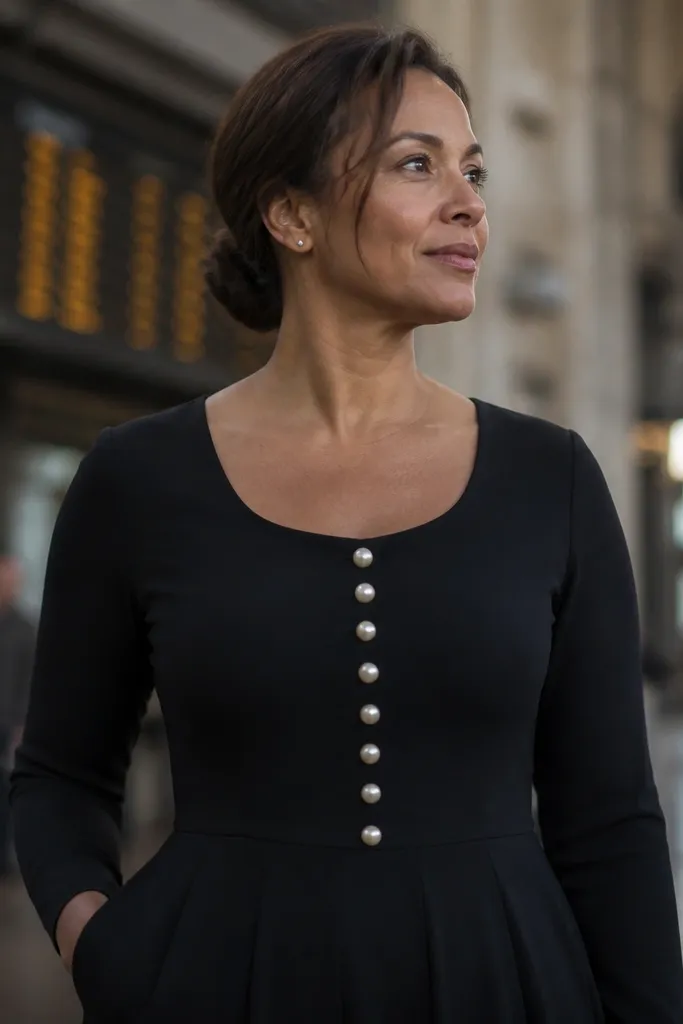
Pearls on a black crepe dress look deliberate and photo-friendly because they catch light in tiny points. A scoop neck keeps it flattering and balanced, while a pearl button placket adds a vintage-meets-modern detail without turning the whole dress into lace overload. This look is bold because the contrast is controlled — you’re choosing one kind of shine and placing it along a vertical line. It suits brides who want a stylish, clean look with subtle drama that still photographs like a statement. Great for city venues, galleries, and indoor receptions.
Start by picking crepe with a clean drape and a lining that doesn’t show through at the buttons. Then make sure the pearl buttons are centered and evenly spaced; uneven spacing reads sloppy in photos. Finally, style with a pearl or crystal hair piece and keep earrings small so the placket stays the focus.
Choose a veil with plain tulle, not lace, so the button detail remains the main contrast.
Avoid large, mismatched pearls — they can look costume-like against matte black.
9. Black Lace Sheath with Asymmetric Hem and Bow-Tie Waist
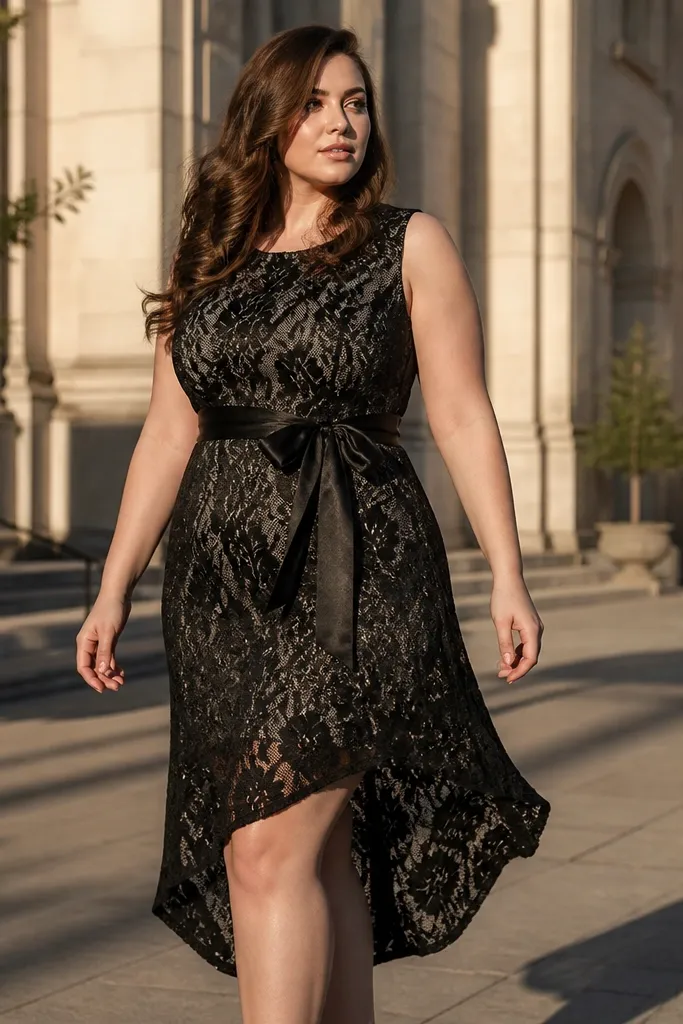
Asymmetry is your shortcut to “bold and stylish” in black. A lace sheath already has texture, and an asymmetric hem adds movement that looks good in motion photos — especially if you’re walking between locations. A bow-tie waist gives you a clear focal point and helps define shape, which is important because black can hide contours. This look suits confident brides who want a fashion silhouette and don’t need a full ball gown to feel bridal. It’s photogenic for street-style wedding portraits and modern venues.
Start by finding a sheath that has structure at the waist seam; lace without shaping can turn shapeless. Then choose an asymmetric hem that’s intentional — one side should be clearly longer, not just uneven. Finally, tie the bow at the front or slightly off-center depending on where you want attention; take a few test photos before the ceremony so you see how it reads.
Quick tipIf the bow sits on a seam, reinforce the inside so it doesn’t sag after sitting.
Skip thisSkip lace sheaths with no lining — they can cling and look dull in low light.
10. High-Slit A-Line with Embroidered Organza Overlay on the Skirt
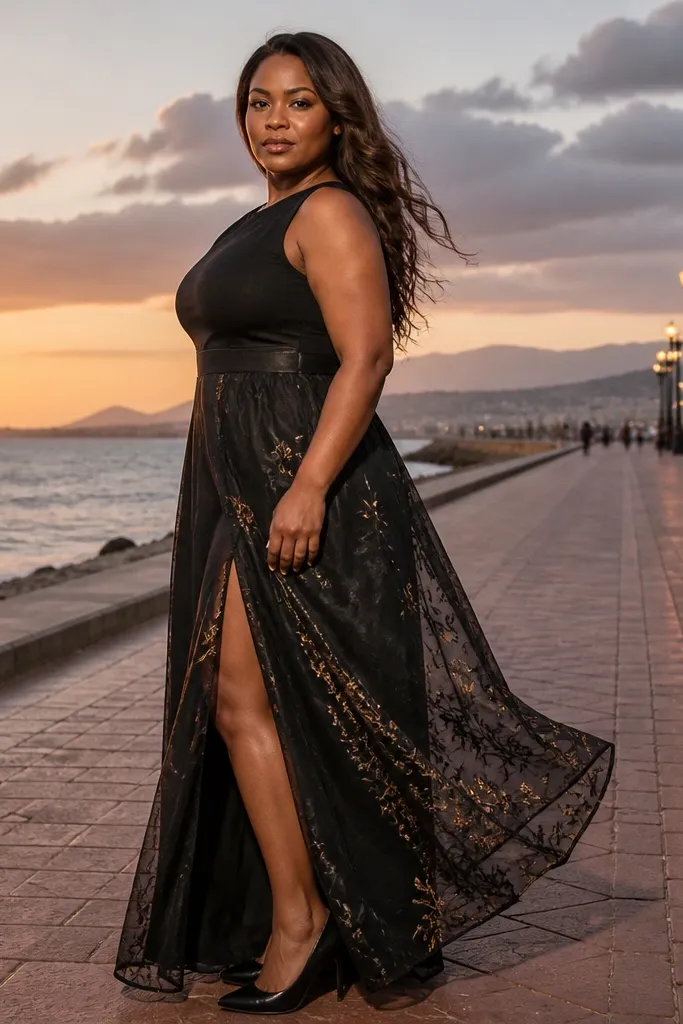
This one is about the skirt doing the talking. A high-slit A-line gives you movement and a bold silhouette, while an embroidered organza overlay adds shimmer and texture exactly where the camera follows you. Organza catches light on each step, which makes the dress feel alive in photos. Keep the bodice simple so the overlay stays crisp rather than busy. This is a great pick for brides who want a black dress that still looks romantic and airy.
Start by choosing a skirt overlay that’s attached at the hem or mid-skirt, not one that floats loosely. Then check that the overlay embroidery has enough spacing to read clearly at distance. Finally, plan your styling: a sleek hairstyle and minimal earrings so the embroidered skirt becomes the hero in your wedding photo set.
For best effect, do a quick walking test in front of a bright window; organza should flutter, not stick.
Avoid overly dense embroidery that turns into a black-on-black blob in photos.
11. Square-Neck Jumpsuit Dress with Wide-Leg Trousers and Bridal Belt
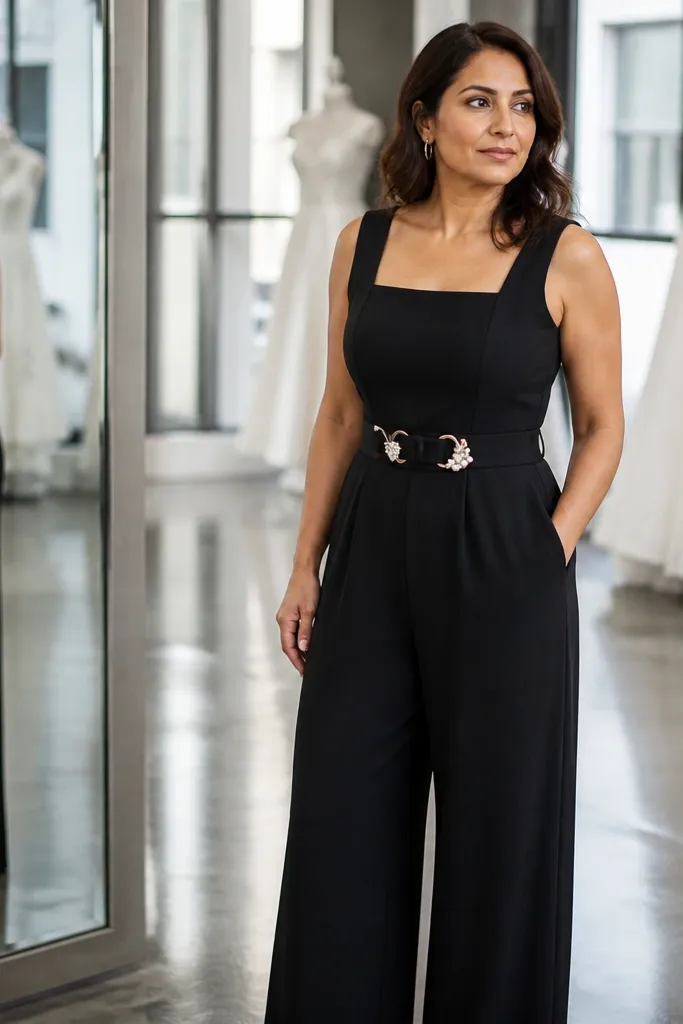
A jumpsuit dress is bold by default, and the square neck keeps it wedding-styled instead of nightclub. Wide-leg trousers move beautifully, and they photograph cleanly because the lines stay simple. Add a bridal belt with a metallic buckle or pearl cluster to bring the “wedding” feeling without relying on lace. This look suits brides who want comfort, mobility, and a fashion-forward silhouette that still feels like a statement dress. It also works well for non-traditional venues like warehouses and modern rooftops.
Start by choosing a jumpsuit fabric with structure — crepe, ponte, or a heavy satin blend so it doesn’t crease weirdly. Then select a belt that sits at the natural waist and has enough weight to stay flat. Finally, style with pointed-toe heels or sleek boots so the wide leg looks intentional rather than baggy.
Quick tipGet hemming done before you shop for accessories; shoe height changes the trouser break and the whole look.
Skip thisSkip thin jersey jumpsuits; they cling and read casual under flash.
12. One-Shoulder Liquid Satin with Asymmetrical Draping
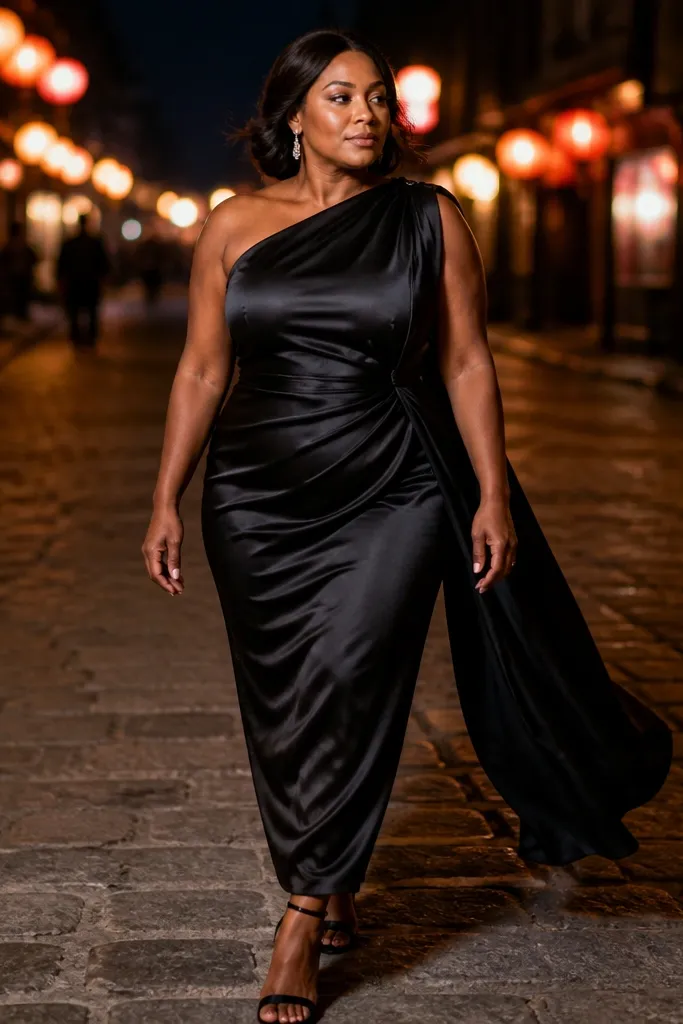
Liquid satin has that smooth, reflective look that makes black feel premium. A one-shoulder neckline is instantly stylish, and asymmetrical draping creates a sculpted effect that looks good from every angle. This is a strong choice for bold brides who want their dress to look like fashion, not just formal. Choose draping that starts at the shoulder and falls diagonally so it shapes the body and avoids lumps. It suits evening receptions and photo sessions where you’ll be moving and turning.
Start by checking how the satin falls when you lift your arm; it should drape without twisting. Then look for an internal lining at the bodice so the neckline stays in place. Finally, keep jewelry simple and sleek — a single statement earring or a thin bracelet works better than stacking necklaces.
Quick tipIn humid weather, satin can cling — bring a small anti-static spray for the hem area.
Skip thisAvoid satin that’s too glossy; it can look like costume shine instead of wedding-level satin.
13. Black Tulle Ball Gown with Matte Bodice and Micro-Ruffle Skirt
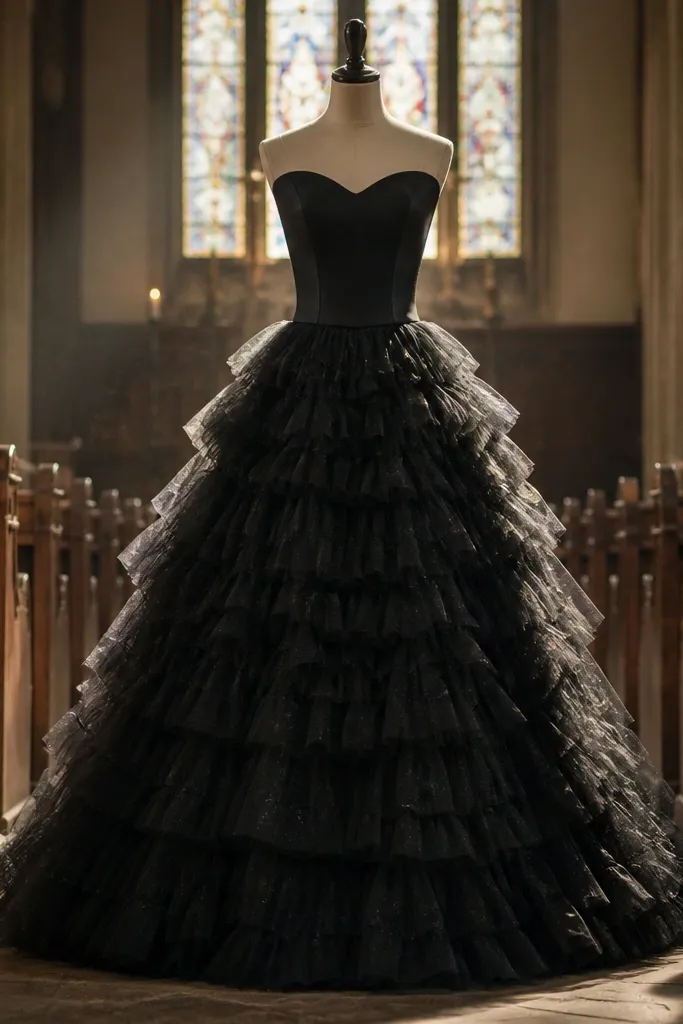
If you want maximum drama without going costume, this is the balance. A matte bodice keeps the top grounded, while a tulle ball gown with micro-ruffles adds texture that reads as “designed” on camera. The ruffles create a soft sparkle through shadow and highlight, so the dress doesn’t turn into a flat black silhouette. It suits brides who love volume and want their photos to look big and cinematic. Outdoor portraits look amazing when the skirt moves, too.
Start by choosing tulle layers that are fine and numerous, not thick and stiff. Then build the skirt volume with a structured underskirt so it holds shape even in wind. Finally, plan your portrait angles: full-body shots from the front and a few side shots show the ruffle texture best.
For ball gowns, keep the veil short or off-shoulder; long veils can tangle in the skirt.
Skip a single-layer tulle “ball gown” — it won’t hold volume and will look thin.
14. Black Crepe with Plunging V and Crisp Waist Seams
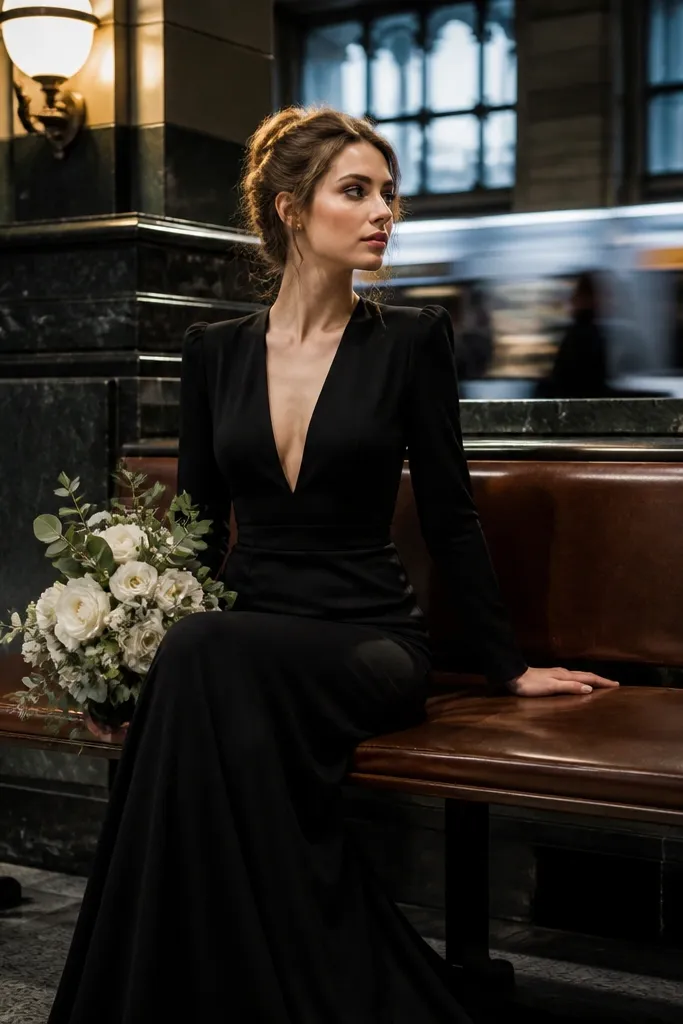
A plunging V on black crepe looks bold because the neckline creates a clear focal point and the fabric stays clean. The real secret is crisp waist seams — they define shape so the dress doesn’t read like a single dark block. This look suits brides who want sexy styling but hate heavy decoration. It also photographs well because crepe has a smooth surface; the V line stays readable even in low light. Pair it with structured undergarments to keep the neckline and waist crisp.
Start by selecting a dress with a structured bodice or internal corset so the plunging V doesn’t gape. Then check that the waist seam is fitted and slightly raised; that seam placement makes black look tailored. Finally, style with a delicate necklace only if it sits below the V line; otherwise, go with statement earrings and let the neckline stay clean.
Use fashion tape on the inner neckline for photos that involve sitting or bending.
Avoid plunging necklines with flimsy lining; black gaps show fast in flash.
15. Black Embroidered Tulle Sleeves Over Strapless Base
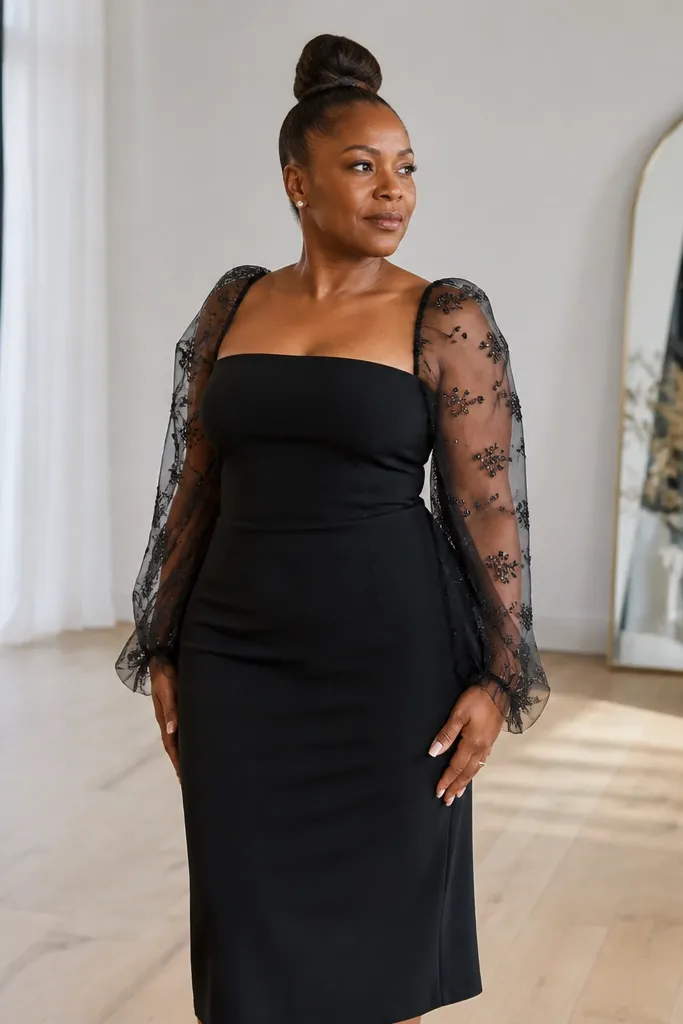
This is an easy way to make a strapless black dress feel bridal without covering the whole thing. Embroidered tulle sleeves add texture and a vertical line that frames your arms, while the strapless base keeps the look modern. Choose embroidery that has a mix of tiny motifs rather than one big panel so it looks detailed up close and still clear from far away. It’s perfect if you’re doing a ceremony that requires coverage but want strapless energy for photos. The best part is you get two vibes in one dress: bare shoulders in portraits, sleeves for ceremony.
Start by finding sleeves that attach securely at the bodice without slipping; look for hidden snaps or grip tape. Then choose embroidery with a black-on-black contrast thread if you want subtle drama, or a slightly raised silver thread if you want more sparkle. Finally, style hair to match the sleeve length — a sleek bun shows the sleeve design, while loose waves can hide it.
Quick tipDo a quick movement test: raise your arms and walk — if the sleeves shift, they will shift in every photo.
Skip thisSkip sleeves with scratchy seams; tulle embroidery can irritate fast during a long wedding day.
16. Black Lace Slip with Long Train and Pearl-Edge Hem
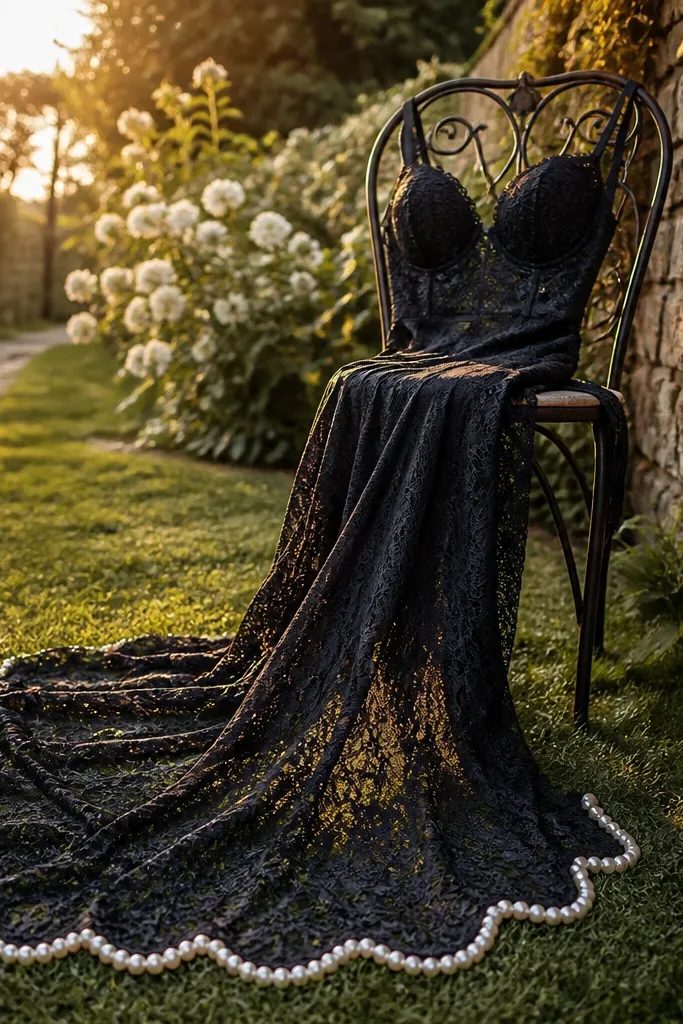
A lace slip with a long train is romantic in a way black can still handle. The pearl-edge hem is the standout detail because it creates a bright border that reads in photos even when the train is moving. Lace slip dresses also photograph beautifully close-up because the pattern has depth without looking heavy. This look suits brides who want a “soft bold” vibe — dramatic train, but not a rigid ball gown. It works in both outdoor evening settings and indoor venues with warm ambient light.
Start by choosing lace that has stretch and a lining that prevents cling at the hips. Then make sure the train is long enough to show in photos but not so long it becomes unmanageable for walking. Finally, keep the rest of the styling minimal: clean updo, small earrings, and a veil that doesn’t add competing lace patterns.
Quick tipAssign a helper to manage the train during portraits so pearl edging stays clean and centered.
Skip thisAvoid pearl trim that’s too thick; it can look chunky and reflect harshly under flash.
17. Black Satin Capelet with Off-Back Illusion and Fitted Skirt
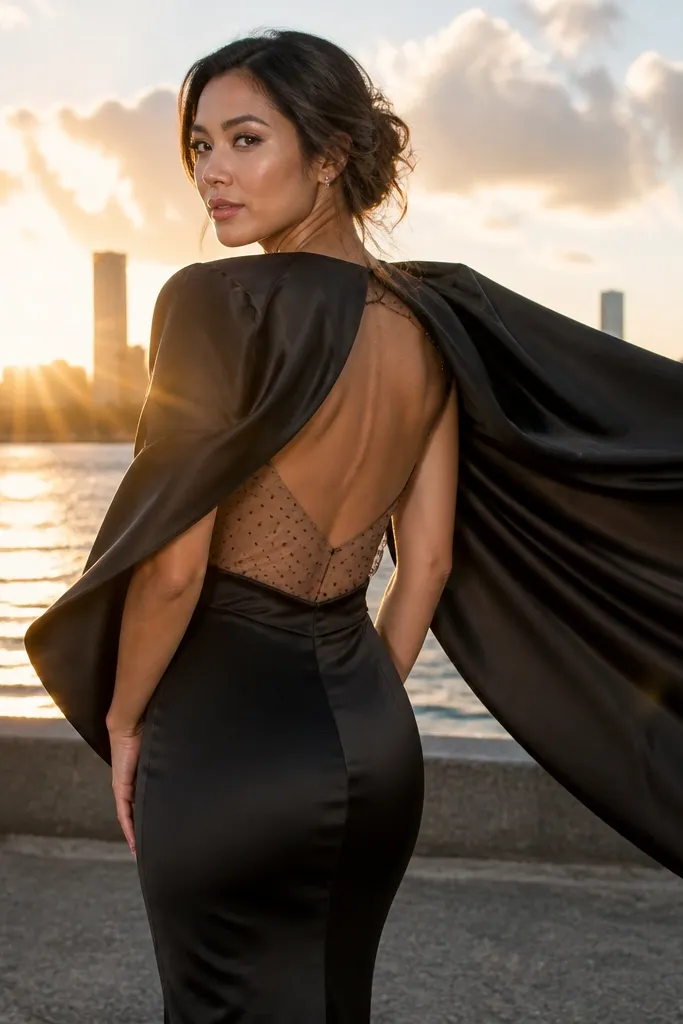
Capelets are underused, and that’s why this look works. The satin capelet adds movement around the shoulders, while an off-back illusion bodice gives a bold back view that feels modern. A fitted skirt keeps the overall silhouette sleek so the cape doesn’t turn the dress into a heavy shape. Satin also helps black look dimensional, especially in sunset light or indoor lighting with warm highlights. This is for brides who want a clean, stylish front but a dramatic surprise when the camera shifts to the back.
Start by selecting a capelet with a structured edge so it sits flat and doesn’t collapse. Then confirm the off-back illusion is supported and doesn’t pull — check fit at the shoulder blades. Finally, style with a low bun or sleek waves so the back view stays visible; skip a necklace and use earrings instead.
If the capelet catches on your seat belt or chairs, pin the inside edge temporarily for transit.
Avoid capelets made from thin satin that flips open; it can look messy in motion photos.
18. Black Crepe Halter with Cutout Waist and Matching Veil Edge
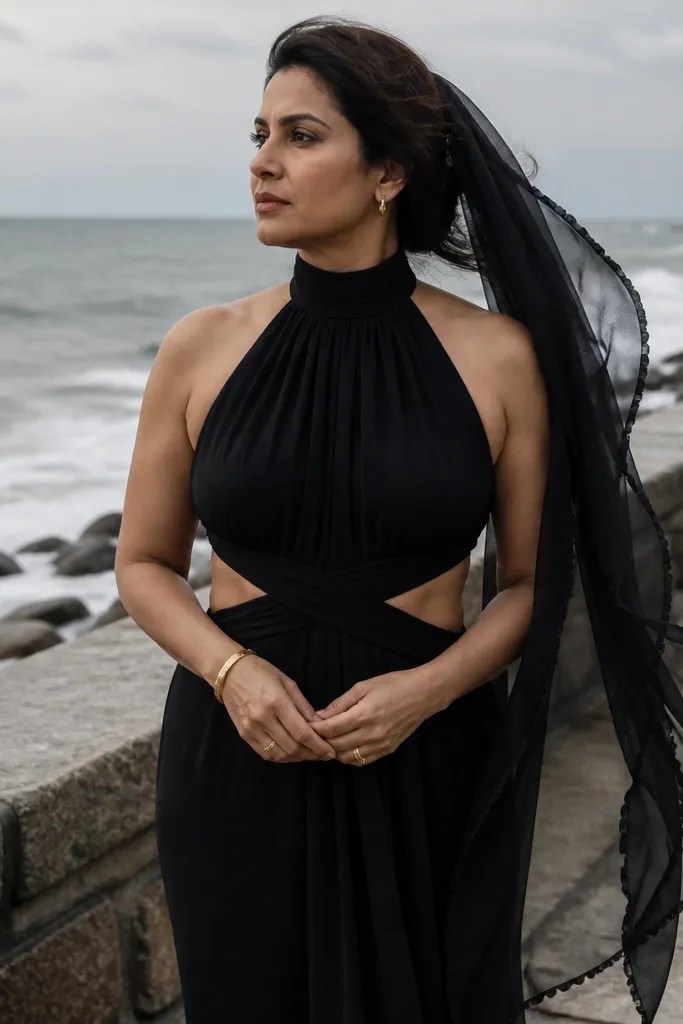
A halter neckline is bold because it frames the shoulders and keeps the upper body graphic. Adding a cutout waist creates a stylish break in black, making the silhouette look intentional instead of monolithic. The matching veil edge is what ties it together — the veil looks designed, not random. This is a great option for brides who want a modern, fashion editorial look without going full jumpsuit. It’s also excellent for outdoor photos where the neckline and waist detail show clearly against sky and greenery.
Start by choosing a crepe dress with a cutout that’s lined so it doesn’t look like a hole; lining keeps it bridal. Then match the veil edge detail to your dress — use tulle with the same trim color or a narrow satin binding. Finally, keep your jewelry small and sleek; the halter and cutout already do the heavy lifting.
For cutouts, test sitting in advance — you want the lining to stay smooth and not wrinkle at the opening.
Skip cutouts that are too large; they can read like lingerie styling rather than a wedding statement.
19. Black Lace Sleeve Detailing with Cap Sleeves and Roped Waist Band
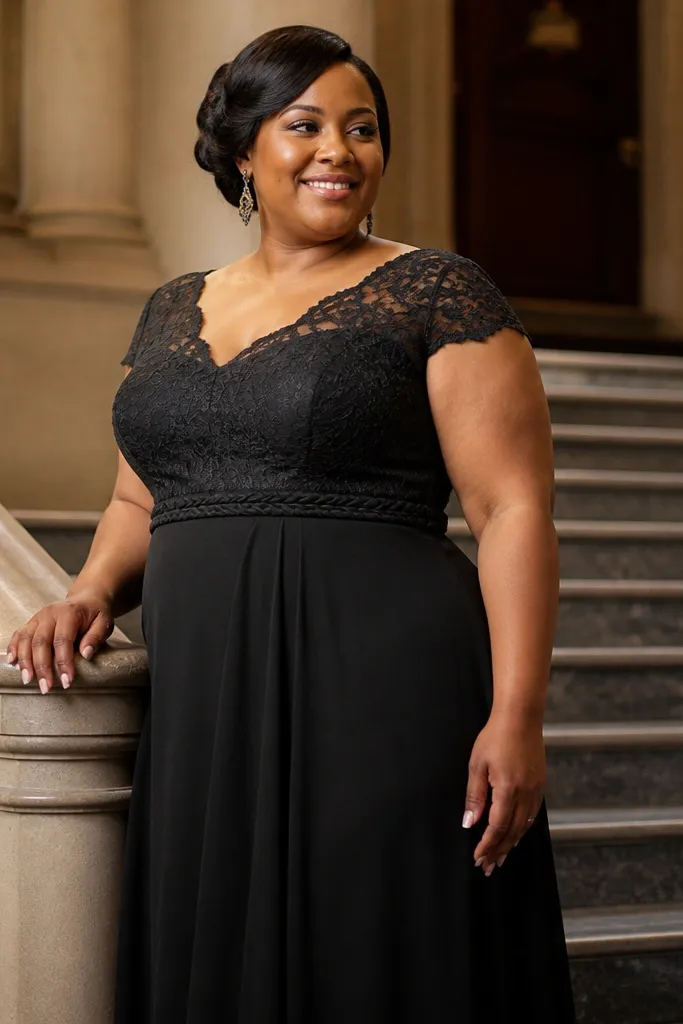
Cap sleeves soften black while lace sleeve detailing keeps it bold. A roped waist band — usually a raised, corded trim or beaded rope effect — adds definition that black often hides. This look is for brides who want a statement dress but still want it to feel classic in photos. The lace sleeves also help frame the shoulders, which is flattering for both straight and slightly rounded shoulder shapes. It works well for daytime ceremonies and indoor portraits where you want a polished, bridal feel.
Start by choosing a dress where the waist band is attached securely and doesn’t ripple; corded trims can shift if the seam work is weak. Then confirm the cap sleeves are lined enough to sit flat on the upper arm. Finally, style with a simple bracelet and small studs; let the waist band and sleeves be the visual anchors.
If you’re wearing a veil, choose a plain tulle one — lace cap sleeves already add detail near the face.
Avoid cap sleeves that are sheer with no structure; they can look flimsy and lose shape in photos.
20. Black Organza Overlaid Bodice with Metallic Thread Border
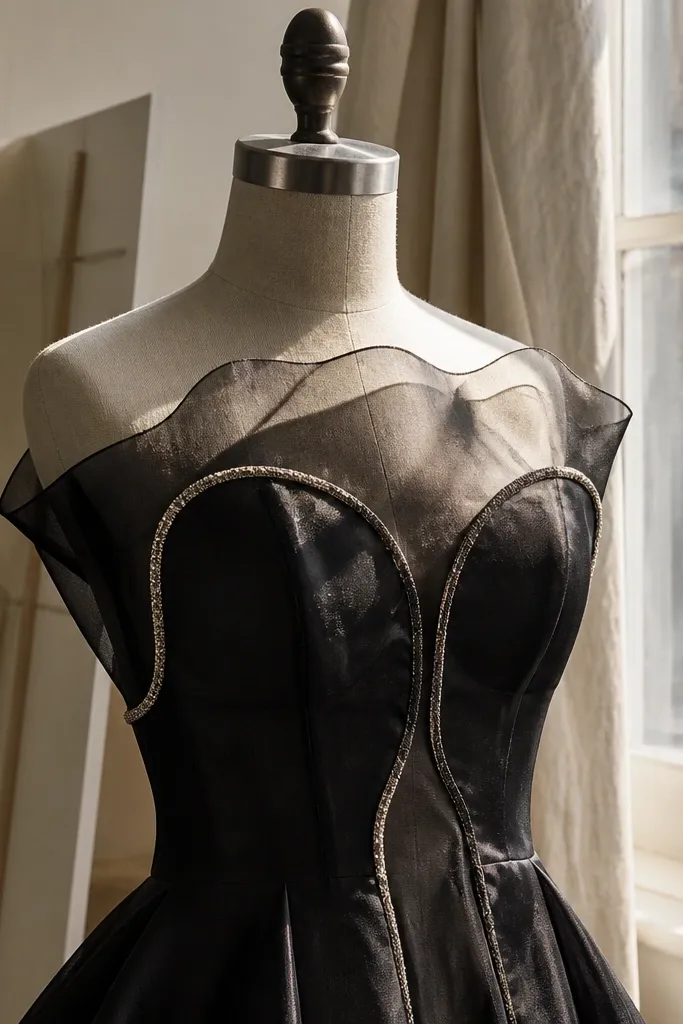
Organza overlaid bodices add lift, and a metallic thread border gives black a controlled sparkle. The border is important: it traces the neckline and shape so the dress looks styled rather than random glitter. This look is ideal for brides who want bold without going full lace all over. The organza layer also makes the bodice look dimensional, which helps black read as bridal in photos where shadows can flatten details. It’s especially photogenic for evening receptions and under spotlight lighting.
Start by choosing a metallic thread border that matches your jewelry tone — silver for cool jewelry, darker gold for warm accents. Then check that the organza overlay is lined where it touches skin so it doesn’t feel scratchy or shift. Finally, keep the skirt fabric simple and smooth so the neckline border stays the focal point.
Quick tipTurn your portrait angles slightly — metallic thread reads best when light hits at an angle, not straight on.
Skip thisAvoid heavy all-over metallic embroidery; it can turn the dress into a dark, noisy pattern.