1. Soft High-Neck Lace with Long Sleeves and a Crepe Skirt
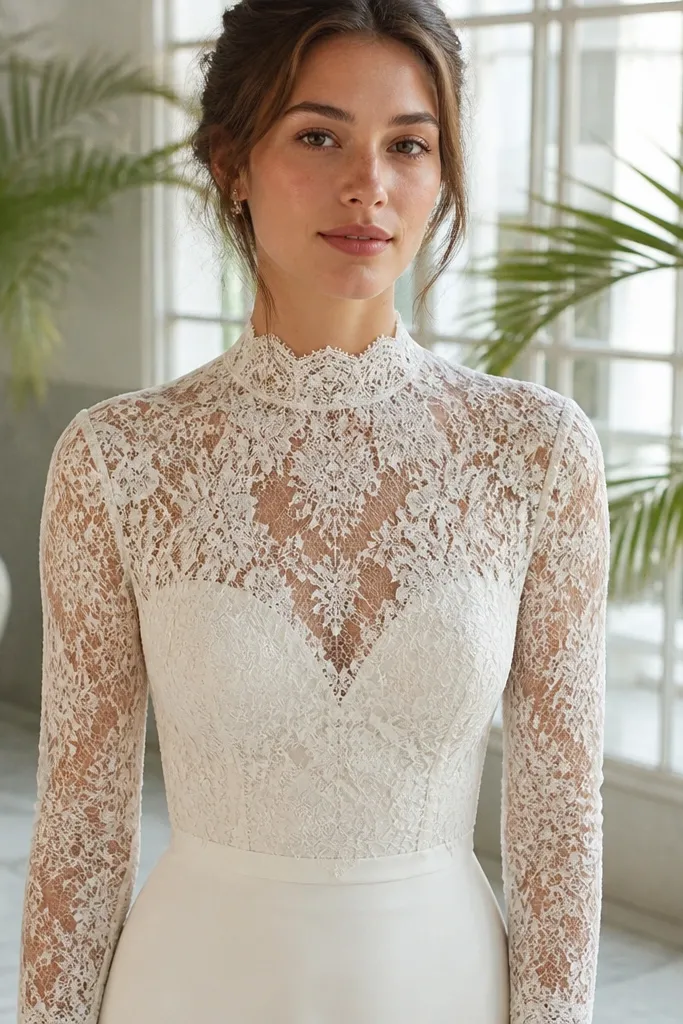
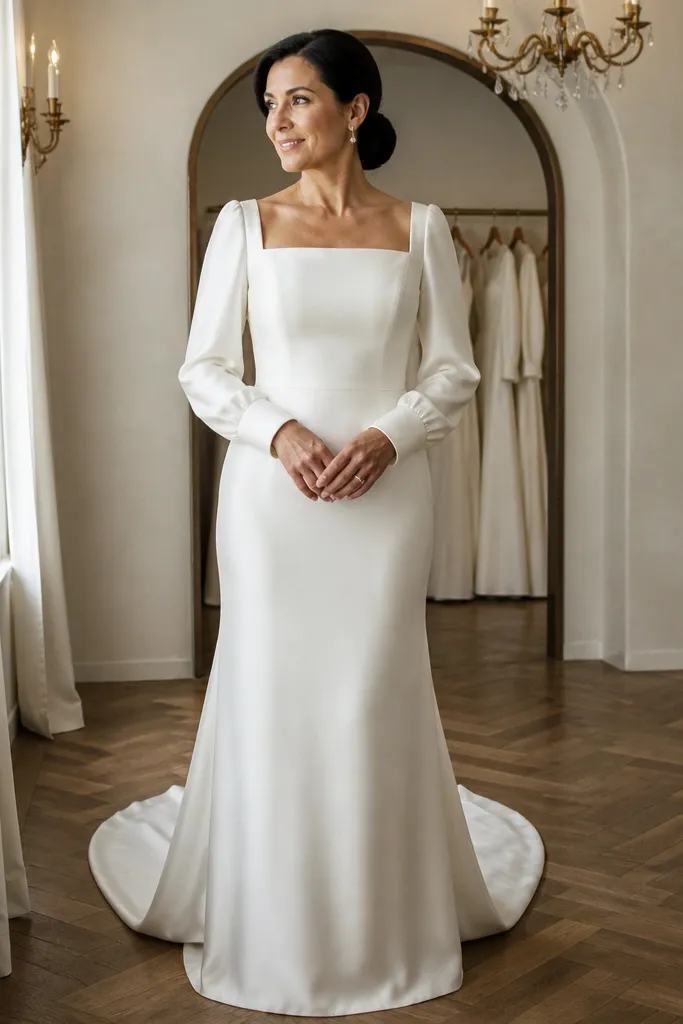
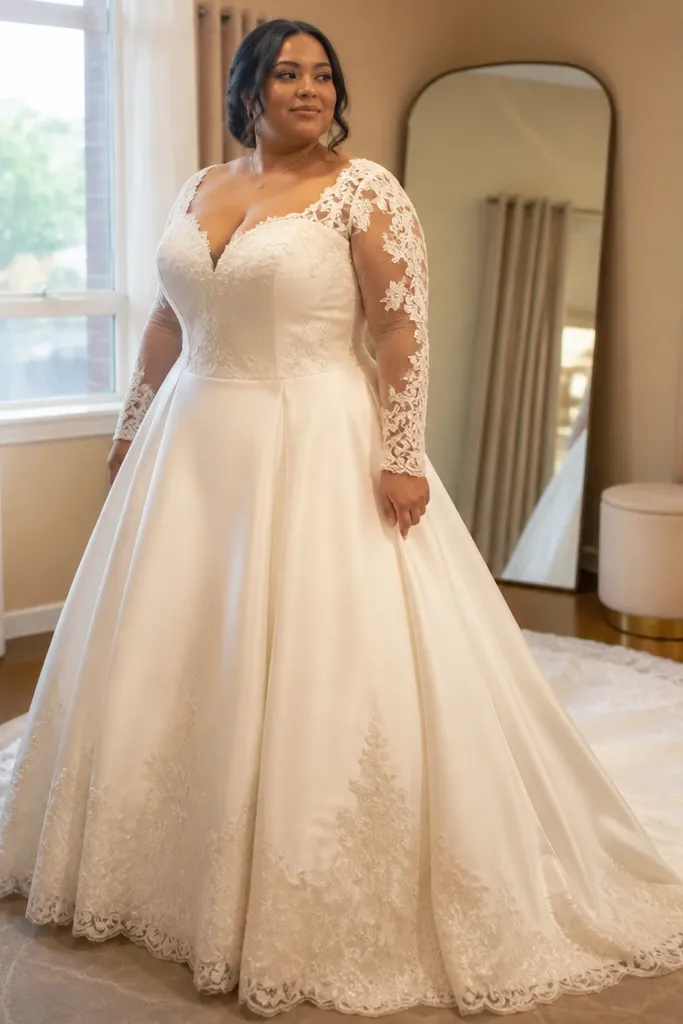
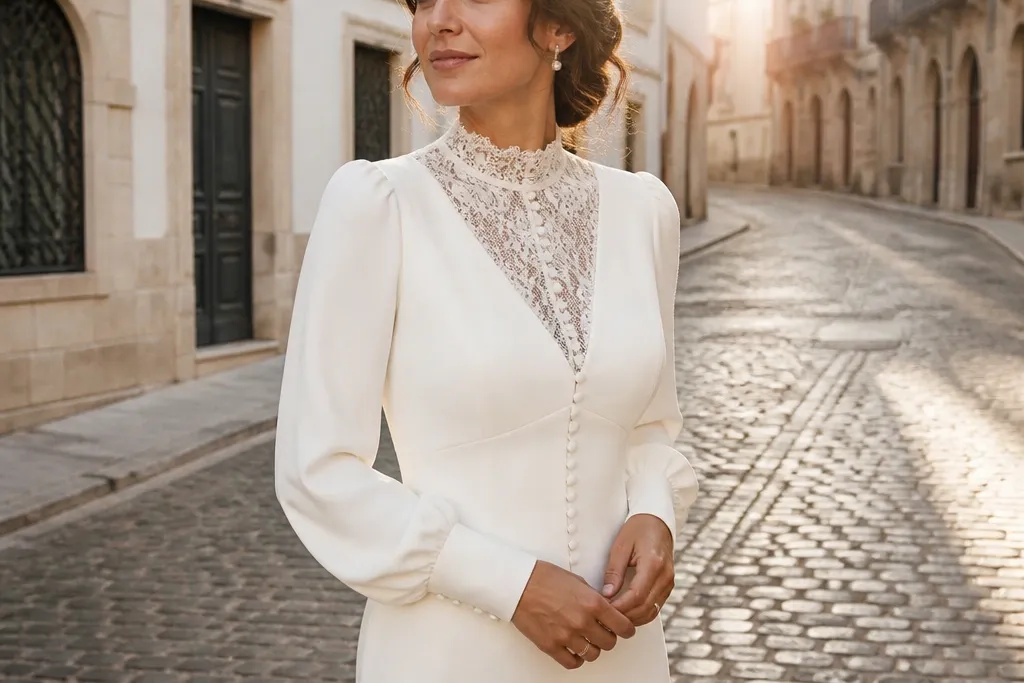
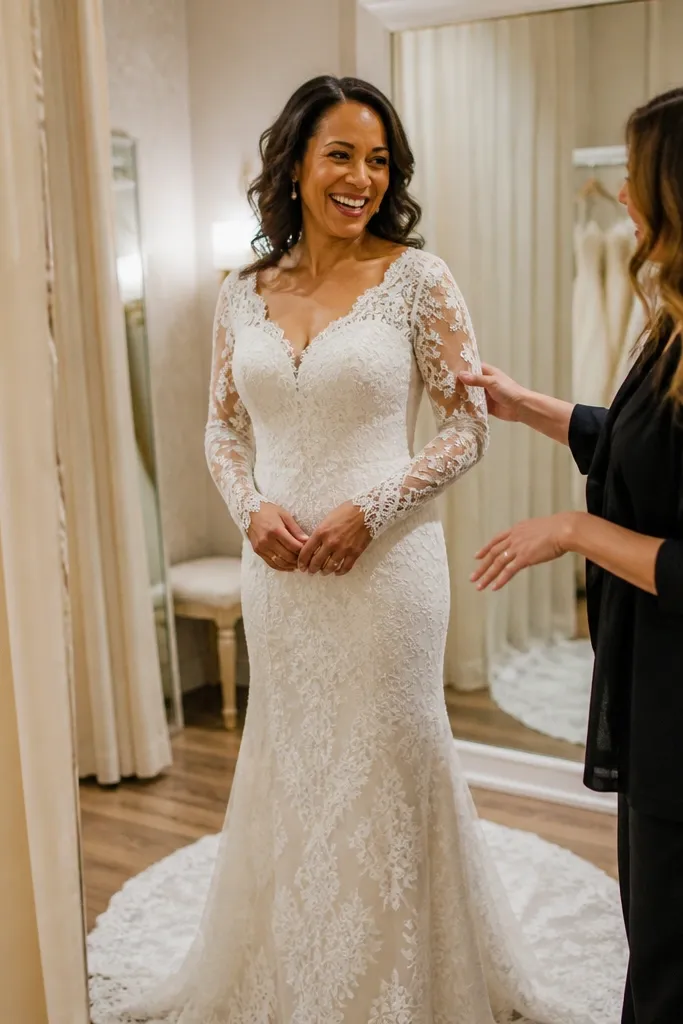
This is the modest bridal look that photographs like you planned every detail. The soft high neck gives coverage without chopping your face in half, and the lace texture adds dimension even in flat lighting. Long sleeves keep the silhouette refined, while a crepe skirt keeps the overall drape clean instead of bulky. It’s especially flattering if you want to look polished in motion — the lace top catches light and the skirt stays smooth as you walk. Go for ivory or off-white rather than bright white if you want it to feel warm and bridal.
Start by choosing a neckline that sits close but not tight — you want it to follow your collarbone, not stand away from your skin. Then check sleeve finish at the wrist: look for a delicate lace cuff or a narrow hem that doesn’t add bulk. Finally, pick a crepe skirt with lining that prevents see-through and reduces clinging; ask to feel the fabric weight in-hand if you can. For fitting, stand up straight and lift your arms slightly to see if the lace bunches at the shoulder seam. If it does, size up at the sleeve and tailor the shoulder.
Bring a strapless bra or longline undergarment to test the neckline fit — modest gowns fail when the underlayer pulls the collar.
Avoid stiff lace that feels like it stands away from your neck; it reads bulky on camera.
2. Illusion Neckline Modesty with Cap Sleeves and a Satin A-Line
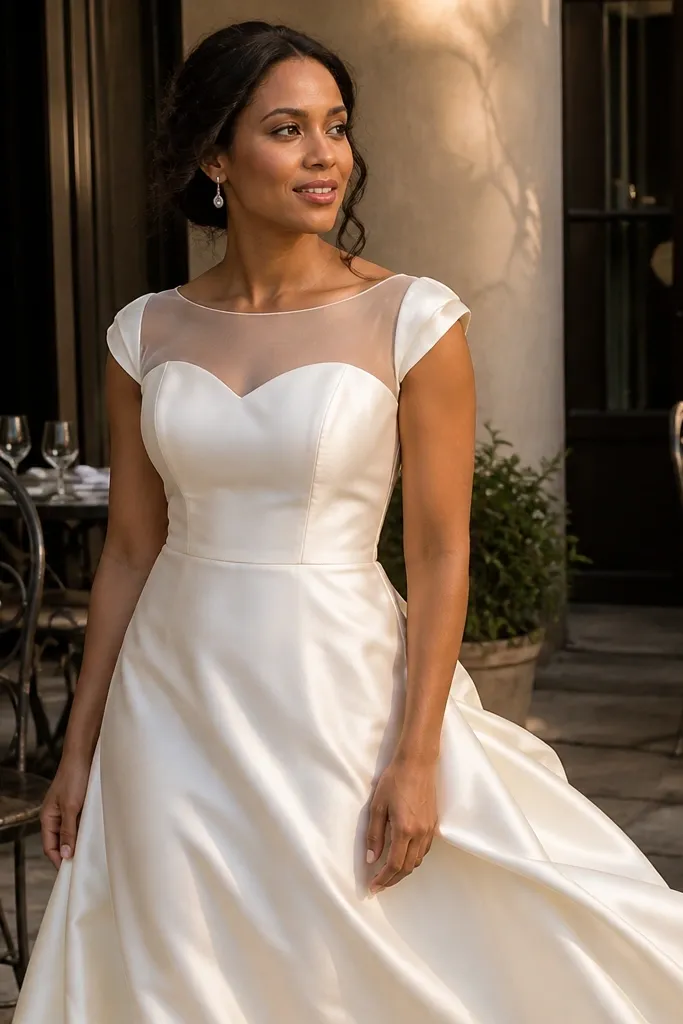
Illusion fabric turns modest coverage into a flattering visual effect. The illusion panel lets the neckline look lighter, while cap sleeves keep the look airy and youthful. Pair that with a satin A-line skirt and you get a gown that looks crisp in portraits and still moves well in outdoor photos. This is a great pick if you’re modest but don’t want heavy long sleeves. It also works beautifully for daytime ceremonies where bright highlights can flatten lace.
Start by selecting an illusion neckline with a mesh that matches your skin tone — you want it to disappear, not look gray or shiny. Then choose cap sleeves that are wide enough to smooth the upper arm without creating a tight band. Finally, pick an A-line skirt that has a slight flare rather than a straight drop; you can test this by gently lifting the hem and watching how it falls. When you book alterations, ask for hemming that keeps the skirt from pooling too much if you’ll be walking on uneven ground. Plan to wear nude or skin-tone seamless underwear to keep the illusion panel clean.
Quick tipIf the illusion mesh looks shiny in the store, it will photograph shiny too — skip it and choose matte mesh.
Skip thisDon’t pick cap sleeves that end mid-bicep; that length can shorten the arm visually.
3. Scoop Neck Modesty with 3/4 Sleeves and Mikado Structure
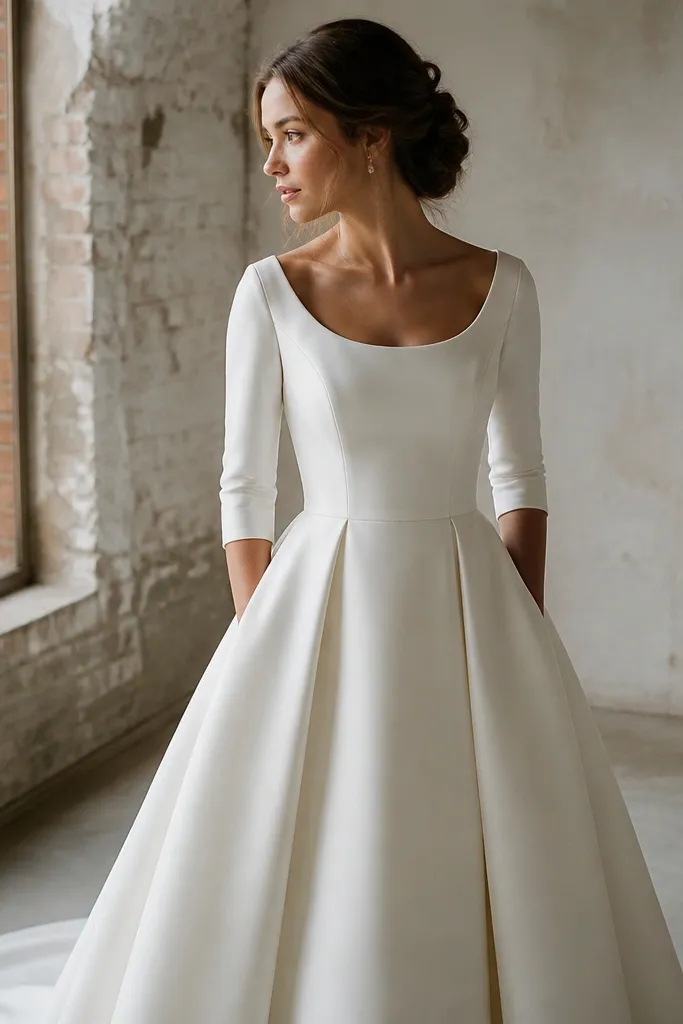
A scoop neckline is modest in coverage but still gives a gorgeous line from collarbone to waist. Add 3/4 sleeves and you get a balanced silhouette that looks intentional without feeling formal-heavy. Mikado fabric brings structure — the bodice holds its shape and the skirt keeps a clean shape in photos. This is a strong option for a bride who wants a modern modest look that doesn’t rely on lots of lace. It also photographs well in shade because the fabric has a firm texture that keeps details crisp.
Start by asking for a scoop neckline that doesn’t dip too low — you want it to sit comfortably without pulling at the center. Then choose 3/4 sleeves with a defined seam at the forearm so they don’t look like a casual tee. Finally, look for a mikado skirt with a lining so it drapes smoothly and doesn’t scratch your legs. For sizing, check the bodice — if it wrinkles across the bust, the structure is fighting your measurements. Alterations should tighten at the waist and refine the sleeve opening, not just the hem.
Wear a smooth, low-profile bra — mikado gowns show bra lines and side seams fast.
Avoid mikado gowns with flimsy bodice lining; the dress looks stiff but sits wrong.
4. Bateau Neck Lace with Bell Sleeves and an Organza Overlay Skirt
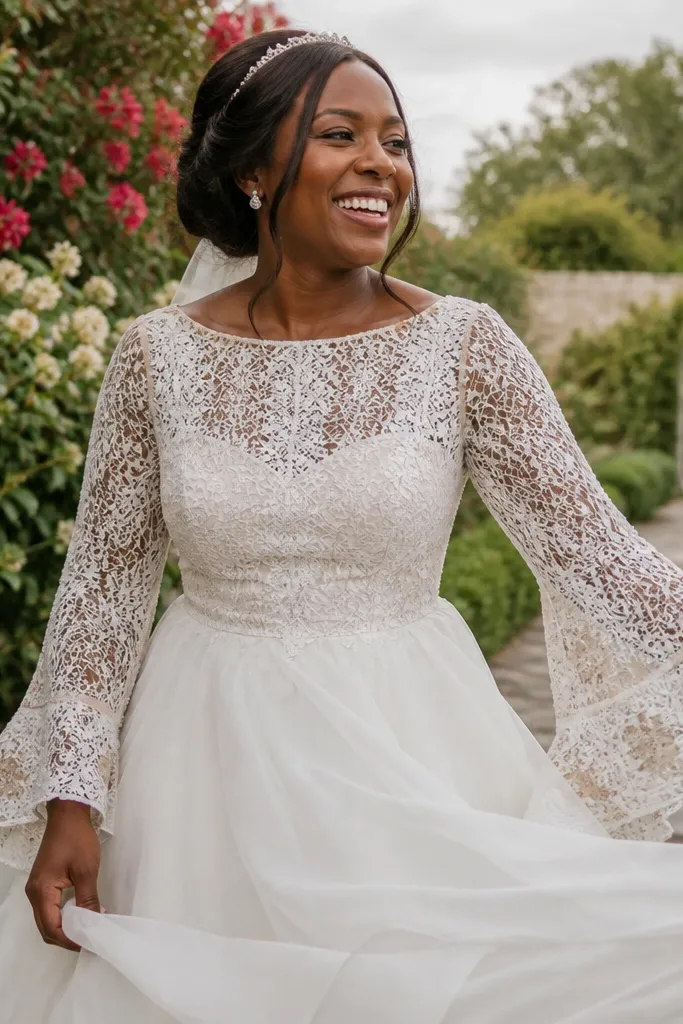
Bateau necklines are a cheat code for modest elegance because they sit wide across the collarbone. Add lace and bell sleeves, and you get movement at the arms without breaking coverage. An organza overlay skirt adds airy volume, so the gown looks romantic in breeze photos instead of heavy. This is ideal for a garden, vineyard, or any venue with natural light where you’ll be walking between photo spots. The overlay also helps camouflage minor figure concerns because it creates a soft layer instead of clinging.
Start by confirming the bateau neckline height: it should stay above the widest part of your chest for a clean frame. Then choose bell sleeves that flare from mid-forearm, not from the elbow — that keeps the silhouette balanced. Finally, look for organza over a lining that moves but doesn’t feel see-through; press your hand against the fabric to gauge thickness. For fitting, ask the tailor to check sleeve length while you’re standing and walking, since bell sleeves shift with movement. Plan your hair up or half-up so the neckline stays visible and photogenic.
Quick tipBring a small lint roller — organza shows stray threads under bright venue lighting.
Skip thisAvoid overly long bell sleeves that drag at the wrist; they catch on rings and look messy in photos.
5. Long-Sleeve Crepe Column with a High Slit and a Draped Back
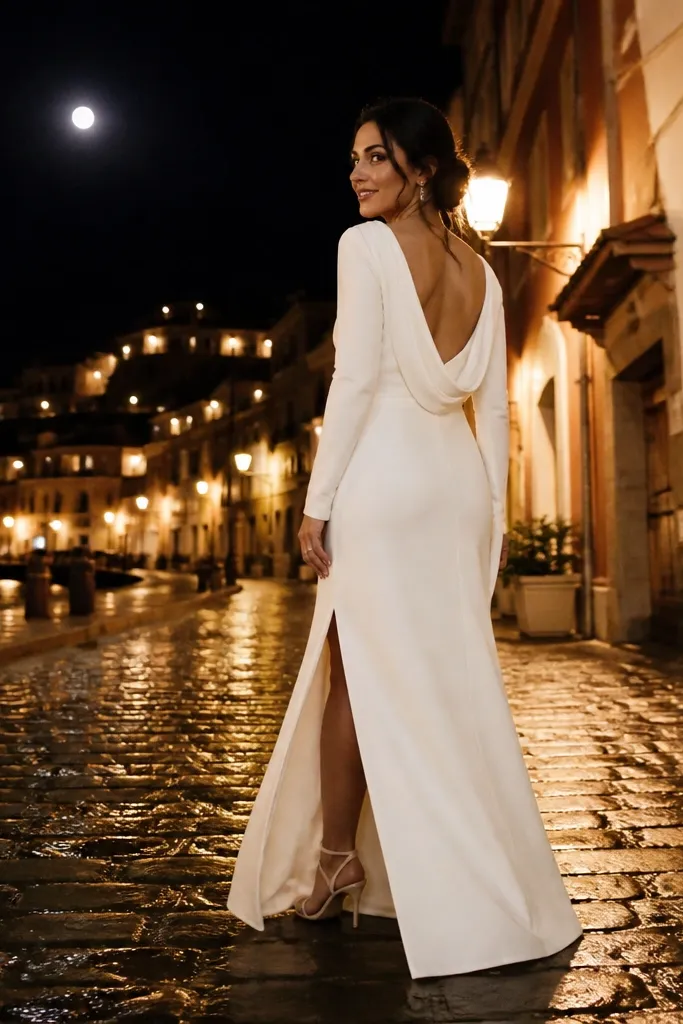
If you want modest but not traditional, this is the move. A long-sleeve crepe column gives sleek coverage, and the high slit adds a clean, leg-lengthening line when you walk. The draped back makes it feel bridal from every angle, which matters because most guests don’t see your front all night. Crepe keeps the fabric smooth and modern, so it doesn’t look like a costume even when the silhouette is fitted. It suits evening ceremonies and indoor receptions where you’ll take portraits under warm lighting.
Start by choosing a slit position that sits high enough to show movement but not so high that it feels casual — look for a slit that starts around upper-thigh. Then check the drape back: it should be anchored with internal points so it doesn’t sag. Finally, choose a crepe with stretch or a forgiving lining — column gowns reveal every tug if the fabric is too rigid. For alterations, focus on waist alignment and sleeve length; column gowns look off when the seams sit crooked. Test walking in the dress — if the slit pulls the fabric tight at the hip, size or adjust.
Use shapewear that doesn’t bunch at the knee line; column gowns show ridge lines fast.
Avoid crepe with no stretch if you plan to sit down — the slit won’t save a tight waist.
6. Off-Shoulder Illusion with Long Sleeves and a Tulle Ballgown Skirt
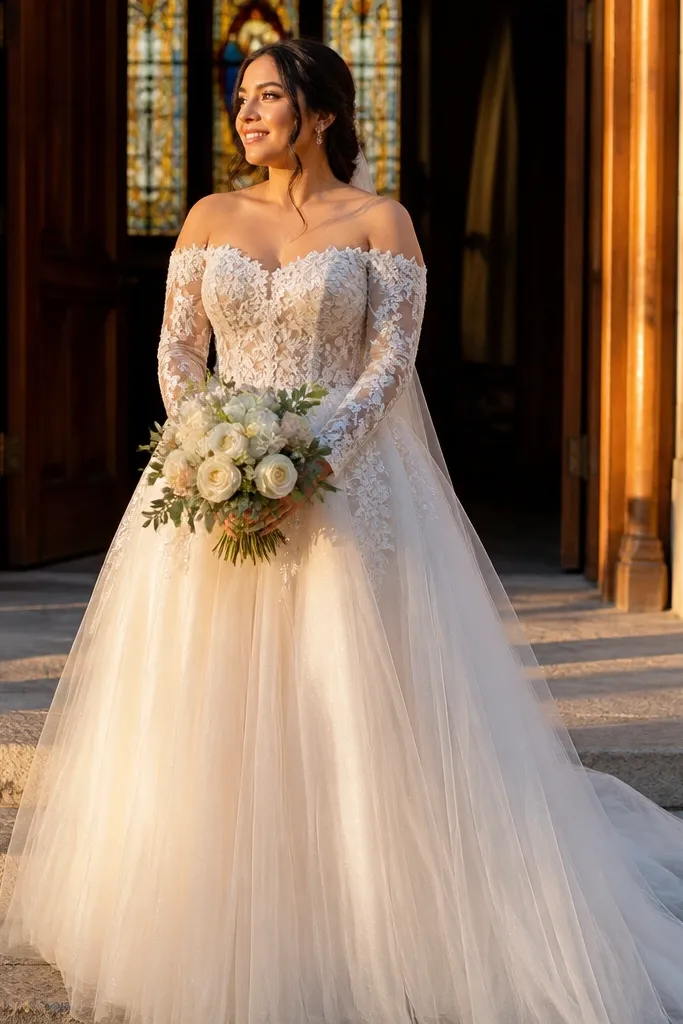
Off-shoulder details usually feel immodest, but illusion lets you keep the coverage while still showing collarbone and a flattering shoulder line. Long sleeves keep it modest, and the tulle ballgown skirt gives the classic bridal photo moment. This combination looks especially good in church or formal reception settings where you want drama without going sleeveless. The tulle adds volume that can hide fit changes — helpful if you’re between sizes. For a gorgeous look, keep the bodice clean and let the skirt do the visual work.
Start by selecting illusion off-shoulder that has a structured edge so it stays lifted; floppy illusion looks sloppy in photos. Then pick long sleeves with a smooth finish — lace sleeves here can feel too busy with a ballgown skirt. Finally, choose a tulle skirt with enough layers to prevent see-through and to keep the shape. For fitting, pin the neckline while you’re standing so the illusion edge sits evenly on both sides. Budget for hemming — ballgowns need precise floor distance, especially if you’ll wear heels.
Quick tipIf you’re wearing a veil, attach it to the back of the bodice, not the skirt — it keeps the silhouette clean.
Skip thisAvoid ballgowns with too few tulle layers; they collapse and look flat in full-length photos.
7. Satin Wrap Bodice with 3/4 Sleeves and a Flared Midi Skirt
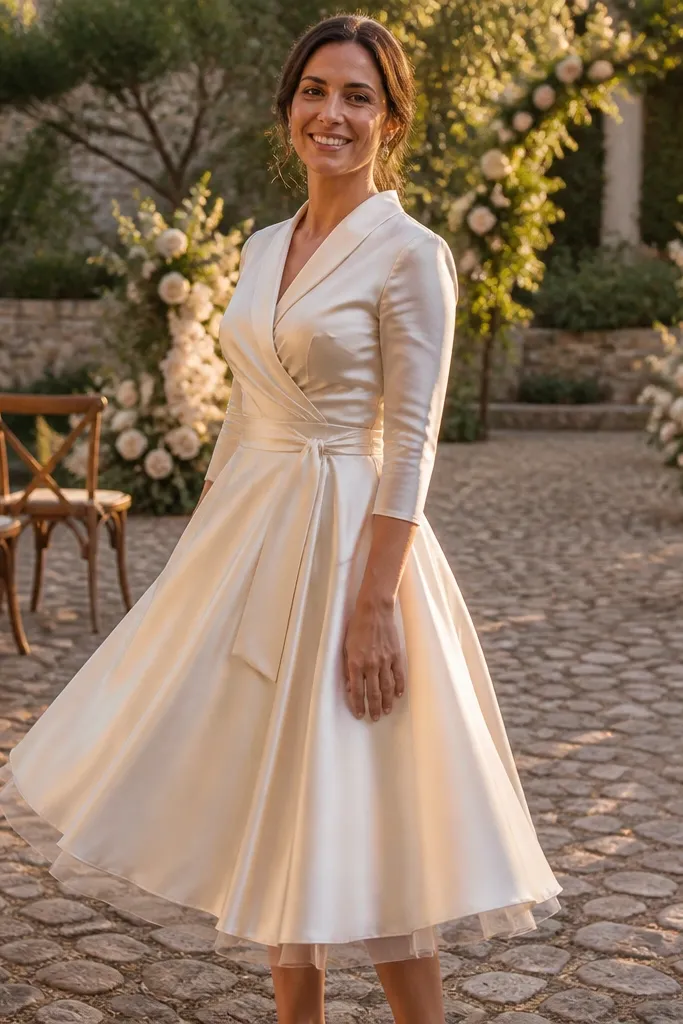
A wrap-style bodice gives shape and romance without needing a deep neckline. With 3/4 sleeves, it stays modest while still looking flattering and feminine. A flared midi skirt keeps it modern and easier to move in than a full-length gown, which is a big deal for outdoor weddings on grass or cobblestone. Satin adds a smooth glow under ceremony lighting, and the wrap construction helps the waist sit where you want it. This is a smart choice if you want a gorgeous bridal look that doesn’t feel like a heavy production.
Start by choosing a wrap bodice with a clear, secure closure at the waist — you want it to hold shape when you sit and dance. Then pick sleeves that end above the wrist for a long, clean line. Finally, choose a midi skirt with a hem that hits mid-calf so you don’t trip and you get a flattering proportion. For alterations, pay attention to the wrap overlap — if it’s too small, you’ll see gapping in motion. Plan your footwear before hemming so the midi length works with your heel height.
Bring your shoes to the fitting — midi hems change a lot once you walk.
Avoid wrap gowns with minimal lining; satin can shift and create unwanted gaps.
8. High-Neck Beaded Bodice with Shorter Sleeves and a Soft A-Line
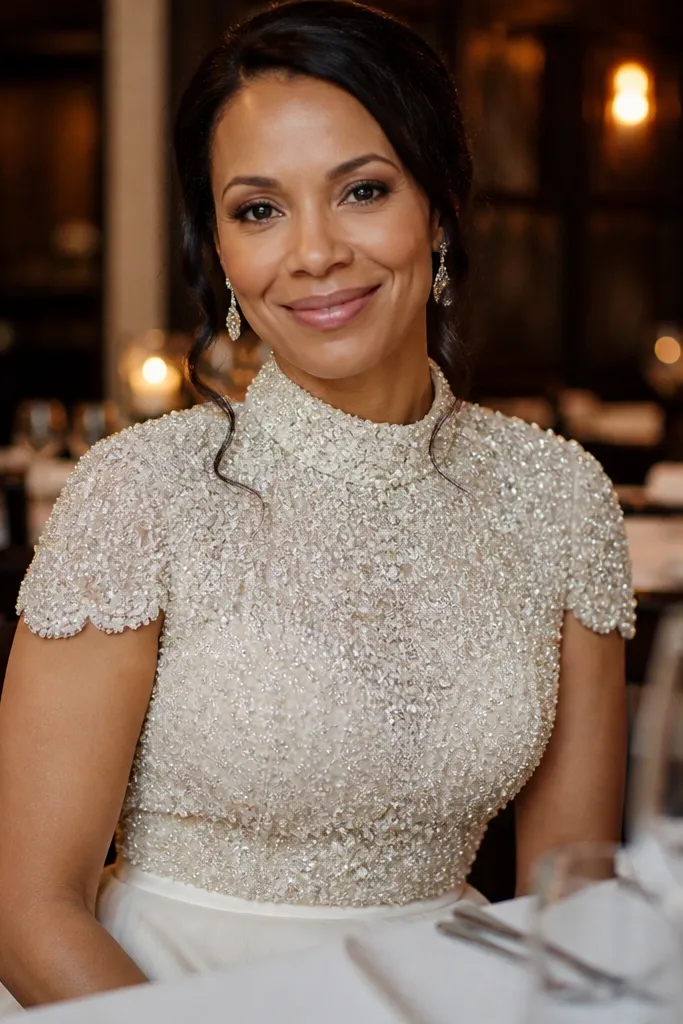
This look is all about sparkle where it matters: the bodice. A high-neck beaded top keeps modest coverage, and shorter sleeves keep the overall outfit from feeling too heavy. Pair it with a soft A-line skirt so the beads don’t overpower your movement. It’s perfect for evening receptions, especially under warm lighting where beads catch and shimmer instead of just glittering. The key is balance — keep the skirt simple so the bodice stays the focus.
Start by checking bead placement — look for a smooth line around the neckline and bust, not random heavy clusters. Then choose sleeve length that covers comfortably but doesn’t bunch; a slightly shorter sleeve can look cleaner on camera. Finally, pick an A-line skirt that drapes rather than stands; crepe or satin back crepe works well here. For fitting, ask for extra support at the bust so the beaded bodice doesn’t pull or distort. If the dress is itchy, check for lining coverage inside the beading.
Quick tipPlan to wear simple earrings — the beaded bodice already gives enough sparkle.
Skip thisAvoid beaded bodices with a thin lining; they can feel scratchy and look uneven in photos.
9. Long Sleeve Floral Appliqué with a Straight Skirt and Lace Train
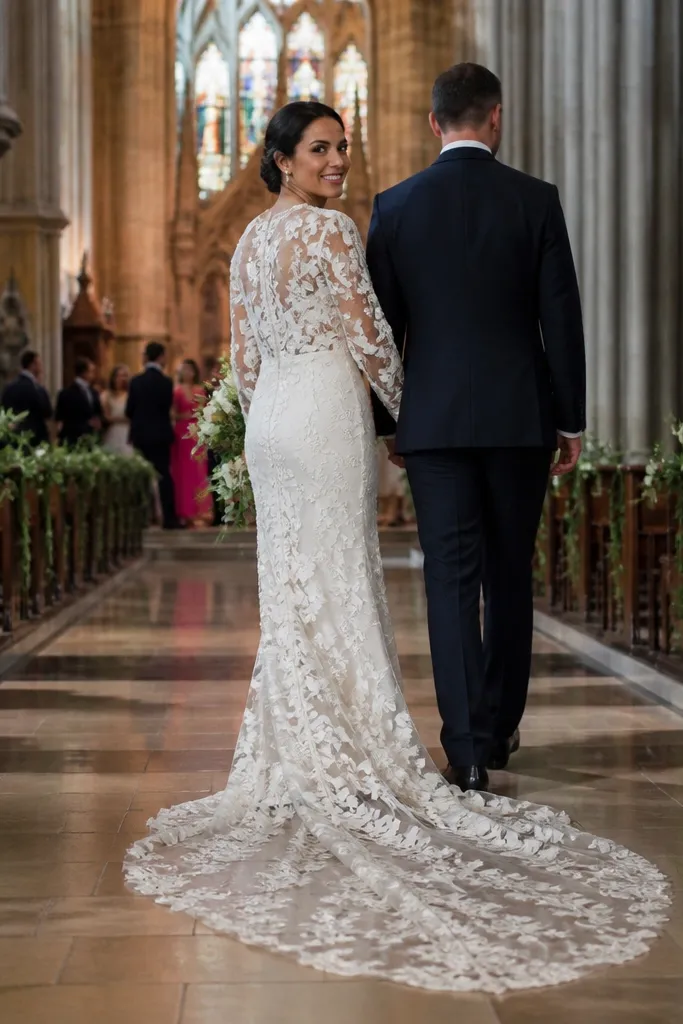
Floral appliqué is the easiest way to make modest dresses look romantic without going low-cut. Long sleeves covered in appliqué create a full, intentional frame, while a straight skirt keeps the silhouette sleek. Add a lace train and you get that “gorgeous” moment from behind during ceremony exits and reception entrance photos. This style suits brides who want coverage but don’t want an overly puffy skirt. It also looks striking in outdoor settings with greenery because the florals echo the environment.
Start by choosing appliqué density: the bodice should feel detailed, but the skirt should stay readable and not look like one flat sticker. Then confirm how the train attaches — it should be secure enough to walk without dragging awkwardly. Finally, pick a straight skirt with enough room through the hips so it doesn’t cling when you move. For alterations, focus on seam alignment at the waist and train length — the train should skim the floor, not stack in a heap. Practice walking with the train handled by a helper if you’ll be outdoors on uneven ground.
If the appliqué feels heavy, wear a lighter veil — too many heavy textures can look crowded.
Avoid straight skirts that are too tight in the lower thigh; modest coverage won’t hide pulling.
10. Structured Sweetheart with Long Sleeves and a Soft Ballgown Underlayer
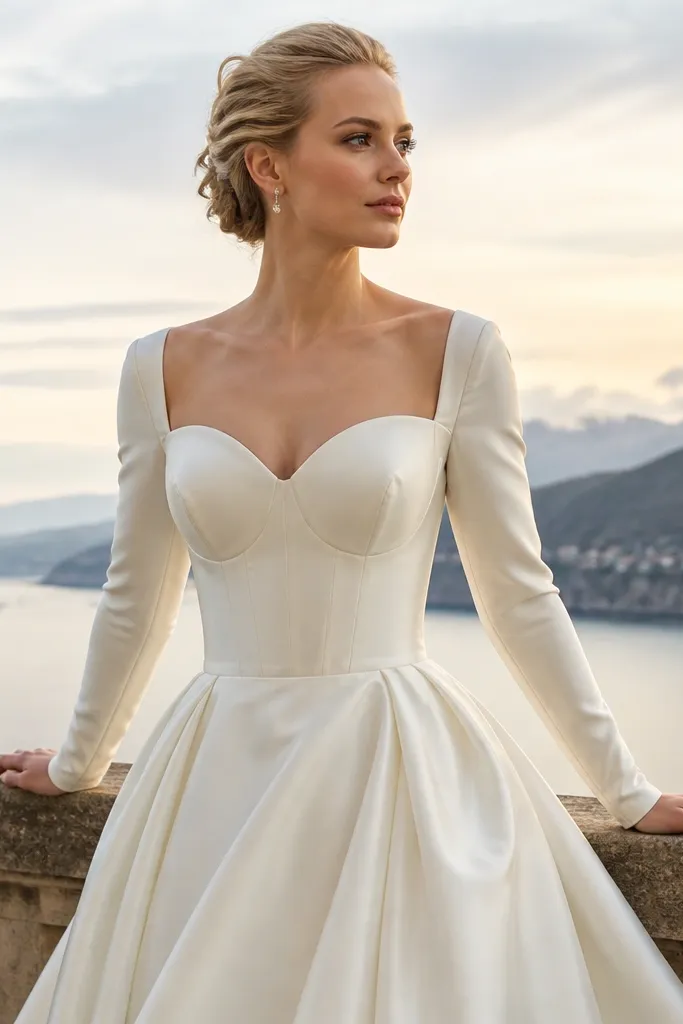
A sweetheart neckline can still be modest when the sleeves are long and the bodice is structured. This combo creates a defined shape that looks flattering and feminine, even with full coverage. The soft ballgown underlayer helps the skirt hold volume without feeling stiff, so it moves like fabric, not like armor. It’s a great choice for brides who want the big bridal silhouette but hate when ballgowns look like they weigh a ton. The structured bodice also helps your posture, which shows up in photos immediately.
Start by selecting a sweetheart neckline with a clear cup shape and enough coverage around the center — you want it secure, not gaping. Then pick long sleeves with a fabric that holds shape, like crepe or satin, rather than super stretchy jersey. Finally, look for a ballgown with an underlayer that’s soft and a top layer that adds movement; ask to see the skirt layers in person. For fitting, keep the waist seam at your natural waist, then hem for the exact heel height. If you’re worried about bulk, choose a less-wide skirt and add volume with layers instead of width.
Quick tipChoose a veil that matches the sleeve texture; matte sleeves + shiny veil can clash in photos.
Skip thisAvoid sweetheart bodices with thin boning — they often collapse and flatten the neckline.
11. Caped Modesty with Long Sleeves Under a Removable Capelet
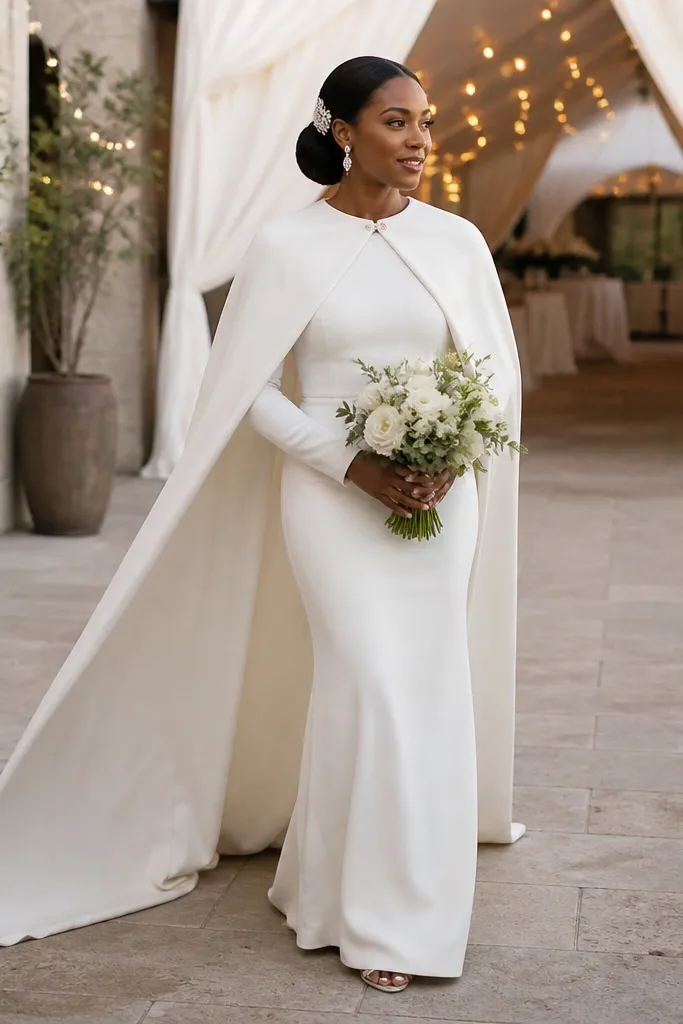
A capelet adds drama to modest dressing without forcing you into heavy lace everywhere. You get full coverage for the ceremony, then the silhouette can look lighter if you remove the cape for the reception. Long sleeves under the cape keep the look cohesive and photo-ready from every angle — the cape frames your shoulders and creates a clean shape. This style works well for churches, winter weddings, and any venue where you’ll be indoors for photos. It also gives you a built-in “second look” without changing the entire dress.
Start by choosing a capelet that drapes close to the body, not one that floats away from your shoulders. Then check attachment points — look for secure snaps or hidden hooks so it doesn’t shift during photos. Finally, pick a gown base that’s simple and smooth, like crepe or satin, so the cape is the focal detail. For fitting, confirm cape length at the elbow or slightly above — too long makes it look like a coat in photos. Bring a small mirror to test how the cape looks when you turn your head; cape angles show up instantly.
If you’re wearing a veil, pin it so it doesn’t tangle with the cape seam.
Avoid capelets made from stiff tulle; they look like a separate costume piece.
12. Turtleneck Lace Bodice with a Slip Skirt and a Matching Lace Veil
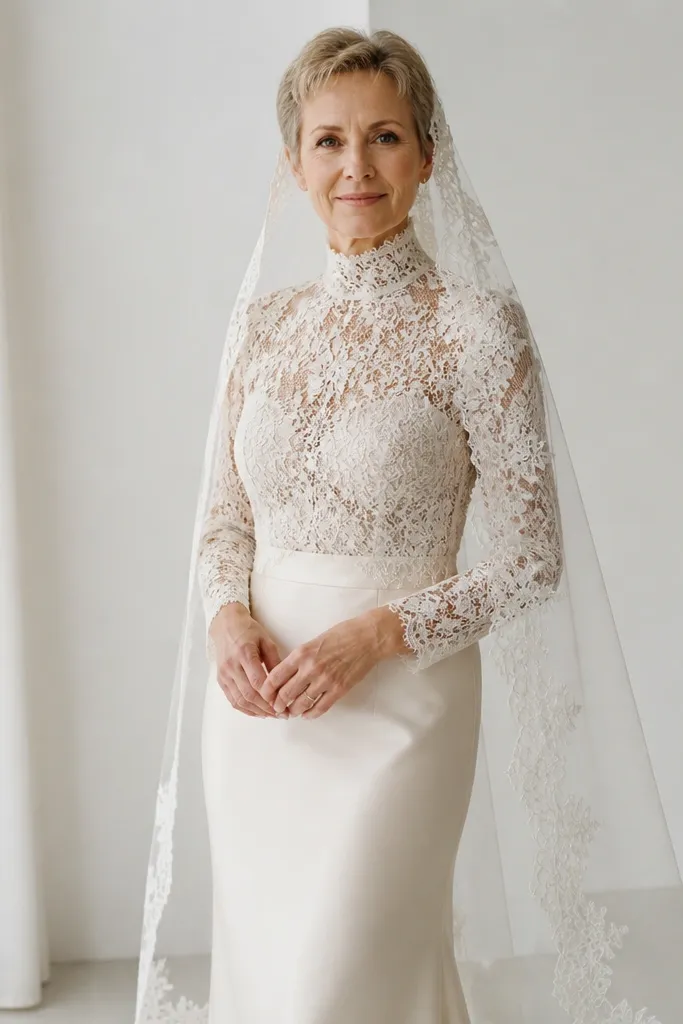
Turtleneck modesty looks bold and modern when the rest of the gown is simple. Lace on the turtleneck adds texture and softness, while a slip skirt keeps the silhouette sleek and elegant. This is a great pick if you want to avoid sleeves that feel heavy, since the coverage is in the neckline rather than full arm coverage. It also photographs beautifully in city settings, where clean lines stand out against architecture. Pair it with a matching lace veil to keep the bridal look cohesive and intentional.
Start by choosing a turtleneck height that doesn’t close off your face — it should sit comfortably without compressing your chin. Then select a slip skirt fabric that has movement, like satin back crepe, and ensure it’s lined for coverage. Finally, keep the seam lines clean so the slip doesn’t cling at the hips. For alterations, ask for a slight taper at the waist so the slip reads shaped, not boxy. Match veil lace to the bodice lace pattern scale so it doesn’t look random in photos.
Choose earrings that sit at collarbone level; the turtleneck already frames the face.
Avoid turtlenecks with thick, bulky lace; they can look stiff and close up your neckline.
13. Square Neckline with Long Sleeves and a Soft Pleated Skirt
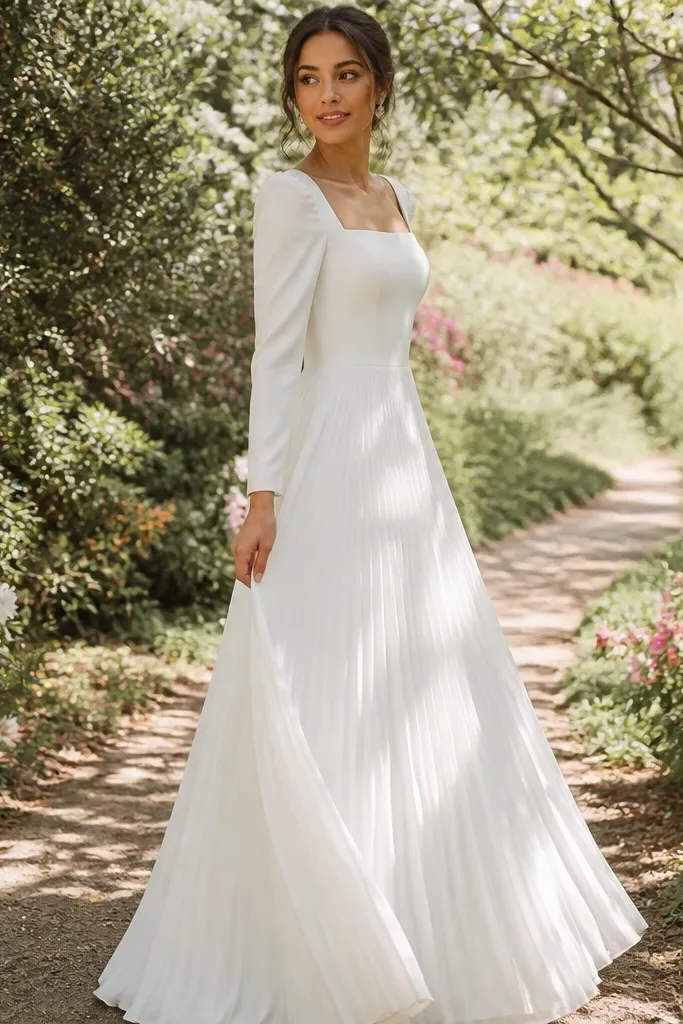
A square neckline is flattering because it creates a clean, structured frame for your bust and shoulders. Long sleeves keep it modest, and a soft pleated skirt adds movement without going full ballgown. Pleats also hide minor fit issues because they create texture where you need it. This look works well for spring and fall weddings when you want light fabric energy but not an overly sheer dress. It’s also one of the best options for brides who want a gorgeous look in both indoor portraits and outdoor walking shots.
Start by picking a square neckline that sits flat — it should not gape in the center. Then choose long sleeves that are smooth and not overly embellished so the pleats stay the main movement detail. Finally, select a pleated skirt where the pleat size matches the scale of the gown; small pleats create a different look than wide knife pleats. For fitting, check how the pleats fall when you stand and when you sit — some pleats shift and can create uneven hem lines. Hem the skirt with your heels in place so the pleats align.
Use a matte veil — shiny fabric against pleats can make the whole look feel too busy.
Avoid pleats that are too stiff; they can look cardboard-like in photos.
14. Long Sleeve Satin with a Wrap Skirt Overlay and a Cathedral Train
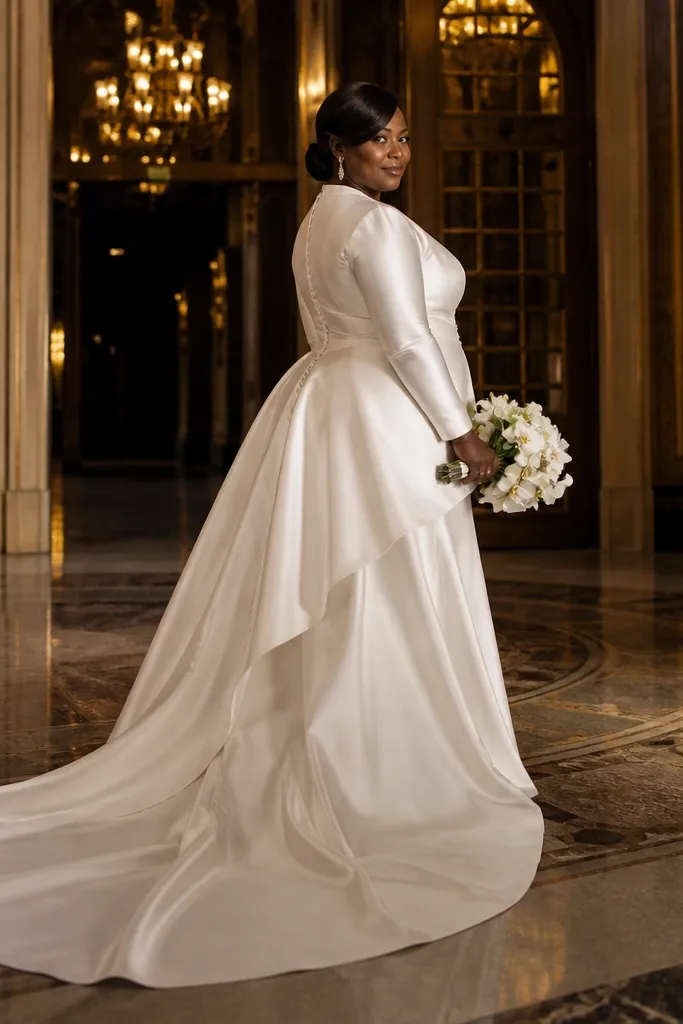
This is the modest bridal look for brides who want drama without heavy ornamentation. Long sleeve satin looks clean and expensive, and the wrap skirt overlay creates visual interest at the hips. Add a cathedral train and you get a show-stopping silhouette for ceremony photos and grand entrances. It’s also great if you hate lace but still want a gorgeous look. The wrap overlay makes the dress feel dimensional even in simple photos because the fabric layers catch light differently.
Start by choosing a wrap overlay that sits flat and secure, not one that flutters and twists. Then pick satin with a smooth finish and lining that prevents cling; test by bending the fabric and watching for wrinkling. Finally, plan the train — cathedral trains are gorgeous but require careful hemming and handling. For alterations, ask for reinforcement at the train attachment points so it doesn’t pull at the waist seam. If you’ll be outdoors, plan a train plan with a person who can manage it so you don’t step on it.
If you’re wearing a long train, choose a simpler necklace or skip it; the neckline and train are already competing.
Avoid satin with a slippery lining — the wrap overlay can shift and ruin the shape in photos.
15. Lace-Up Back Modesty with Long Sleeves and a Minimal Crepe Skirt
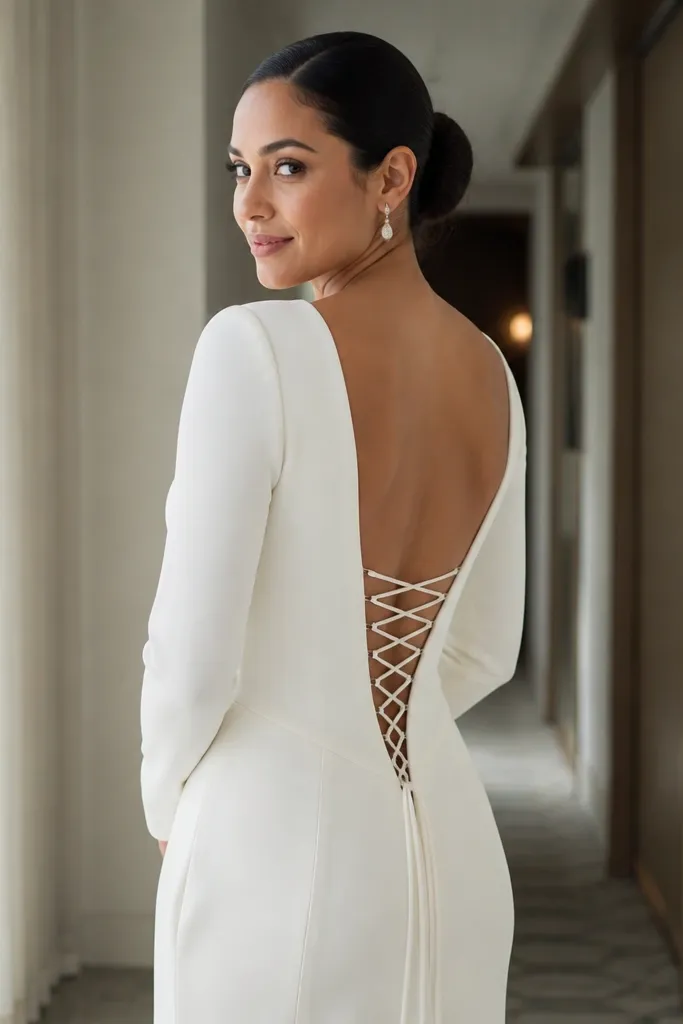
A lace-up back is one of the most photogenic modest details because it adds structure and visual interest at the angle guests remember. Pair that with long sleeves and a minimal crepe skirt and you get a clean, modern look that still feels bridal. The front stays simple and flattering, while the back gives you the “gorgeous” moment when you turn for photos. This dress direction is ideal for brides who want modest coverage but don’t want heavy lace coating the whole gown. It also works well for receptions where you’ll take lots of candid photos from behind.
Start by selecting a lace-up back with evenly spaced grommets and enough length to adjust fit smoothly. Then choose long sleeves that sit flat at the shoulder and don’t wrinkle — wrinkles show in the back angle photos. Finally, pick a crepe skirt that falls straight with slight movement; too much flare can hide the clean line. For alterations, confirm the back lacing doesn’t create puckers at the waist when fully tightened. Hem the skirt with your shoes and check that the back hem doesn’t float higher than the front.
Quick tipBring a strapless or low-back smoothing undergarment — the lace-up back often reveals underlayer seams.
Skip thisAvoid lace-up backs that rely on a thin zipper only; they can gap without enough support.