1. Classic Ballgown With Pearl-Button Corset Bodice
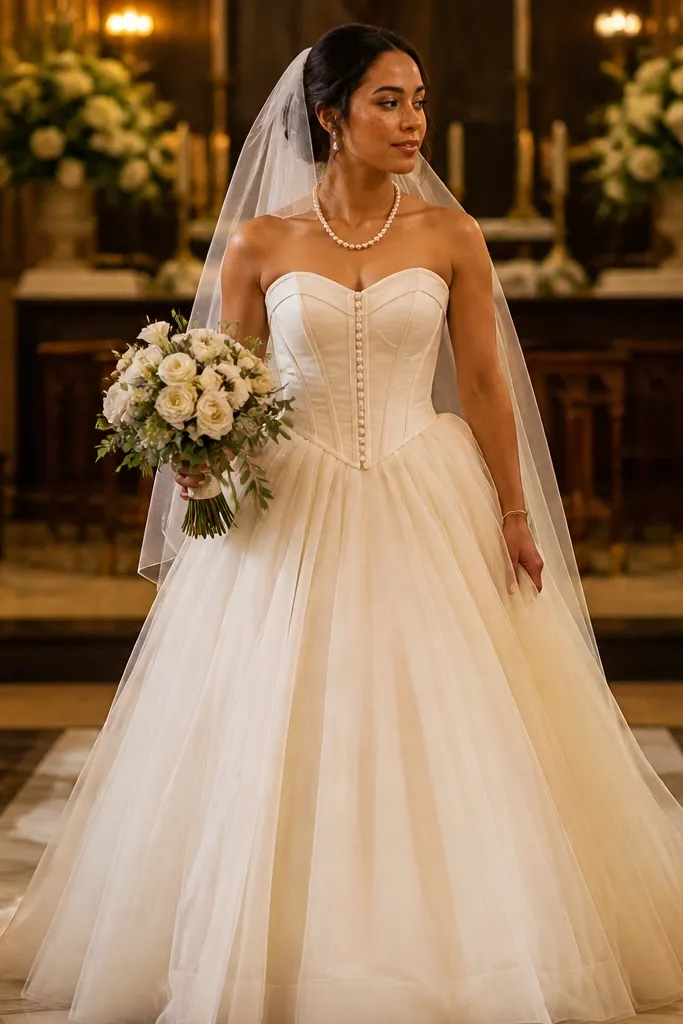
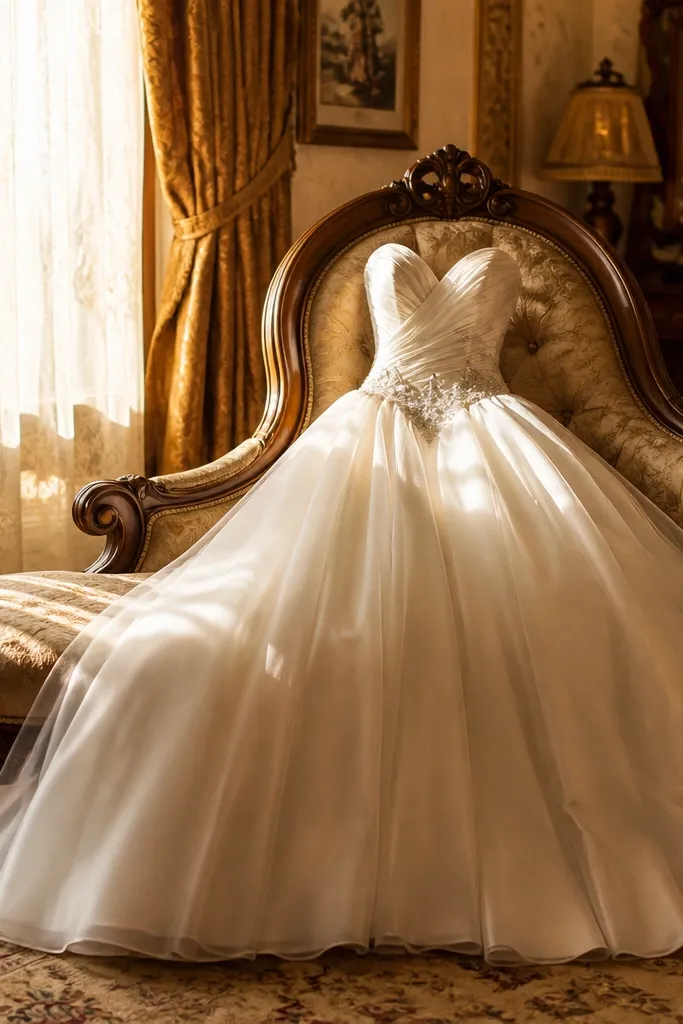
This is the princess shape that reads instantly in photos because the corset bodice tightens the waist and the full skirt creates a strong silhouette. Pearl-button detailing adds tiny highlights that show up beautifully in church lighting and warm indoor lamps. The skirt should have layered tulle so it floats when you walk instead of hanging flat. It suits brides who want a dramatic entrance and don’t mind a bit of structure at the waist. The best season is cooler weather, since heavier layers feel more comfortable and look better without heat-wilt.
Start by choosing a bodice with real boning and a corset-style closure, not just decorative seams. Then ask the boutique to show you the skirt under bright light so you can see the layer count and whether it poofs or droops. Finally, plan your hem with the shoes you’ll wear and request a final fitting 2-3 weeks before the wedding for clean floor contact.
Bring the shoes you’ll wear to your first fitting so the hem height doesn’t drift later.
Avoid thin single-layer tulle ballgowns — they look flat in photos and collapse quickly.
2. Soft Tulle A-Line With Cap Sleeves and Sweetheart Neckline
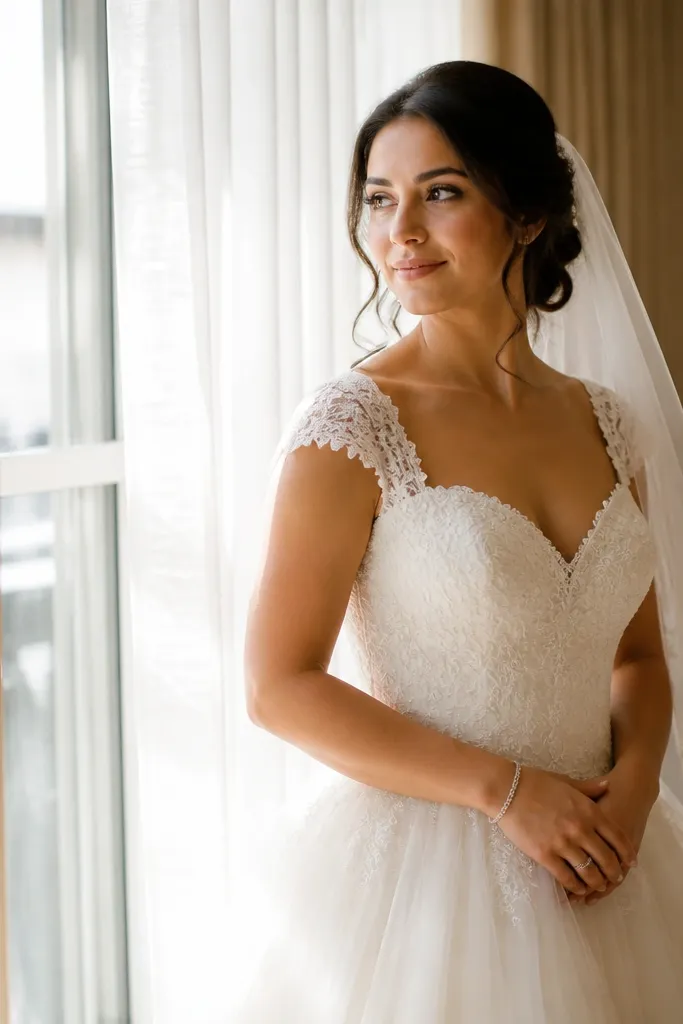
This version stays princessy without feeling heavy. Cap sleeves frame the shoulders in portraits, and a sweetheart neckline adds softness that photographs well even at slightly off angles. The key is layered tulle that creates gentle volume at the skirt without a huge hoop effect. It suits brides who want a romantic “princess” look but still want to sit, move, and dance without fighting fabric. Outdoor golden hour is where this shines because tulle catches light and creates movement.
Start by trying the dress standing and then sitting — the A-line should keep its shape while you’re seated. Then check that the cap sleeves don’t cut across your upper arm when you lift them for photos. Finally, ask for a tulle layer that skims the legs rather than clinging, so the skirt reads airy in motion.
If you’re marrying outdoors, choose a fabric that doesn’t cling in humidity and keep a simple bustle plan so the skirt doesn’t drag.
Skip lace or bead-heavy cap sleeves if your venue has strong ceiling fans — it looks distracting in photos.
3. Fit-and-Flare Mikado Princess Dress With Structured Waist
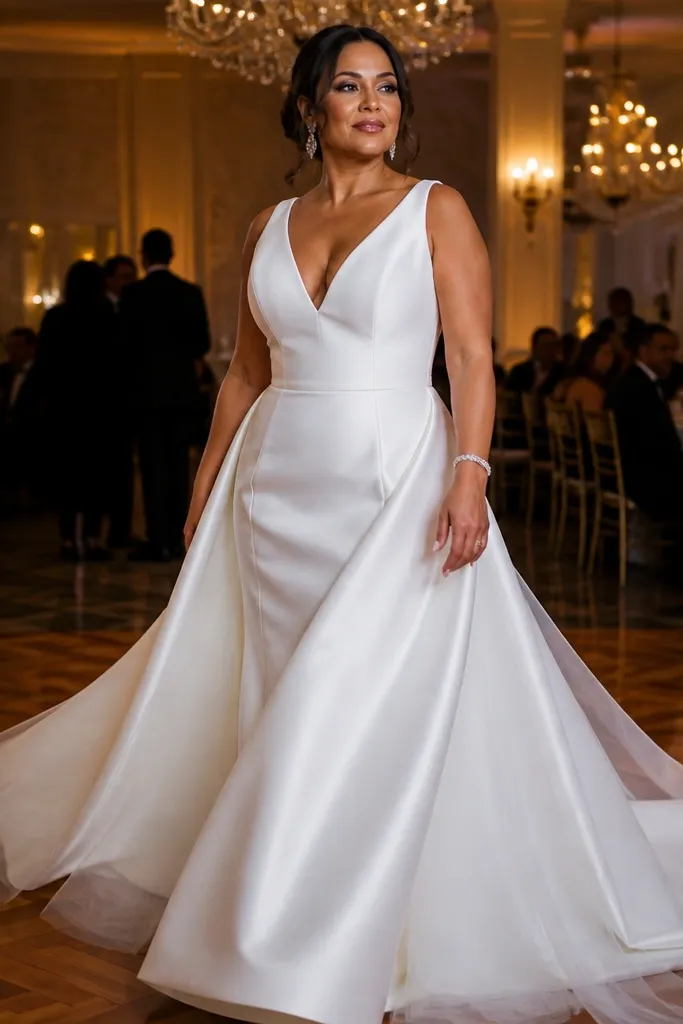
Mikado is the grown-up princess fabric: it holds its shape, doesn’t look see-through, and creates clean lines in photos. A fit-and-flare silhouette gives you that fairy-tale feel at the waist while still letting you walk easily. The structured waist gives definition even if you’re wearing a veil that adds extra bulk at the back. This is a strong choice if you want a princess look that feels polished, not floaty. It’s also forgiving for warm venues because the fabric is less likely to cling than satin.
Start by looking for a waist seam that sits at your natural waist, not too high. Then check the skirt flare by walking across the room — you want it to sway, not whip. Finally, plan alterations for the hem and side seams so the flare starts at the right point above the knee line when you step.
Quick tipIf you’re worried about comfort, choose a mikado with a softer lining so the inside doesn’t feel scratchy.
Skip thisAvoid ultra-stiff mikado with no give — it can restrict movement and looks rigid in close-ups.
4. Princess Lace Ballgown With Off-Shoulder Sleeves
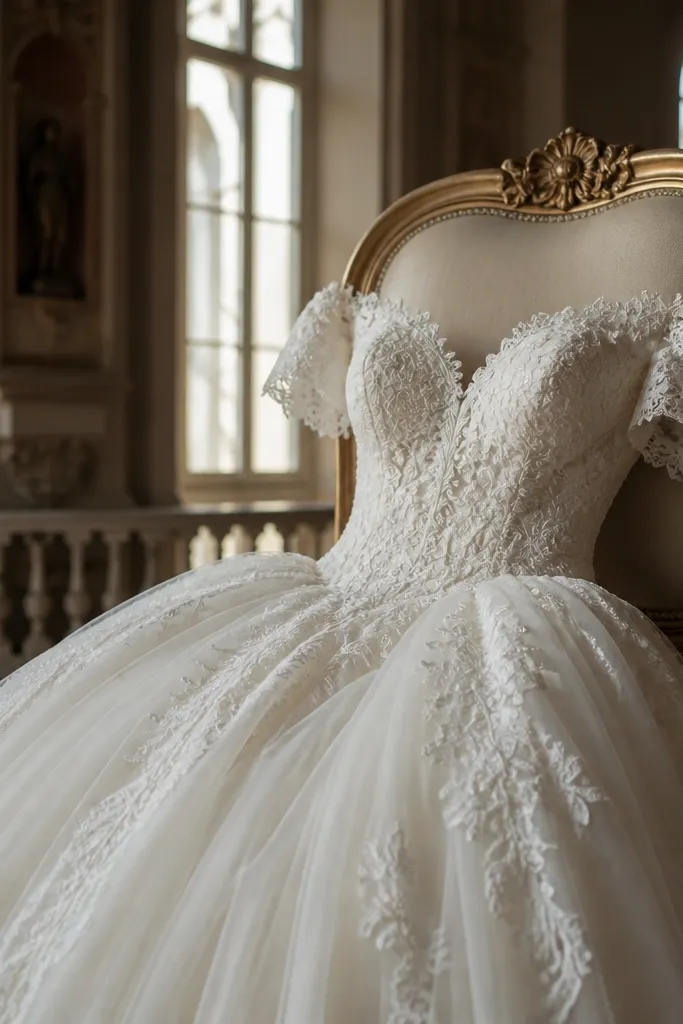
Off-shoulder lace is the fastest way to look bridal and princessy at the same time. The sleeve shape frames your collarbones and gives photos a classic, romantic line. A lace-printed bodice with structured tulle beneath keeps the look dimensional instead of flat. This dress is great for indoor ceremonies, especially if you want a vintage-leaning storybook vibe. Pair it with a veil that doesn’t hide the lace — you want the lace to stay visible in portraits.
Start by testing the neckline fit: the off-shoulder should sit flat without slipping when you talk and smile. Then check the lace coverage over the bust — you want it to look even, not patchy. Finally, ask for a bustle option that lifts the skirt without crushing the lace layers so your photos still show shape.
Quick tipChoose a veil length that ends above the widest point of the skirt so it doesn’t blur the silhouette.
Skip thisSkip heavy lace with too-thin tulle underlayers — the skirt can look see-through and uneven.
5. All-Over Sequined Tulle Princess Gown
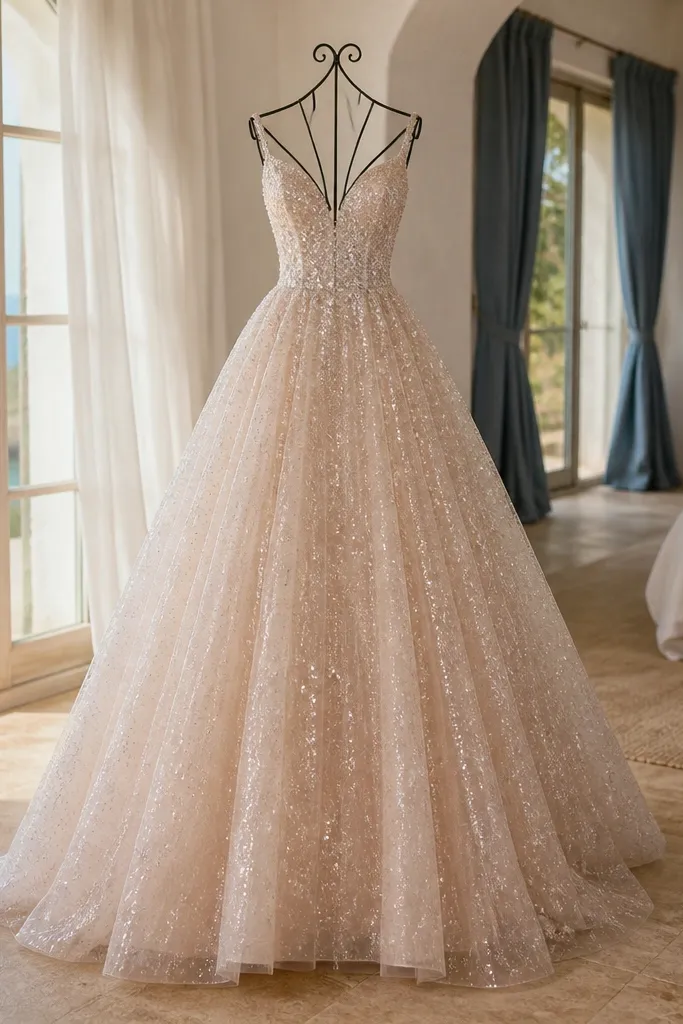
If you want princess energy that reads as “wow” in photos, sequined tulle delivers. The sparkle breaks up the silhouette and makes the dress look dimensional in both flash and natural light. Go for sequins that are evenly spaced and not overly chunky, since chunky beadwork can look harsh in close-ups. This is best for evening receptions or indoor venues where lighting hits the tulle layers. It suits brides who love attention and want their gown to do the talking.
Start by checking how the sequins feel under bright light — you want shimmer, not glitter dust. Then do a quick movement test: walk a few steps and lift your arms to see if sequins snag or pull. Finally, request lining coverage so the skin underneath doesn’t show and the dress doesn’t feel scratchy.
Quick tipBring a lint roller to your dress fittings — sequined tulle attracts stray fibers from rooms quickly.
Skip thisDon’t pick sequins that feel like sandpaper — comfort matters when you’re wearing it for hours.
6. Butterfly-Feel Organza Ballgown With Floating Layers
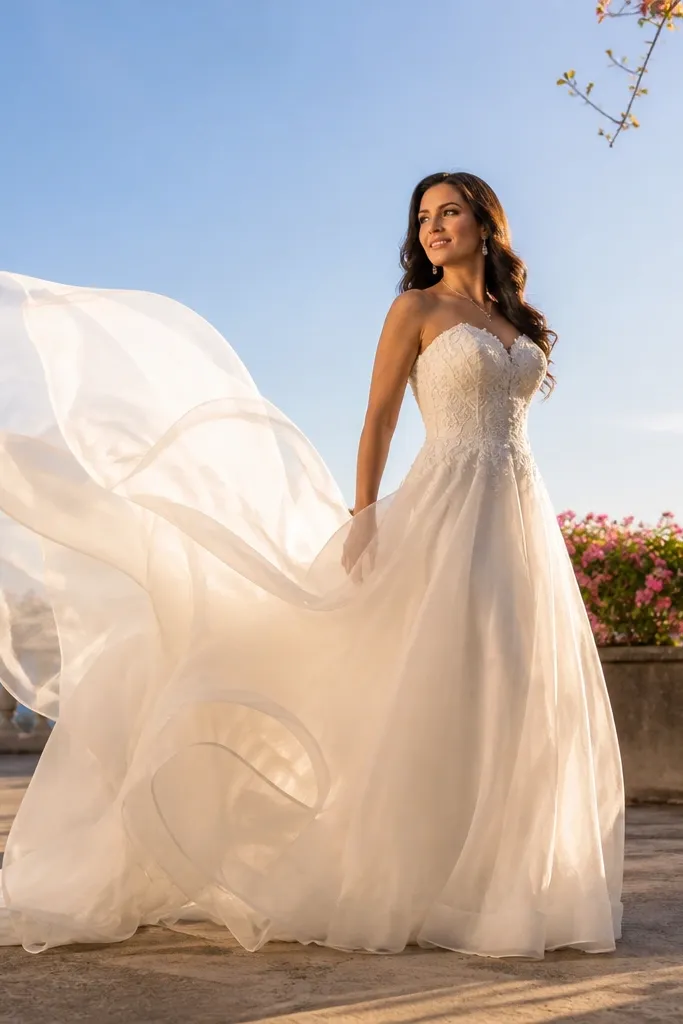
Organza gives you that crisp, airy princess look without the “puffy costume” vibe. Floating layers create a delicate flutter in photos, especially when you turn or walk. The best versions use organza over a soft base so the skirt has shape but still moves like fabric, not foam. This dress is great for spring and outdoor ceremonies because it looks light in photos and won’t feel heavy. It also photographs beautifully in side profiles because organza catches light at the edges.
Start by asking to see the dress from the side and from the front under daylight — organza should show dimension. Then check the skirt structure by gently lifting it at the hem — it should fall back with shape. Finally, plan for a careful bustle so the layers stack neatly and don’t create lumps in reception photos.
Quick tipIf you’re doing outdoor portraits, bring a small hand mirror to check skirt flutter before you pose.
Skip thisAvoid organza that looks flat or overly translucent at the hem — it can reveal underlayers in photos.
7. Satin Princess Gown With Sweetheart Neckline and Tapered Skirt
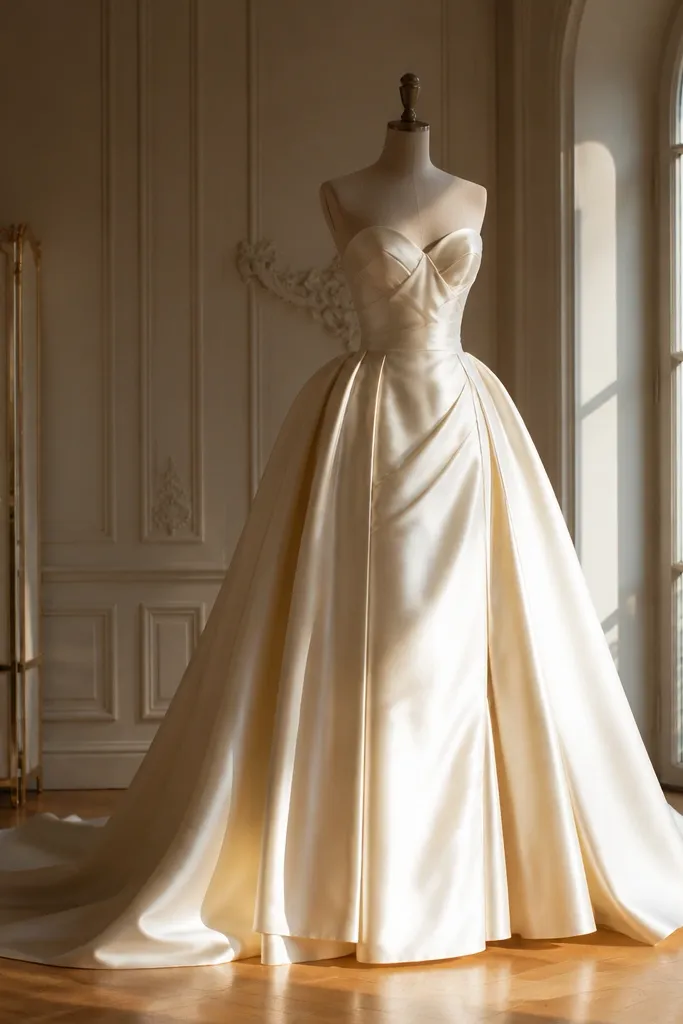
Satin princess dresses look expensive in photos because the fabric reflects light smoothly. A sweetheart neckline softens the look, and a tapered skirt gives you that regal line without going full ballgown. The secret is choosing satin with enough weight so it drapes cleanly instead of wrinkling. This is a strong option if your venue has strong overhead lighting because satin shows contours and keeps the silhouette sharp. It’s also a good pick for fall and winter when you want a sleek, polished bridal look.
Start by checking the satin type: duchess satin or crepe-back satin reads smoother on camera. Then look at the bodice seams — they should pull the fabric tight without rippling. Finally, plan steaming and a tight hem so the skirt skims the floor and doesn’t bunch in photos.
Quick tipAsk if the dress has built-in cups or a structured lining so the sweetheart neckline stays smooth all day.
Skip thisSkip super-shiny satin if you hate mirror-like reflections — some flashes can look harsh.
8. Princess Ballgown With Floral 3D Appliqué on the Skirt
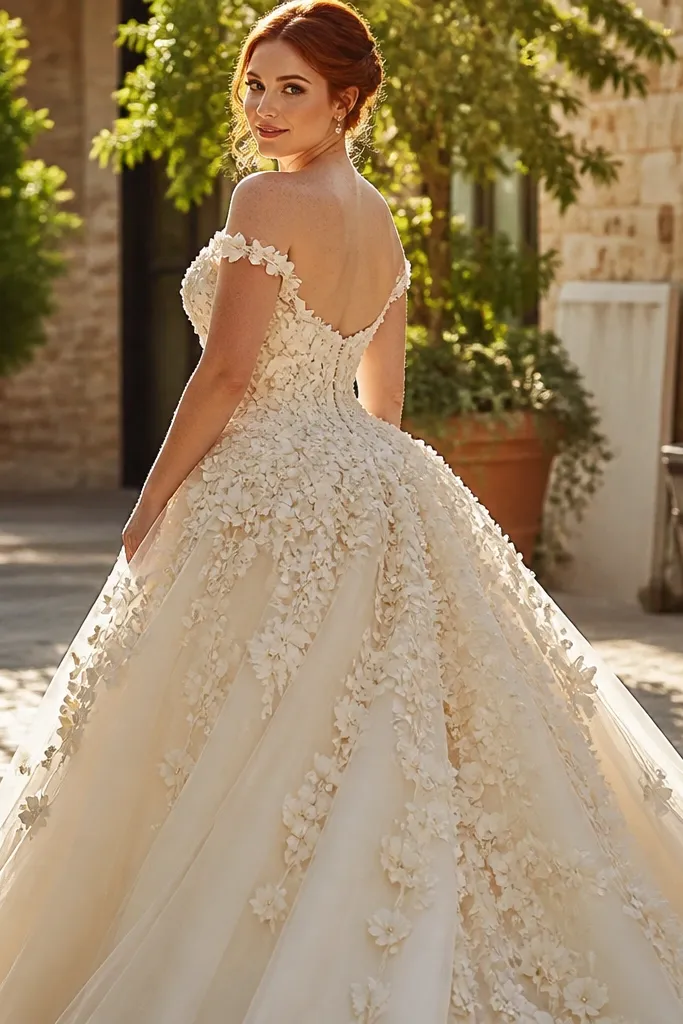
3D floral appliqué turns a standard ballgown into something that looks hand-crafted. The appliqués catch light and create texture that shows up even from a few feet away, which is great for group photos. Look for appliqué placement that starts at the waist and trails down the skirt so your whole body looks elongated. This dress is best for photographers who love close detail shots — it gives them something to focus on. It suits brides who want a princess look with a romantic, garden-feel twist.
Start by checking that the appliqué is anchored securely and doesn’t look like it’s floating on thin tulle. Then do a quick tug test on the skirt edge with your fingers — it should feel firm, not delicate or loose. Finally, schedule alterations early so the appliqué doesn’t end up cut off during hemming.
Plan your veil choice: pick a simple veil so the appliqué stays the main visual.
Avoid dresses where the appliqué stops abruptly at the mid-skirt — it looks chopped in full-length photos.
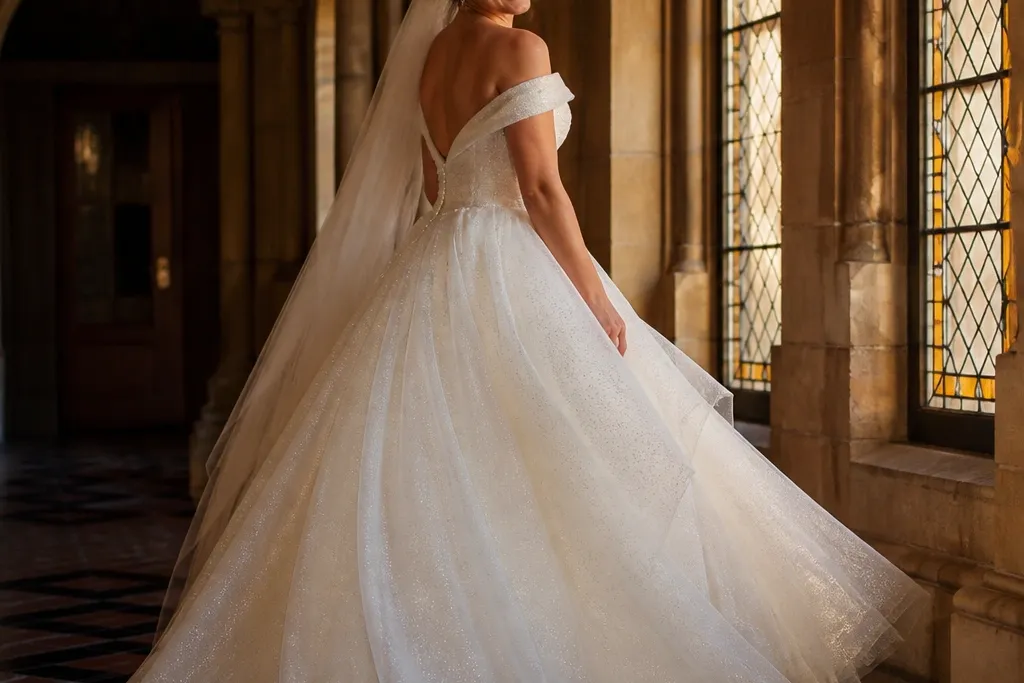
9. Off-Shoulder Tulle Princess Dress With Dramatic Bow Back
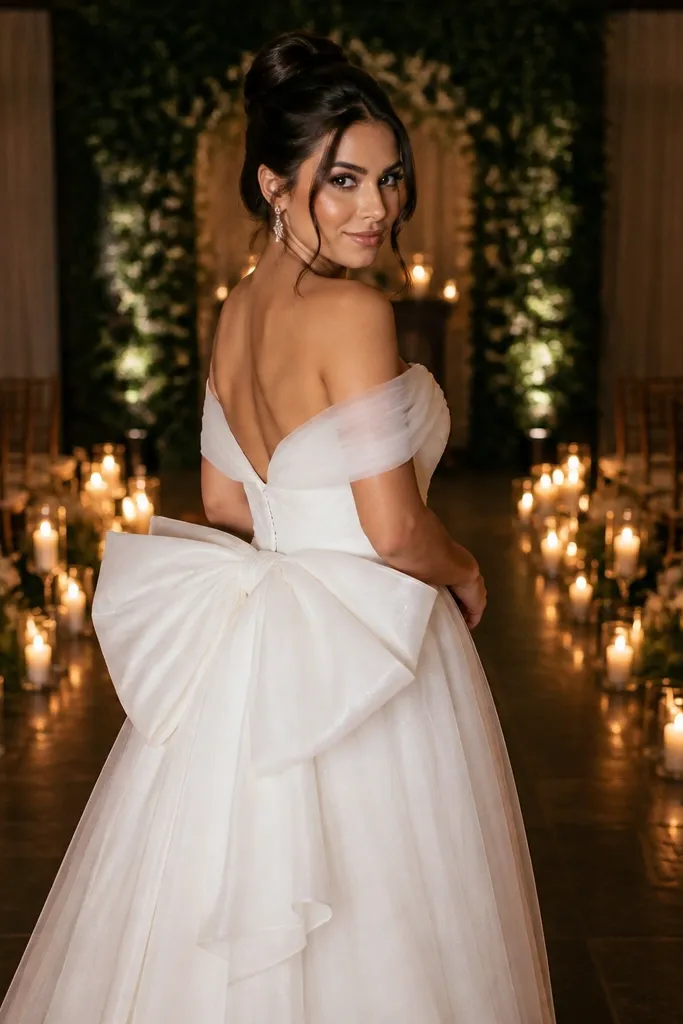
A dramatic bow back is a princess signature because it gives you a clear photo moment from behind. Off-shoulder tulle keeps the front soft and romantic while the bow adds structure at the back. The best versions use a dense bow base so it looks crisp and doesn’t collapse when you sit. This is ideal for brides who want their gown to look amazing in ceremony exits and reception entrances. It also photographs well in outdoor wind if the bow is weighted and not too flimsy.
Start by trying the dress while seated in the shop — the bow should not dig into your back. Then check that the off-shoulder neckline stays in place when you move. Finally, plan a veil that clears the bow so it doesn’t tangle or flatten the photo focal point.
Quick tipIf you’re wearing a long veil, choose a shorter attachment point so it doesn’t wrap around the bow.
Skip thisSkip bows made from the same thin tulle as the skirt — they flatten and look sad in photos.
10. Glitter-Tipped Cathedral Train Princess Gown
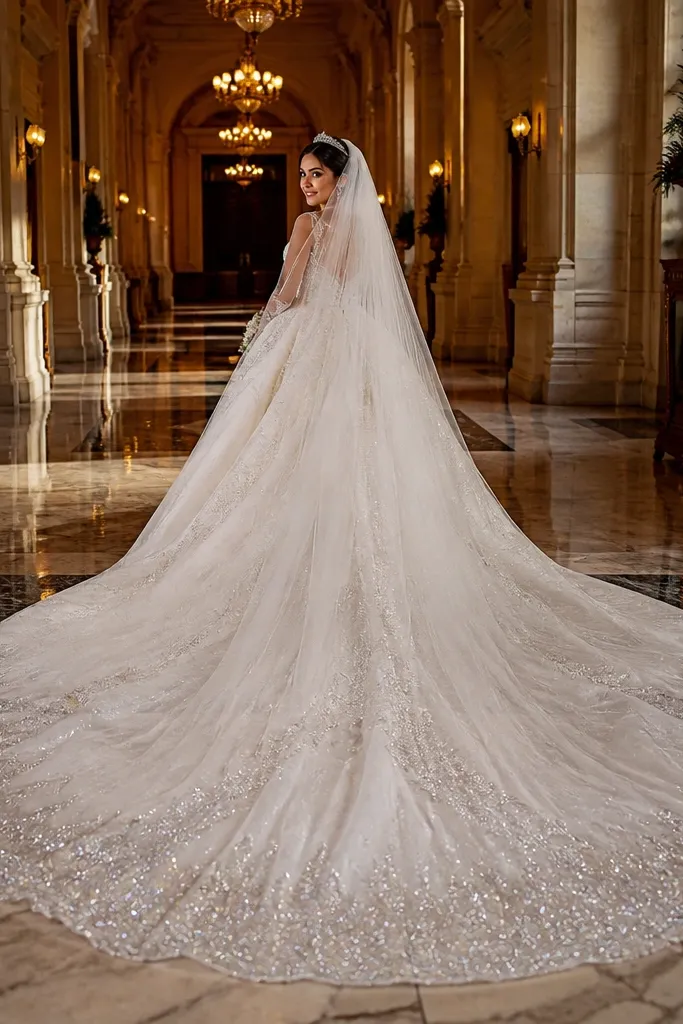
A cathedral train makes the dress feel royal immediately, but glitter-tipped hems keep it from looking too plain. The sparkle at the train edge creates a moving border in photos, especially when you walk away from the camera. This style is perfect for formal venues where you’ll have space for the train to spread. It suits brides who want a princess look with a clean, modern edge instead of heavy beadwork everywhere. Choose a train that’s long enough to be photographed without dragging in mud or on rough flooring.
Start by measuring the train length from the waist seam to the hem — make sure the venue can handle it. Then test the skirt path by walking slowly in the shop — you want the train to trail, not snag. Finally, ask about a bustle or train lifter so the train can be secured for dinner and dancing.
Plan for train protection if your venue has textured floors — use a fabric guard to prevent scuffs.
Avoid glitter that’s applied unevenly — it looks like accidental fallout in close-up photos.
11. Classic Corset Ballgown With Lace-Up Back and Tulle Skirt
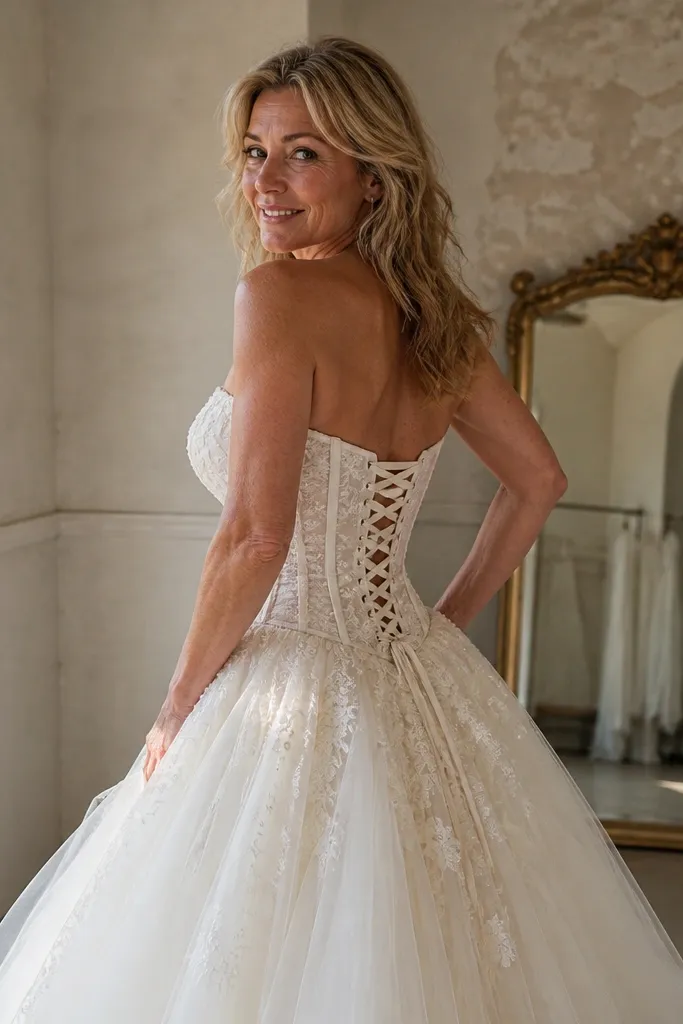
A lace-up back adds that old-school princess drama and makes fit adjustments easier. The corset front shapes the bodice cleanly, and the tulle skirt gives you volume that looks good from every angle. This style is especially flattering for brides who want a tight waist and a defined neckline. It’s also a practical choice for changes, since lace-up backs can be tuned during final fittings. The photos look best when the dress has a structured underlayer so the skirt doesn’t cling to your legs.
Start by checking the corset lacing — it should close smoothly without gaps. Then look for a skirt with multiple tulle layers or a crinoline understructure for shape. Finally, schedule your final fitting so the lace-up fit looks centered and the hem sits right with your shoes.
Take photos of the back lacing in the mirror during your appointment so you can see how it will look later.
Don’t choose a corset with decorative lacing only — it won’t adjust and it can look off-center.
12. Princess Gown With Floral Lace Bodice and Soft Chiffon Overskirt
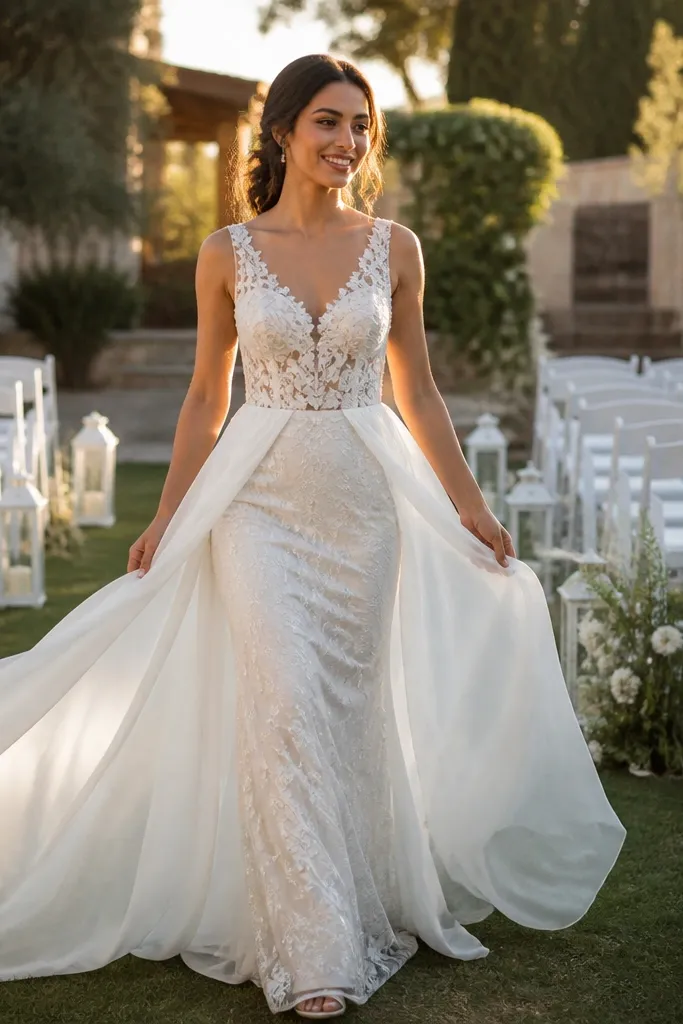
This is a princess look with a built-in photo trick: the chiffon overskirt creates movement when you turn. The floral lace bodice gives you that romantic bridal texture, while the chiffon keeps the overall silhouette light and floaty. It’s great for ceremonies where you want coverage at first, then a dramatic reveal for portraits. Choose it if you like the idea of a layered look but don’t want a heavy, full ballgown. It’s also forgiving in warm weather because chiffon doesn’t hold heat like dense tulle.
Start by confirming whether the overskirt is detachable or drapes over the base dress — you want control for photos. Then check that the lace bodice fits smoothly under the overskirt so it doesn’t bunch. Finally, practice how you’ll handle it during the ceremony and plan a simple way to remove it for the photo portion.
Quick tipAsk for a dress that has secure internal ties so the chiffon doesn’t shift during walking.
Skip thisSkip chiffon that’s too thin and see-through at the hem — it can look messy in bright daylight.
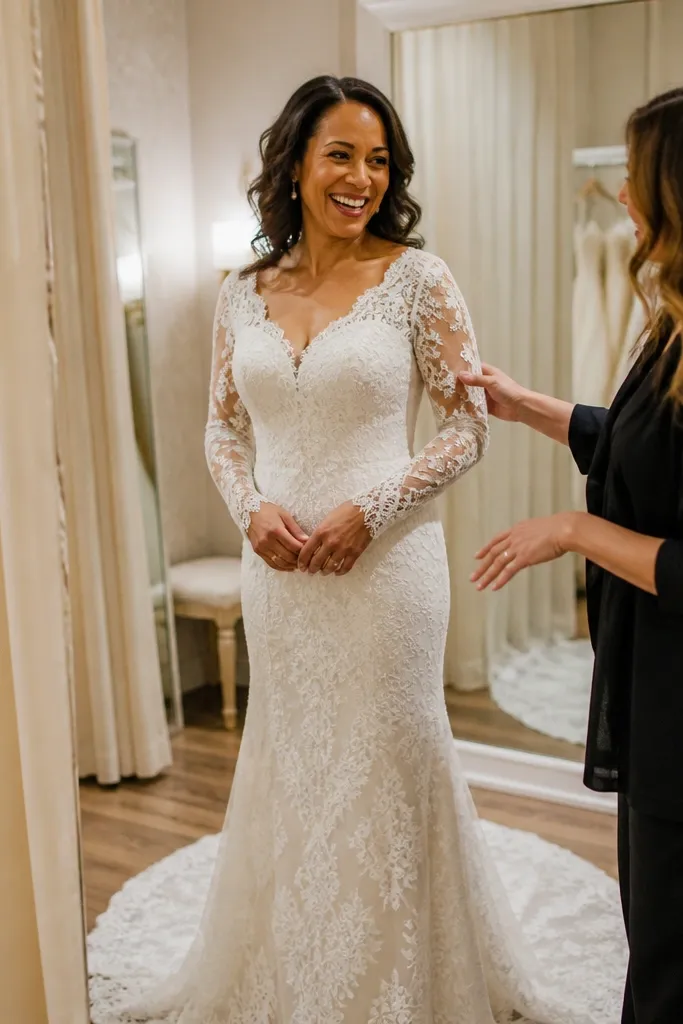
13. Princess Mermaid With Lace Corset and Subtle Flare
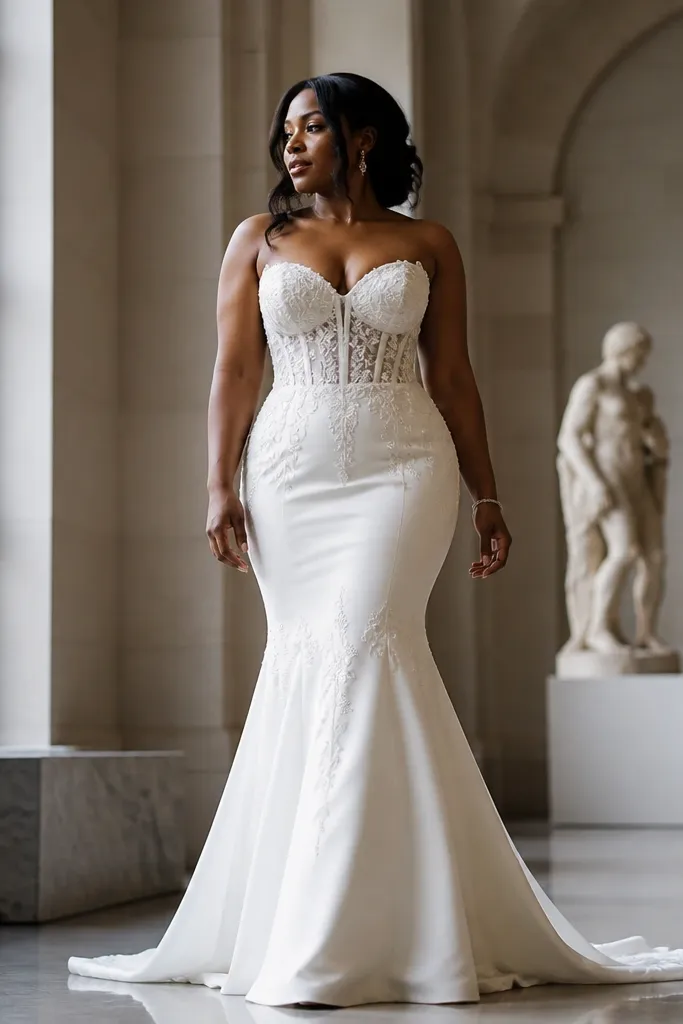
Mermaid princess dresses look dramatic because they hug the body and then flare at the knee, creating a strong photo line. A lace corset bodice adds structure and keeps the neckline crisp. The best versions use a subtle flare so you can walk without feeling trapped. This is ideal for brides who want a princess vibe but prefer a more figure-forward silhouette. It also photographs beautifully in indoor venues because the shape reads clearly under warm lighting.
Start by choosing a flare point that matches your comfort — try walking and stepping up a small stair in the shop. Then check that the lace corset has enough support so it doesn’t pull or gape when you move. Finally, plan for a hem that lands at the right spot in your shoes so the flare hits the camera correctly.
Quick tipBring shapewear that matches the dress’s paneling so the mermaid lines look clean in photos.
Skip thisAvoid mermaid dresses with too much stretch — they can cling and show lines under flash.
14. Princess Gown With Sabrina Neckline and Sparkly Tulle Skirt
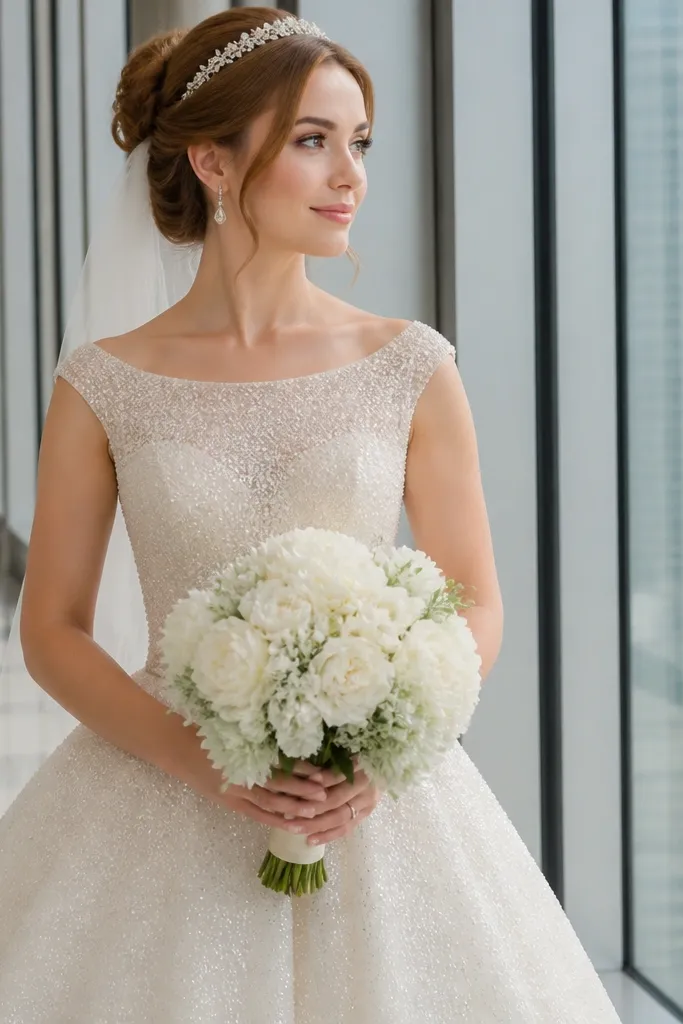
A Sabrina neckline is a clean, modern take on princess style, and it frames the face nicely for portraits. The sparkly tulle skirt adds the fairy-tale effect without covering the entire dress in heavy beading. This combo looks great when you want “princess” but still want the gown to feel fresh and not overly vintage. It suits brides who like a lighter feel and want movement in outdoor photos. Choose this when you want your skirt to be the photo star.
Start by checking that the sparkle is concentrated in the tulle layers, not scattered in a way that looks patchy. Then try the neckline and make sure the fabric lays flat at the collarbone area. Finally, ask about skirt lining so the sparkle doesn’t itch and the silhouette stays smooth in close-ups.
Quick tipIf your venue has strong sunlight, test how the sparkle reads by taking a quick photo on your phone in the fitting room.
Skip thisSkip Sabrina necklines with thin, unstable fabric — they can shift and look uneven in photos.
15. Princess Ballgown With Satin Bodice and Tulle Puff Sleeves
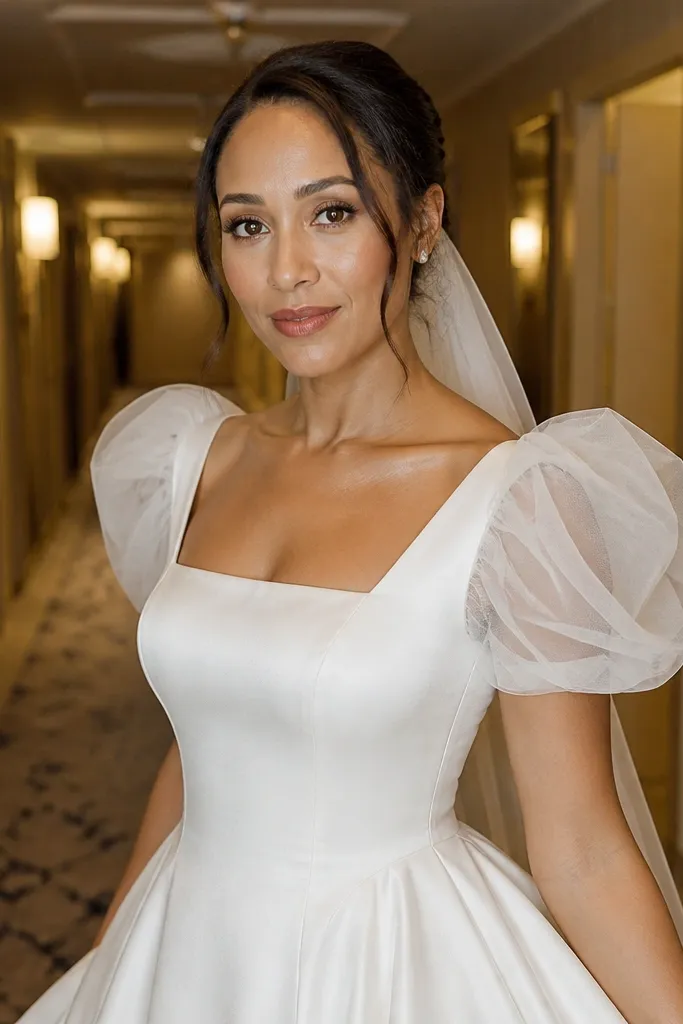
Puff sleeves scream princess, especially when they’re made from tulle that keeps its shape. A satin bodice balances the softness with a smooth, flattering front that shows off the waist. The ballgown skirt adds drama, but the sleeve volume gives your photos a second focal point that looks great in shoulder-up portraits. This is a strong choice for brides who want a romantic, slightly theatrical look. It photographs best with a veil that doesn’t cover the sleeves too much.
Start by checking the sleeve volume — it should sit away from your arm so it doesn’t cling when you lift your hands. Then test the bodice fit with a few arm positions to see if the satin pulls or wrinkles. Finally, plan for a bustle that keeps the skirt’s shape so the puff sleeves and full skirt look intentional in reception photos.
Quick tipChoose a veil with minimal width if you want the sleeves to stay visible.
Skip thisAvoid puff sleeves made from clingy satin — they lose shape and look flat.
16. Princess Gown With 3D Rose Appliqué at the Waist
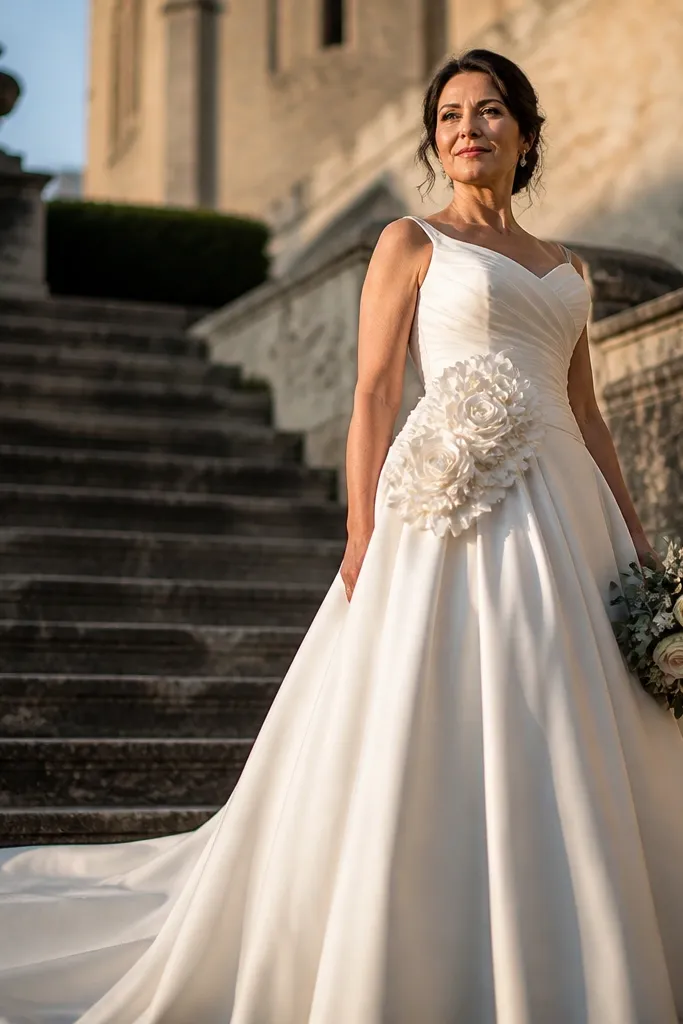
Placing 3D rose appliqué at the waist is a smart way to create a princess focal point without covering the entire dress. It draws attention to your smallest area, then the skirt can stay simpler and more photogenic. The roses should be layered and raised so they cast tiny shadows in photos, adding depth. This style is great for brides who want romantic texture but don’t want a heavy, bead-covered look. It works in both indoor and outdoor settings because the waist detail reads even in medium-distance shots.
Start by finding a dress where the roses sit directly at the waist seam, not higher on the ribcage. Then check the base fabric under the appliqué so it doesn’t pucker. Finally, ask about hemming plans early — raised appliqué should not be cut or flattened when you adjust length.
Keep your jewelry simple so the roses stay the star in close-ups.
Skip appliqué that looks glued on with no depth — it can look like a printed motif in photos.
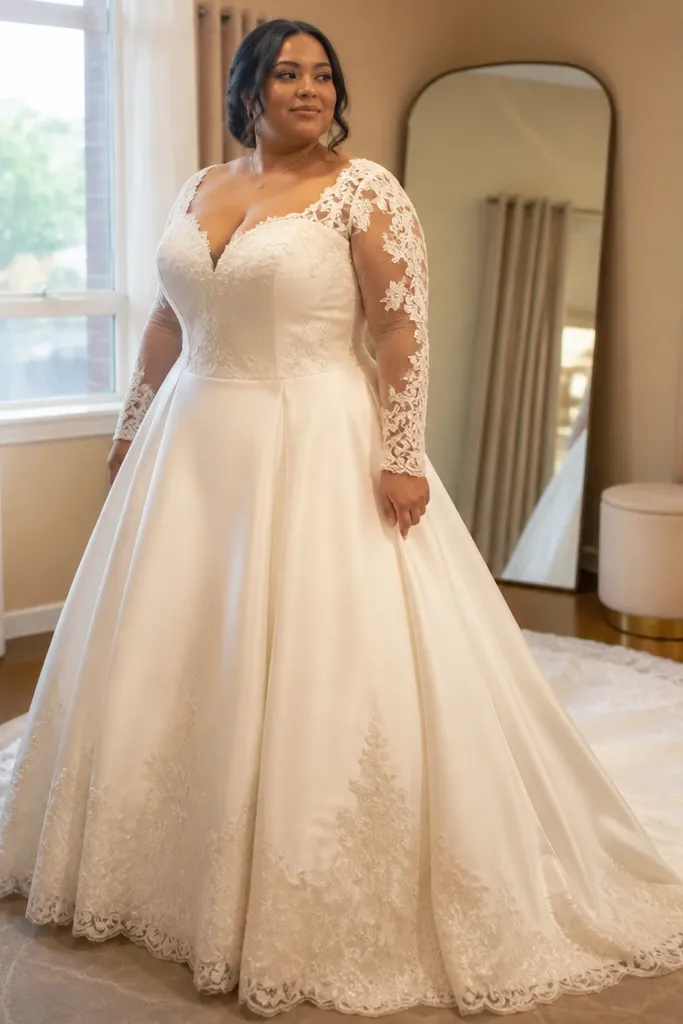
17. Princess A-Line With Lace Scalloped Hem and Soft Train
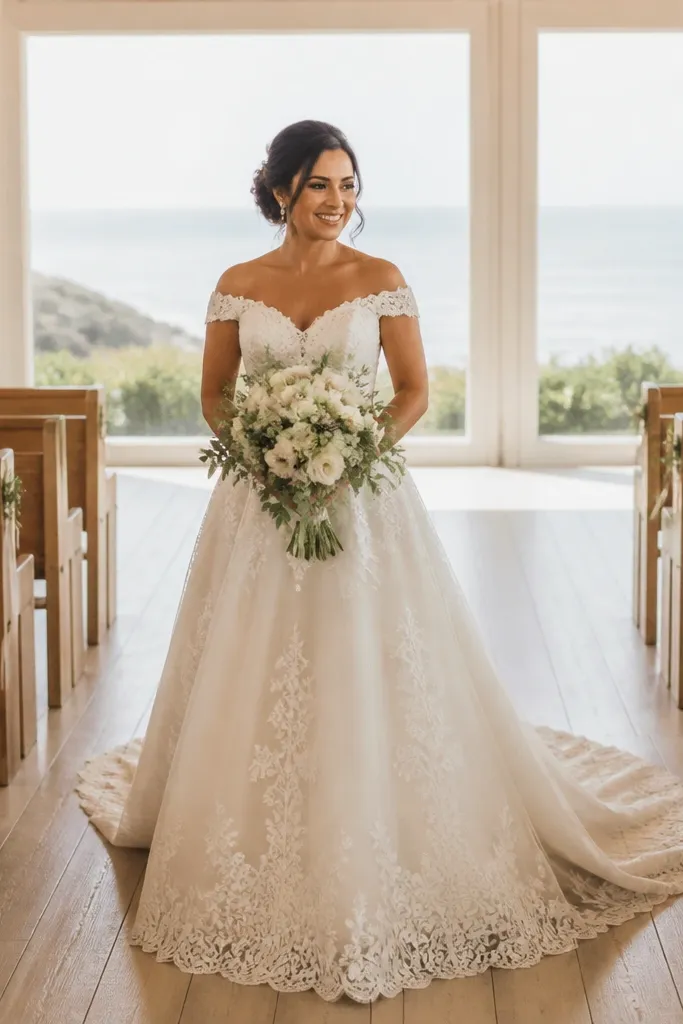
A-line with a scalloped lace hem gives you princess romance while keeping the dress manageable for walking and dancing. The lace edge creates a clean border that shows up beautifully when you move, especially in photos where the camera catches the lower half. A soft train adds drama without the hassle of a long cathedral train. This is a good pick if your venue has limited space for a huge skirt spread. It also looks great in cooler weather photos because the hem detail stays crisp in daylight.
Start by choosing a hemline that doesn’t drag — ask for the dress to skim the floor, not pool. Then check the scalloped lace edge for symmetry so it doesn’t twist when you walk. Finally, confirm how the train is handled — a simple lift or short train is easier to manage at receptions.
Quick tipIf you’re outdoors, request a hem guard so the lace edge doesn’t pick up dust and scuffs.
Skip thisAvoid scalloped hems that are too heavy — they can drag and distort the shape in photos.
18. Princess Gown With Pearl-Trim Cap Sleeves and Tulle Skirt
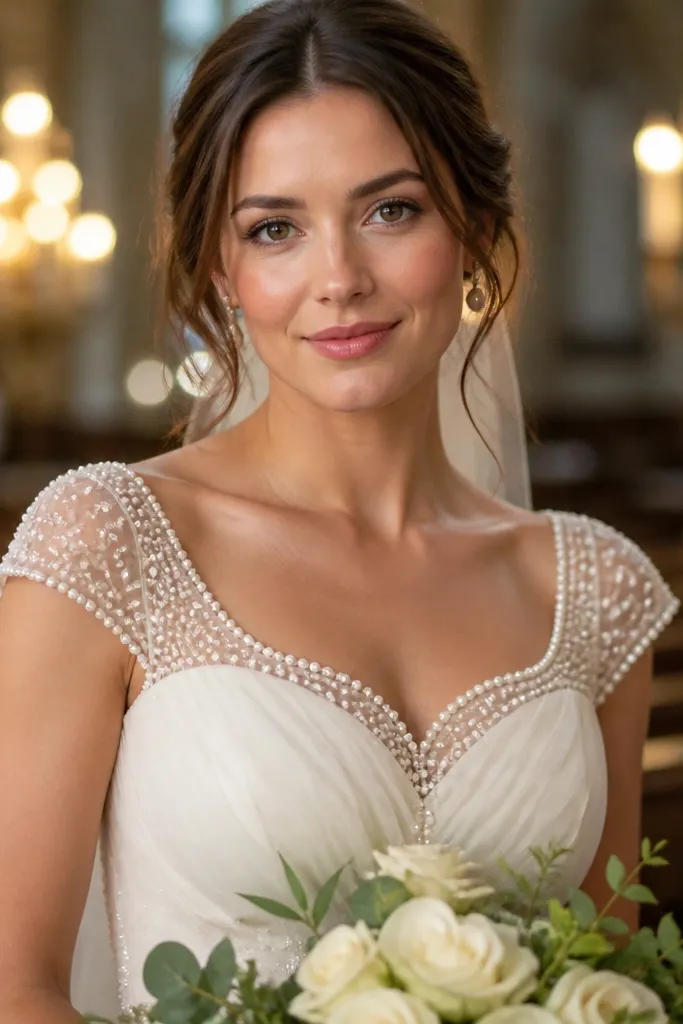
Pearl trim on cap sleeves makes the dress look classic and photo-ready without needing a fully beaded bodice. The pearls add small points of light along the neckline and shoulders, which is exactly where portraits focus. A layered tulle skirt keeps the princess shape and creates movement when you walk. This is a great option for brides who want a refined, clean princess look rather than a heavily embellished one. It’s also comfortable for most seasons because the skirt is airy.
Start by checking that the pearls are stitched securely so they don’t shift during the day. Then try the dress in natural light if the boutique has a window — you want the pearl trim to look bright, not dull. Finally, plan for a veil that doesn’t cover the pearl sleeves; short or shoulder-length veils work well for this style.
Quick tipBring a small steamer for final prep so the tulle doesn’t look wrinkled under the pearls.
Skip thisSkip cheap pearl trim that looks like plastic — it can look flat and fake in flash photos.
19. Princess Ballgown With Satin Waist Sash and Tulle Skirt
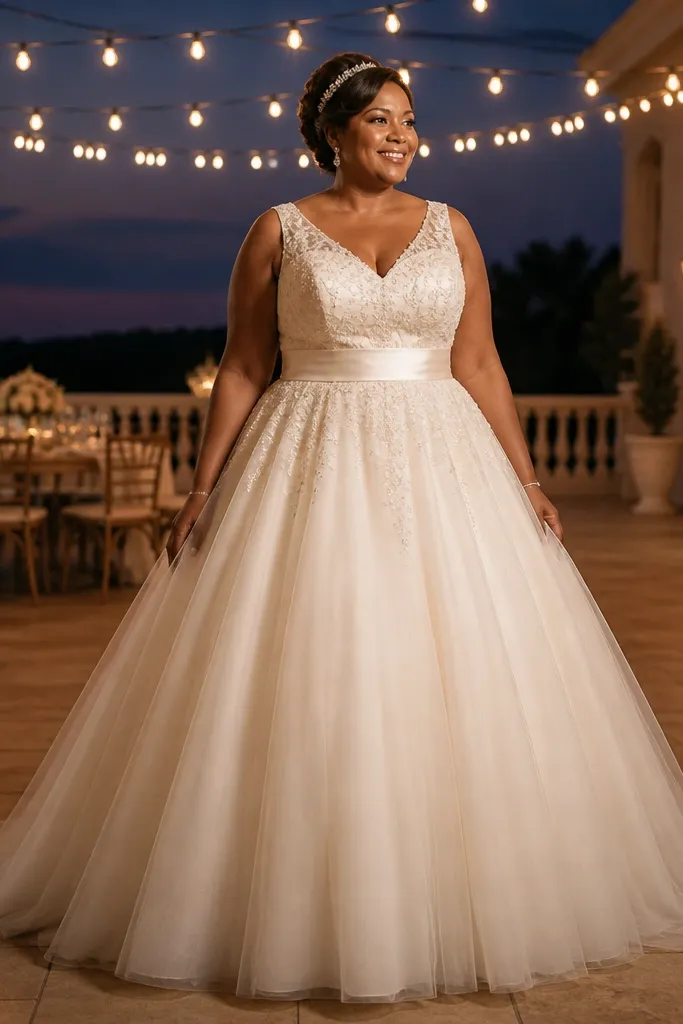
A satin waist sash gives you a princess look with a clean, tailored waistline. It visually separates the bodice from the skirt, which makes your shape read clearly in full-length photos. The tulle skirt does the rest — it creates volume and soft movement without needing heavy lace coverage. This is best for brides who like a defined waist and a lighter, more airy skirt than heavy beadwork. It also looks great with a simple veil because the sash already creates detail.
Start by choosing the sash width — a medium-width sash (about 2-3 inches) looks balanced and doesn’t swallow the waist. Then ensure the sash sits flat and doesn’t roll, since rolling makes the line look messy in pictures. Finally, ask for how the sash ties — you want it to sit centered every time, especially for standing and walking shots.
Quick tipWear a strapless or low-profile bra so the sash line stays smooth under the bodice.
Skip thisAvoid sashes that are too thin — they disappear in photos and look like a belt.
20. Princess Gown With Floral Lace Bodice and Tapered Organza Skirt
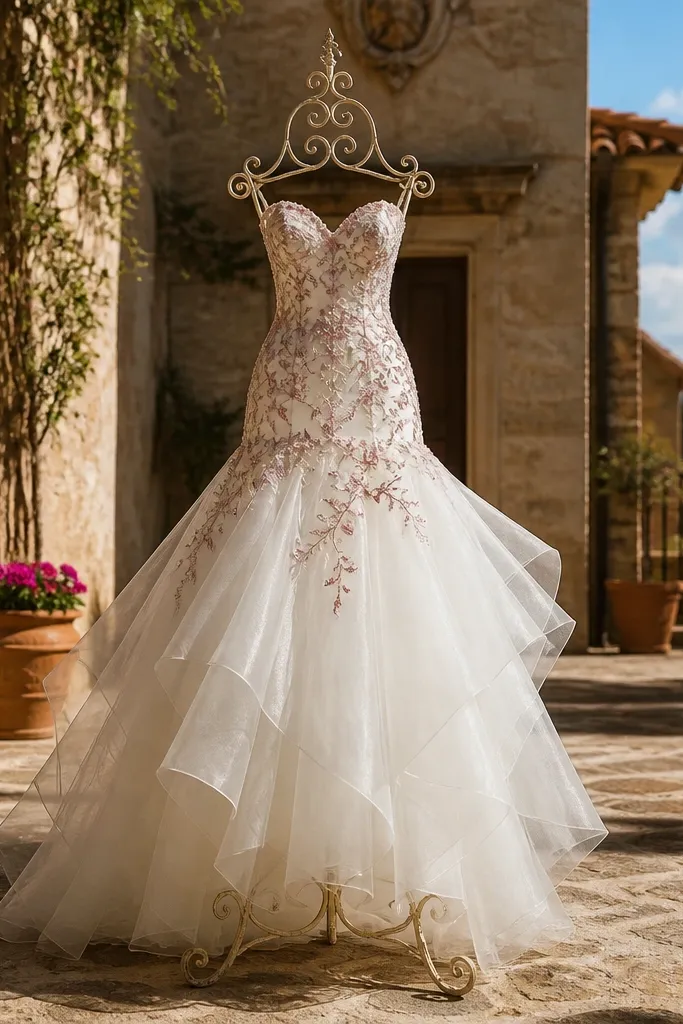
This dress balances romance and structure with a lace bodice and a tapered organza skirt that still looks bridal and princessy. The lace gives texture at the top, while organza creates that crisp, airy volume at the skirt edge. It’s ideal if you want a princess silhouette but hate the feeling of a massive ballgown. Photos look sharp because the organza holds its outline instead of collapsing. It’s a good fit for spring weddings and indoor receptions where you’ll have good lighting.
Start by checking how the skirt tapers — you want a gradual flare so it doesn’t look like a sudden cut. Then test the movement by walking and turning slightly; organza should flutter, not cling. Finally, choose a veil that complements the lace texture without overwhelming it — a simple, sheer veil works best.
If you’re planning portraits on stone stairs or uneven ground, consider a shorter train to prevent snagging.
Skip organza skirts that look too stiff — they can restrict movement and show creases.
21. Princess Gown With Sweetheart Neckline and Waterfall Ruffles
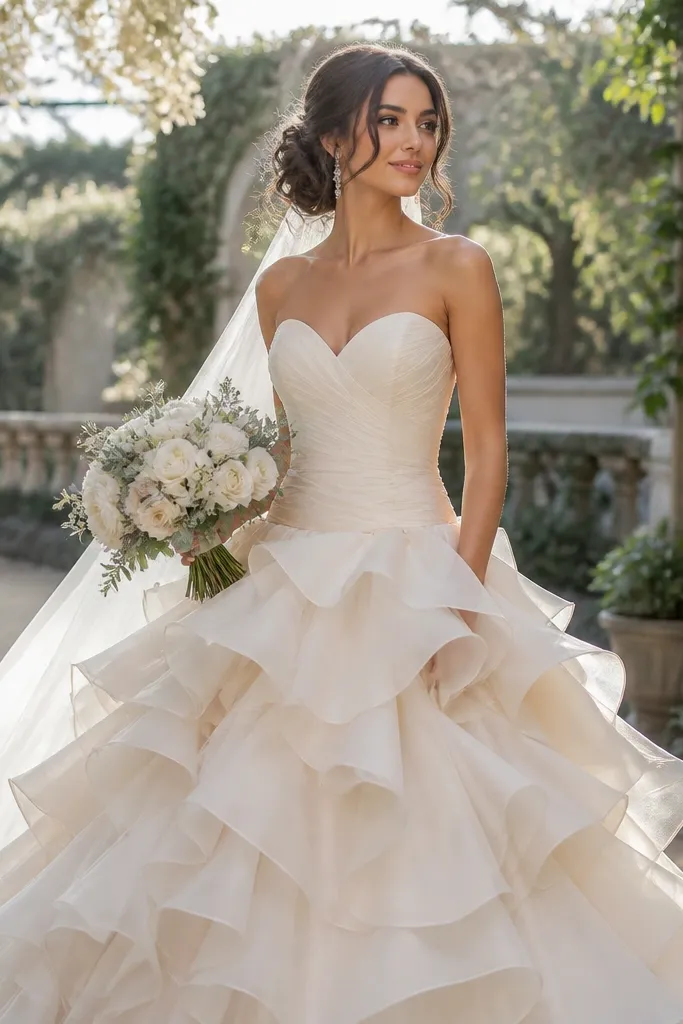
Waterfall ruffles give you princess drama with a flattering flow — they create motion even when you stand still. The sweetheart neckline keeps the face area soft, and the ruffles add texture that photographs well in both bright sun and indoor light. Choose ruffles with clean edges and consistent spacing so the skirt looks intentional, not messy. This is a great choice for brides who want a romantic princess look but prefer movement over heavy structure. It’s especially photogenic for outdoor ceremonies where the breeze can make ruffles lift.
Start by asking for the ruffles to be layered over a base that prevents twisting — twisting shows up fast on camera. Then check the neckline support so the sweetheart doesn’t stretch when you move. Finally, plan your hem and ruffle placement with your shoes, because the ruffles should land at the right height to frame your legs in photos.
If you’re worried about breeze, choose ruffles with a slightly heavier fabric so they don’t fly upward.
Avoid ruffles that start too high on the skirt — they can shorten the silhouette in full-length photos.
22. Princess Ballgown With Lace-Up Corset Front and Off-Shoulder Tulle
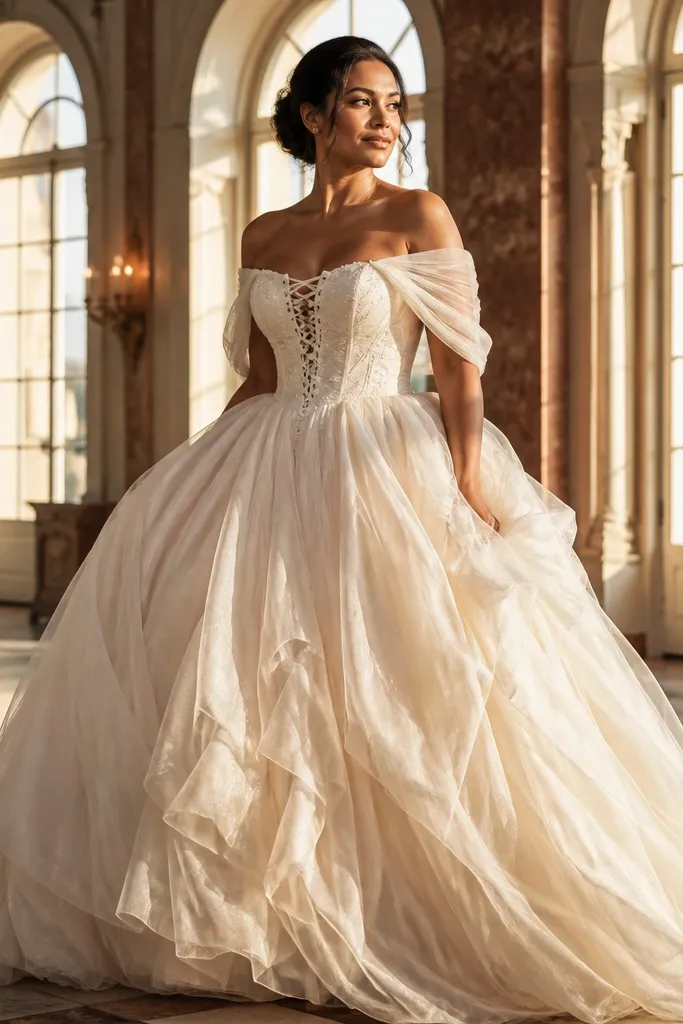
This is a classic princess combo: a corset front for a defined waist and off-shoulder tulle for a soft, romantic neckline. The lace-up detail adds visual interest and helps the fit stay centered through the day. The full skirt creates the storybook silhouette, while tulle at the shoulders frames your face in portraits. It’s best for brides who want a dramatic, traditional look that still feels light and airy. The photos look especially good with a veil that sits behind the shoulders so the neckline stays visible.
Start by checking the corset front seams — they should lie flat and not create wrinkles across the bust. Then test the off-shoulder neckline by moving your arms up and down. Finally, plan a bustle that lifts the skirt without pulling on the tulle sleeves so everything stays symmetrical in the back photos.
Choose a veil attachment that doesn’t interfere with the corset straps so the neckline stays crisp.
Don’t pick off-shoulder tulle that’s too loose — it slides and ruins the princess shape.
23. Princess Gown With Hidden Pockets and Lace Appliqué Skirt
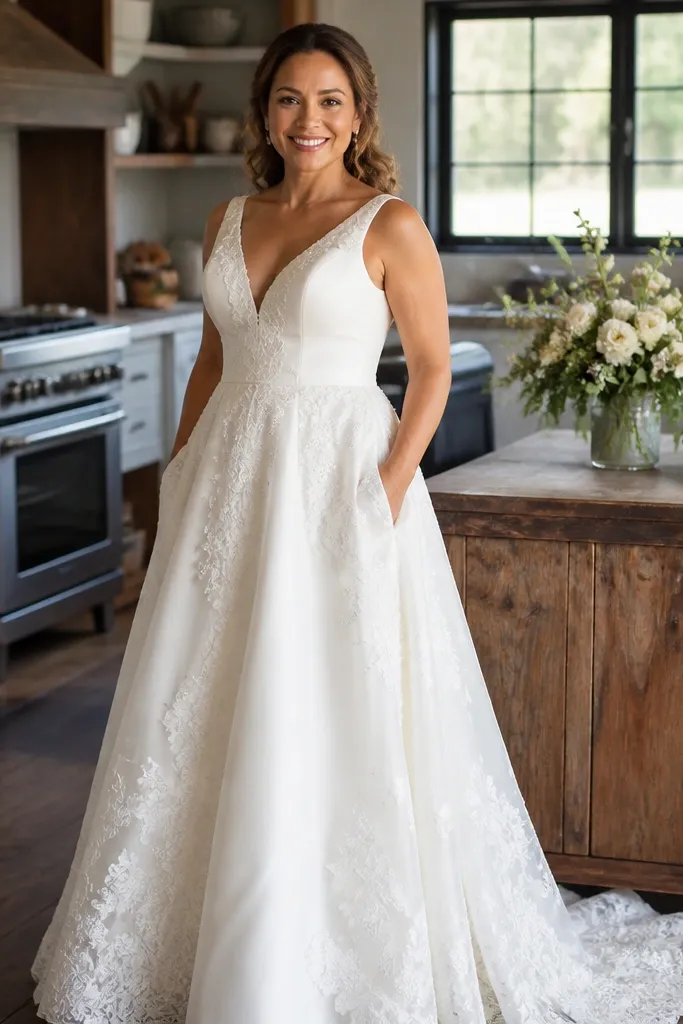
Pockets aren’t glamorous, but they matter — and they’re the kind of detail that keeps princess dresses feeling practical all day. Pairing lace appliqué on the skirt with a clean bodice creates a photo-friendly texture trail from waist to hem. The pocket opening should be hidden in the side seam so it doesn’t distort the silhouette. This style is best for brides who want a classic princess look but hate juggling a clutch while trying to enjoy photos. It’s also great for receptions because you can keep essentials close without adding bulk.
Start by asking the seamstress or boutique if the pockets are sewn into the lining and sit at the side seam — you want them secure. Then check the skirt drape when you stand and when you sit so pocket placement doesn’t pull fabric. Finally, choose your veil and accessories with restraint so the lace appliqué stays the focal point.
Quick tipPack a few essentials in the pockets for photos: lip balm, hair pins, and a small tissue pack.
Skip thisAvoid pockets that pull the side seam — you’ll see it as a tug line in full-length shots.
24. Princess Mermaid With Scalloped Lace Train Detail
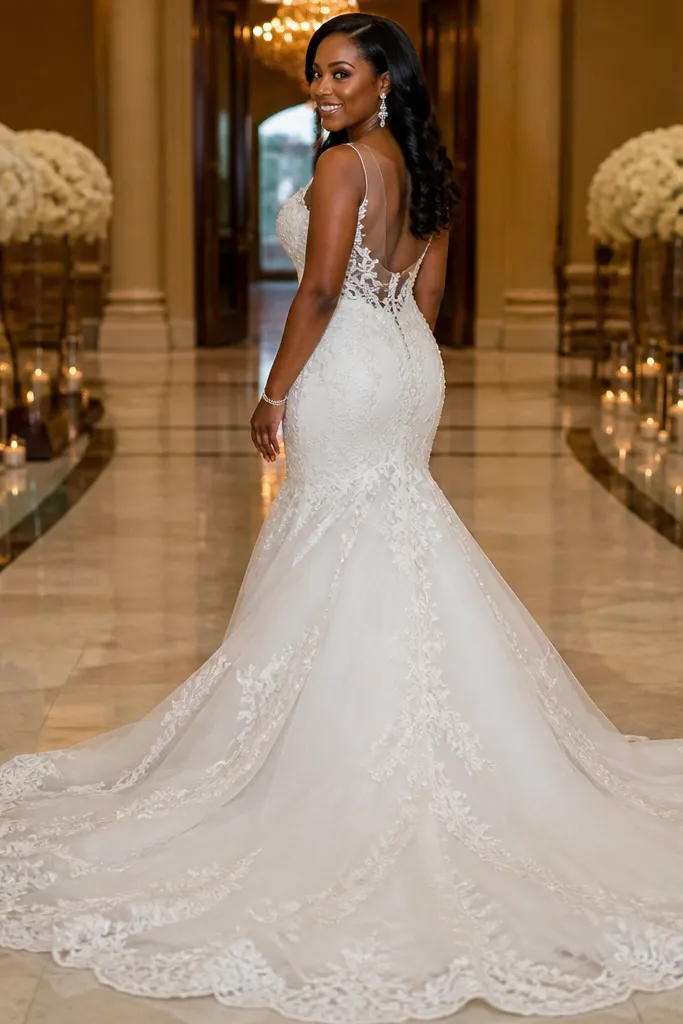
A mermaid silhouette plus scalloped lace train detail gives you princess drama without a huge skirt. The scalloped edge adds softness and depth at the hem, which is where cameras love to catch texture. Choose a train that’s long enough for portraits but not so heavy that it drags and scuffs. This dress suits brides who want a sleek princess look with romantic lace framing at the bottom. It’s especially flattering in indoor venues with clean floors and controlled lighting, since the train detail stays sharp in photos.
Start by choosing a flare that lets you walk — ask to step forward and take a few turns in the shop. Then check that the lace train detail is stitched evenly and doesn’t twist to one side. Finally, plan for hem and train management with your shoes so the scallops land cleanly at the right height.
Quick tipIf you’re worried about scuffs, ask for a protective sole or fabric guard on the train hem.
Skip thisSkip scalloped lace that’s too heavy — it can drag and distort the mermaid line.
25. Princess Gown With Crystal-Embroidered Bodice and Matte Tulle Skirt
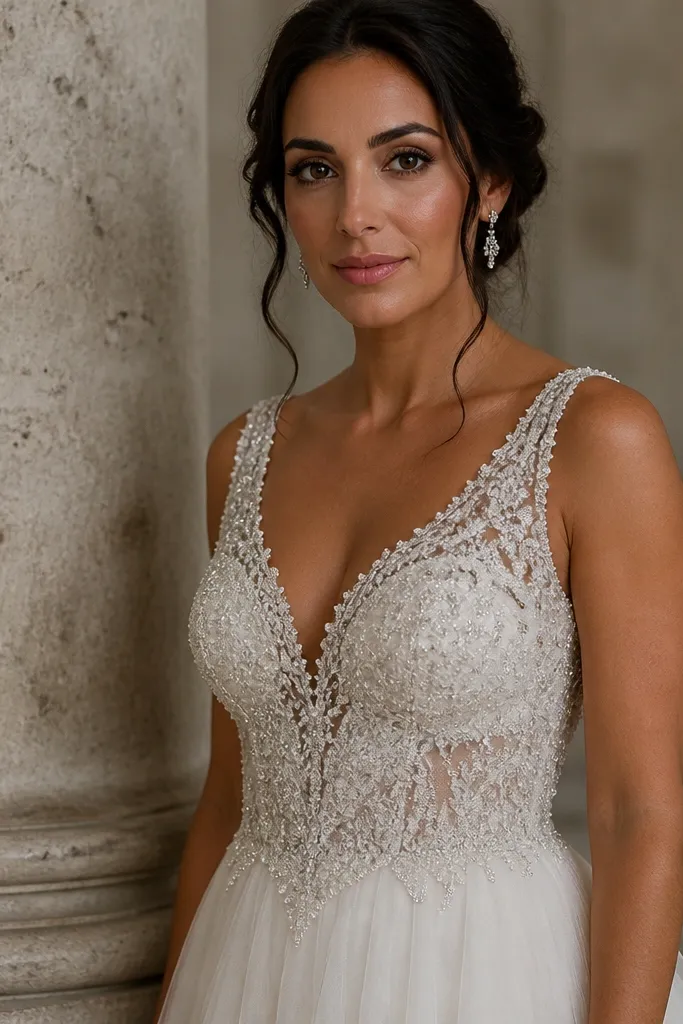
Crystal-embroidered bodices sparkle in a controlled way, while a matte tulle skirt keeps the overall look soft and not overly shiny. This combo reads like luxury in photos because the sparkle is concentrated where the camera focuses — your face and upper body. A matte tulle base also reduces the “cheap glitter” feel that can happen when everything is shiny. This is a smart choice for brides who want princess glamour with a refined look. It works well for both indoor and outdoor portraits because the bodice catches light without washing out.
Start by checking the sparkle coverage — you want even embroidery, not clumped crystals. Then test the neckline and straps so they don’t feel too heavy or sag under the crystal weight. Finally, ask for a matte tulle layer that holds shape, and plan your veil so it doesn’t steal attention from the bodice embroidery.
Quick tipBring a white phone flashlight to the fitting room — it helps you see how the embroidery flashes without harsh room lighting.
Skip thisAvoid crystal bodices that feel scratchy — irritation shows in photos when you keep adjusting.