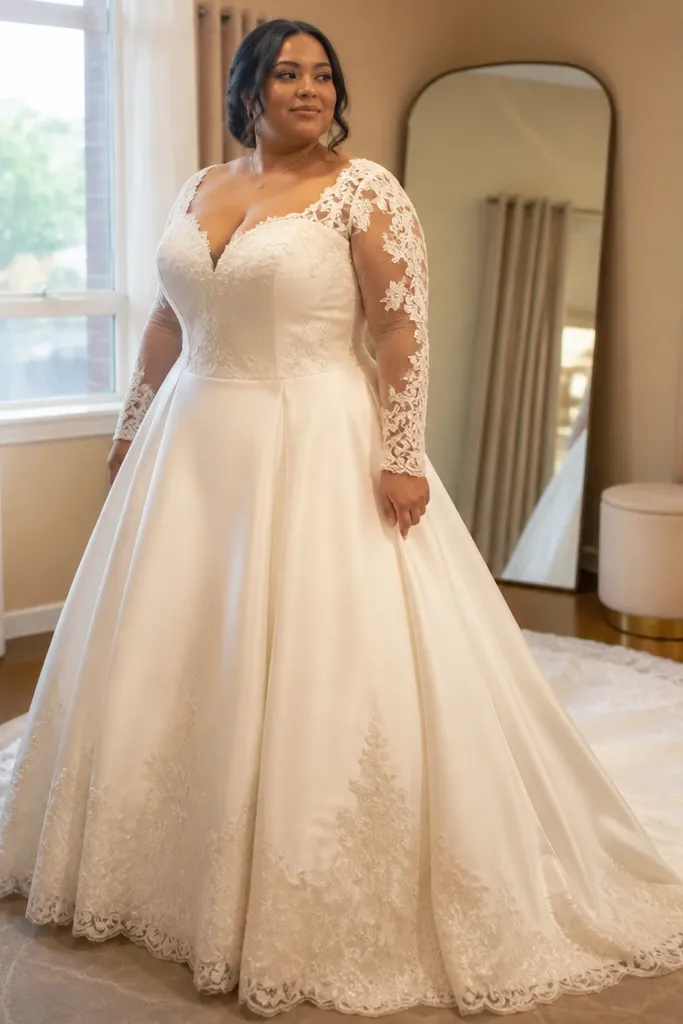
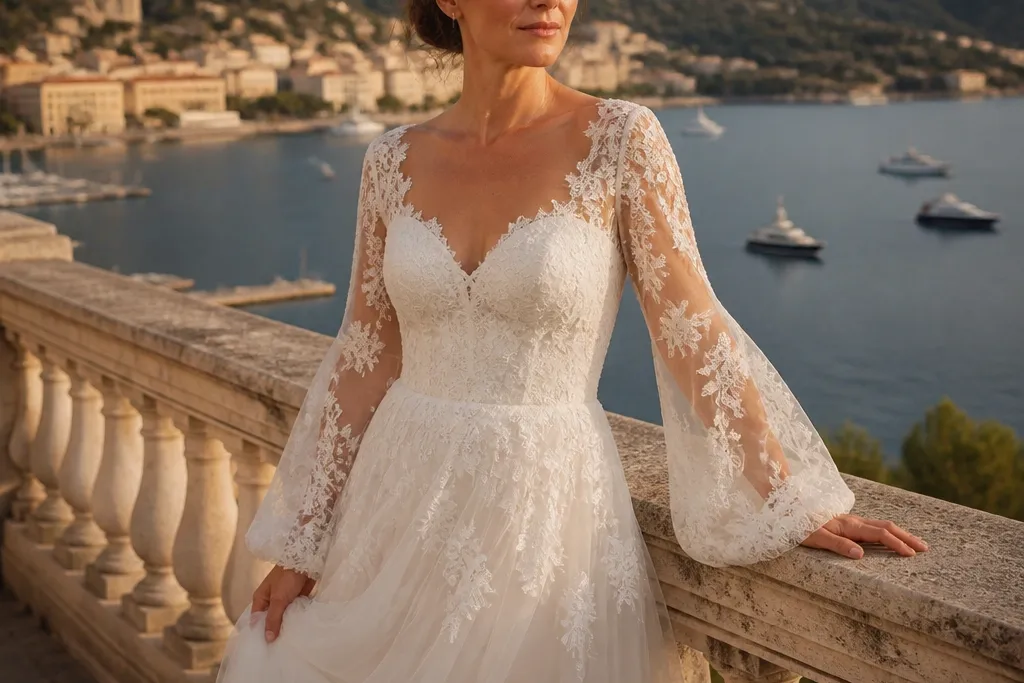
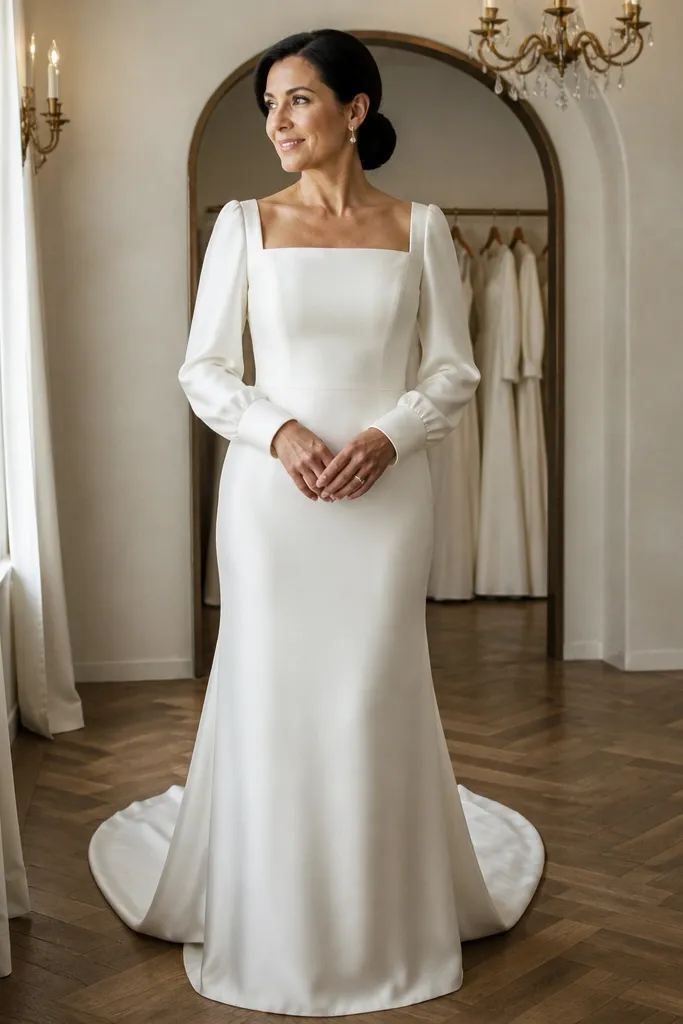
1. Illusion Lace Bishop Sleeves with a Soft A-Line Skirt
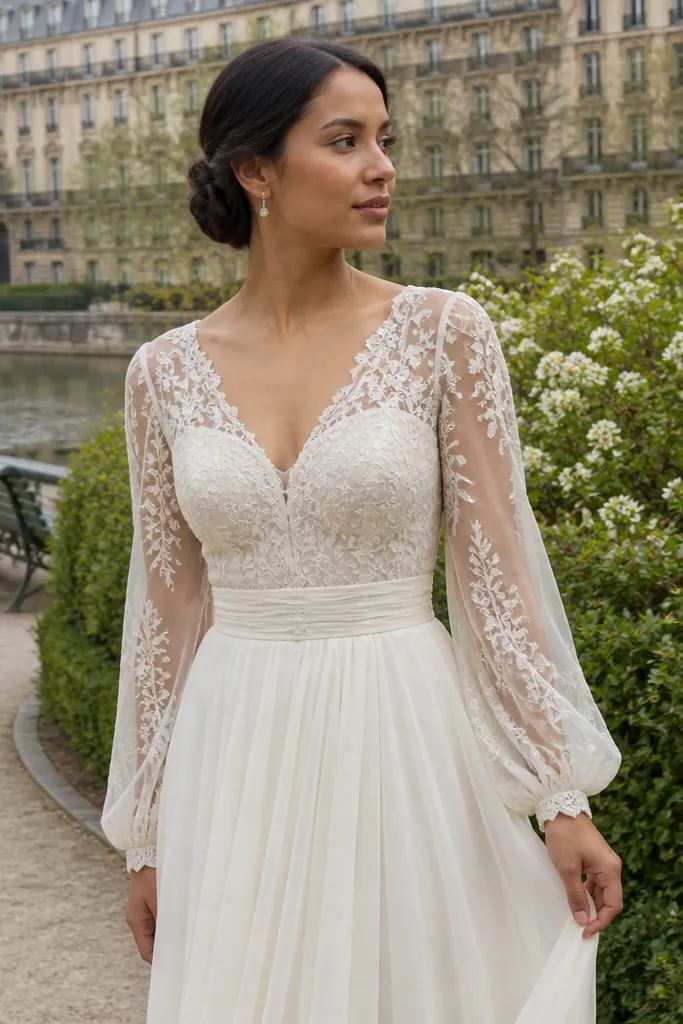
Bishop sleeves look elegant because they add drama at the arm without boxing you in like a full coat sleeve. The key is the illusion layer: sheer tulle or mesh that lets your skin tone create a natural line from shoulder to wrist. Pair it with an A-line skirt so the volume stays lower and the top stays airy. In photos, the sleeves create movement when you walk, and lace catches warm light in a way that reads “careful” rather than “busy.”
Start by choosing an illusion base that matches your skin tone — not bright white — so the sleeve edge disappears. Then pick lace placement that starts near the shoulder seam and grows toward the cuff, so your arm looks longer. Finally, ask for a sleeve length that lands near the wrist bone, not mid-hand, which keeps photos clean and avoids snagging on jewelry.
If you’re wearing a veil, keep it off the sleeve area so lace doesn’t tangle in wind.
Skip bishop sleeves with thick netting that creates obvious horizontal bands across the bicep.
2. Matte Satin Elbow Sleeves with a Straight Neckline
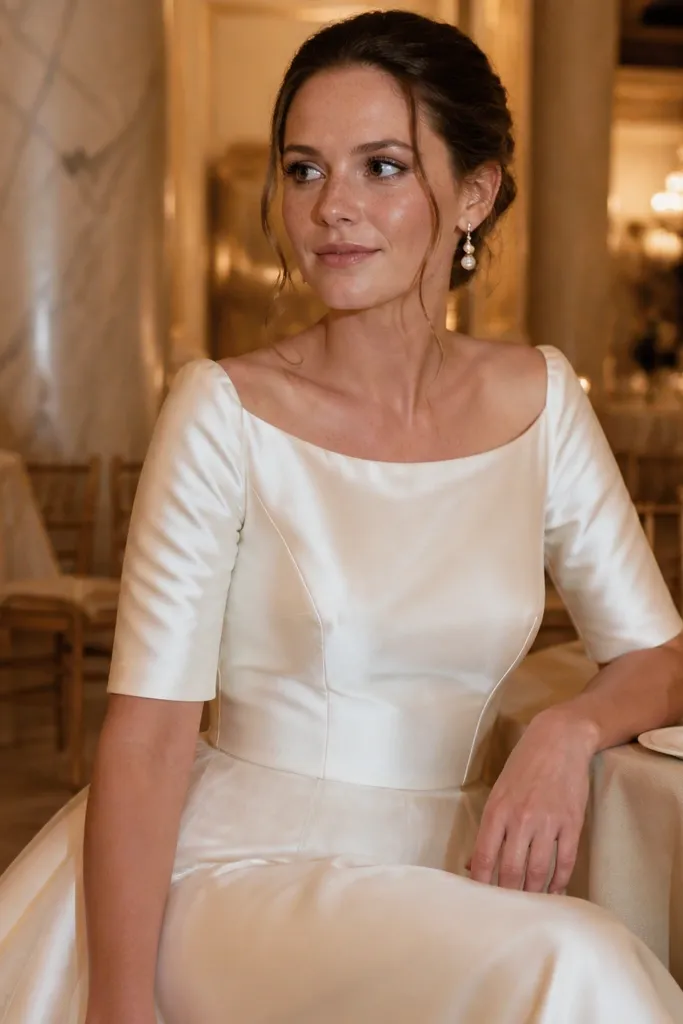
Elbow sleeves in matte satin give a refined, editorial look because the fabric holds shape and shows clean edges. A straight neckline keeps the face framed and makes the sleeve placement feel intentional. This style is especially elegant for receptions where you’ll be seated a lot — the sleeve sits neatly and doesn’t collapse. It also photographs well under flash because satin reflects in controlled highlights, not sparkly glare.
Start with a dress fabric that is not glossy — matte satin or light duchess satin reads expensive without looking shiny. Then choose sleeves that end at the elbow crease, so your arm line looks smooth when you raise your hands. Finally, get the sleeve opening tailored to fit snugly at the upper arm, so it doesn’t gap when you turn.
Bring a strapless bra or smoothing longline option to fittings so the sleeve fit isn’t thrown off by a bulky underlayer.
Avoid elbow sleeves that are too wide at the hem — they look like separate fabric panels.
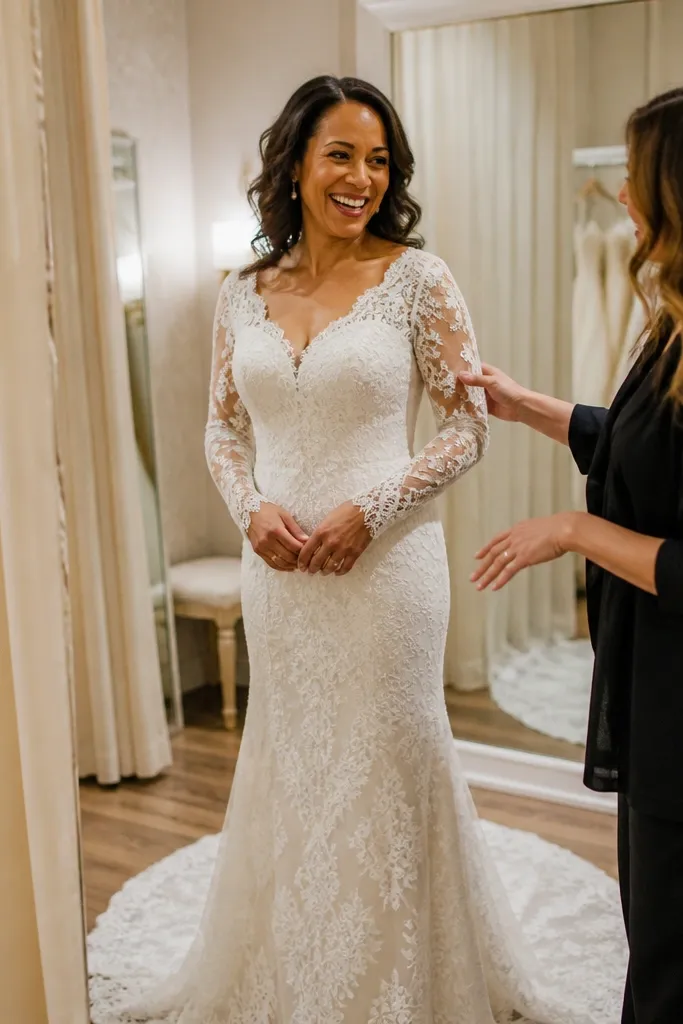
3. Long Sheer Lace Sleeves with a Sweetheart Corset Bodice
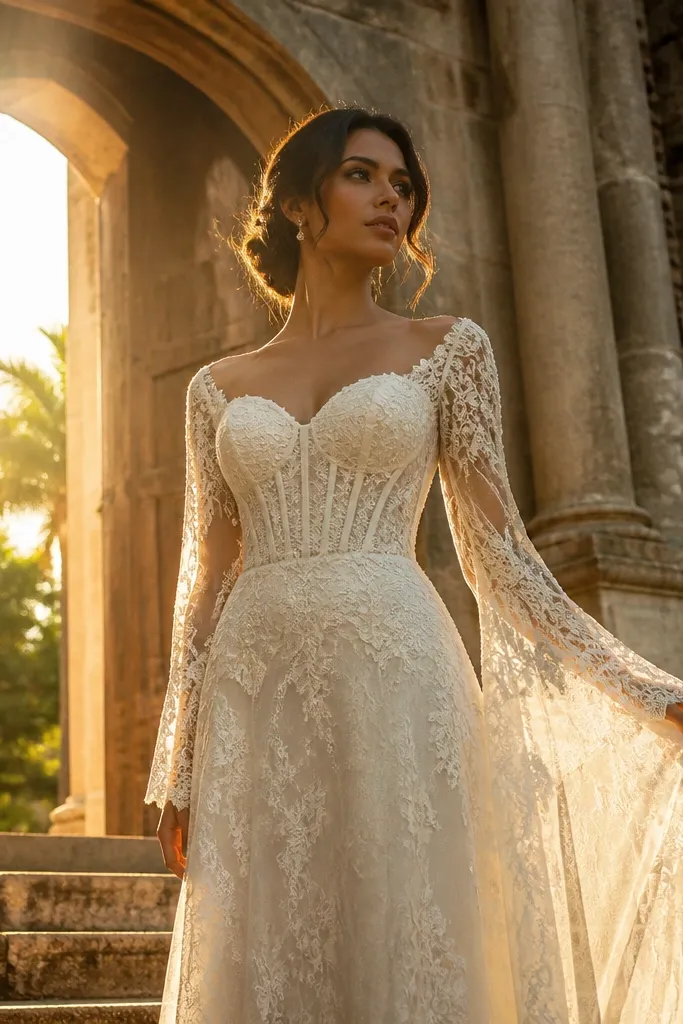
Sheer long lace sleeves make an elegant style because they add coverage while keeping the torso visually light. A sweetheart corset bodice gives the shape and the lace adds texture without hiding your waistline. In photos, the lace creates a soft halo effect around the arms and draws attention to your face. This is a strong choice if you want classic romance but still want a modern, photo-friendly silhouette.
Start by ensuring the lace pattern is denser at the forearm and more spaced near the upper arm, so the sleeve doesn’t look heavy. Then choose a corset bodice with boning or structured seams so the neckline stays crisp in close-ups. Finally, ask for a sleeve underlayer that doesn’t shift — a smooth lining stops the lace from wrinkling when you sit.
Quick tipPick a bracelet-free sleeve cuff if you’re wearing a statement necklace, so your hands don’t compete with the neckline.
Skip thisSkip opaque lace sleeves — they read like a jacket and flatten your shape.
4. Capped Lace Sleeves with a Square Neckline
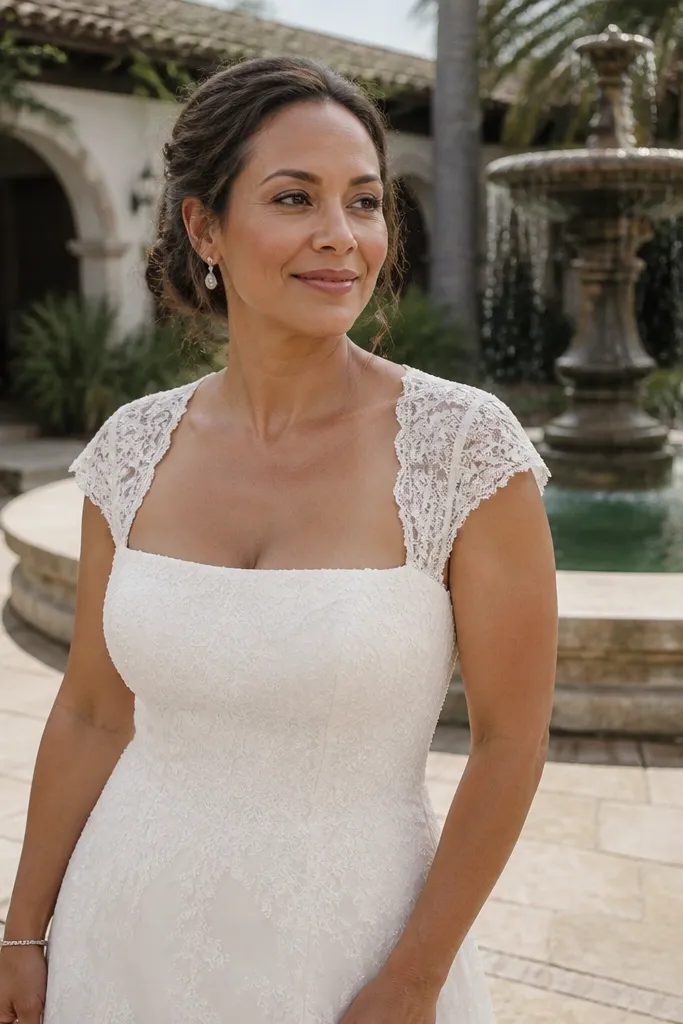
Capped lace sleeves look elegant because they cover just enough to soften the shoulder line while keeping your arms visible. A square neckline adds structure and makes the whole upper half feel architectural. This combo is great for summer weddings where you want coverage for photos but don’t want full sleeves in heat. Lace caps also photograph beautifully in overhead shots because they sit high and frame the collarbone.
Start by checking the cap height in relation to your shoulder seam — it should sit slightly above the arm crease. Then choose lace that matches the dress fabric tone, not a darker contrast, so it reads cohesive. Finally, tailor the sleeve edge so it lies flat; any curling at the top edge shows up fast in pictures.
If you’re getting hair up, avoid sleeves with a lot of lace at the shoulder if your veil comb sits there too.
Don’t pick capped sleeves that are too long into the upper arm — they turn into “half sleeves” that look unfinished.
5. French Lace Half-Sleeves with a Column Dress
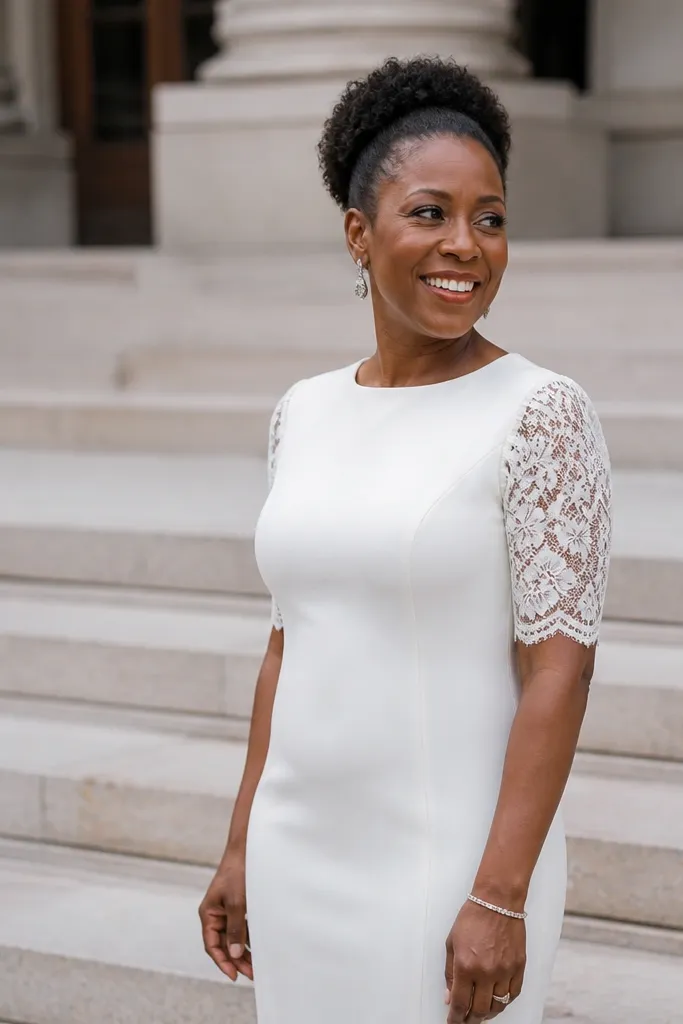
Half-sleeves can look elegant when they end at mid-bicep and keep the rest of the arm uncovered. French lace works because it has fine patterning that looks delicate up close, and the sleeve sits like a fitted detail rather than a separate garment. A column dress keeps the silhouette sleek, so the lace becomes the focal point. This style is ideal for city venues and indoor ceremonies where clean lines matter.
Start by choosing a sleeve length that hits mid-bicep, not near the elbow, so your arm looks longer. Then pick lace with repeating motifs that don’t distort when the dress is tailored to your waist and hips. Finally, make sure the sleeve seam aligns with your natural arm crease — misaligned seams create visible wrinkles.
If you’re wearing a backless dress, keep the sleeve lace pattern light so your back detail stays the star.
Skip half-sleeves that are loose and drapey — they look like a shrug in photos.
6. Organza Puffed Sleeves with a Fitted Waist
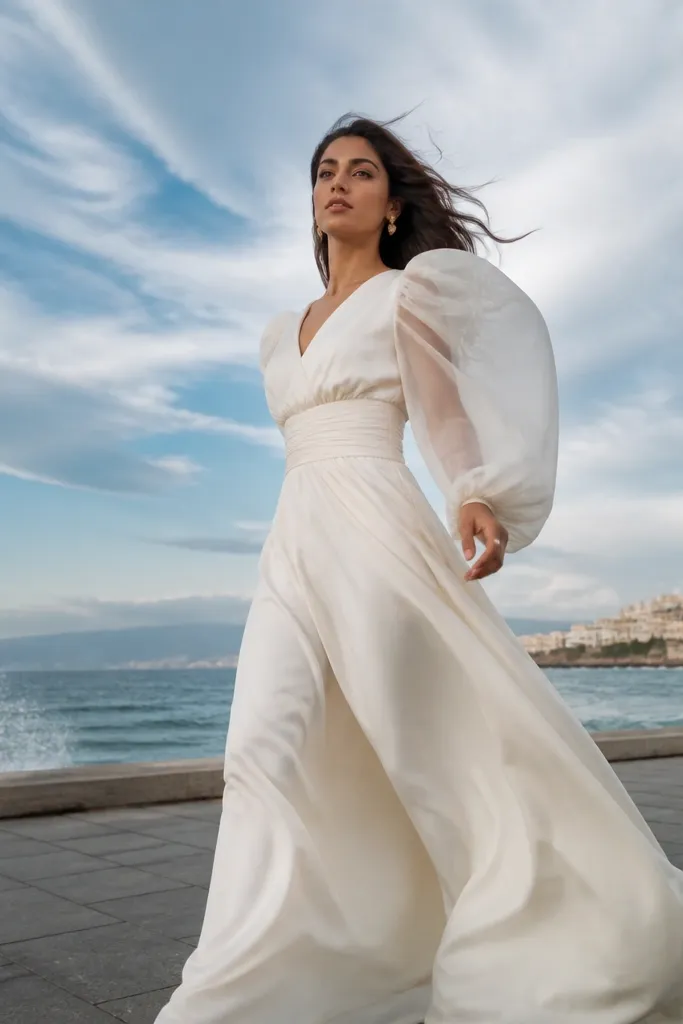
Puffed sleeves read elegant when the volume is controlled and the waist is fitted. Organza gives a crisp puff that holds shape, which looks stunning in movement and doesn’t droop in warm indoor light. Look for sleeves with a structured shoulder seam and a clean cuff so the puff doesn’t balloon unpredictably. This is a strong choice if you want a romantic silhouette without going full vintage.
Start by selecting a dress with a fitted waist seam or corset so the puff has something to contrast against. Then choose puff sleeves that gather at one point near the shoulder and taper toward the cuff. Finally, tailor the sleeve opening to your upper arm so the puff sits like a frame instead of floating off your body.
Quick tipBring a cardigan-free top to fittings so sleeve seams are measured without bulk interfering.
Skip thisAvoid oversized puffs with thin, clingy fabric — they collapse and look messy.
7. Structured Lace Sleeves with a Straight Skirt and Waist Seam
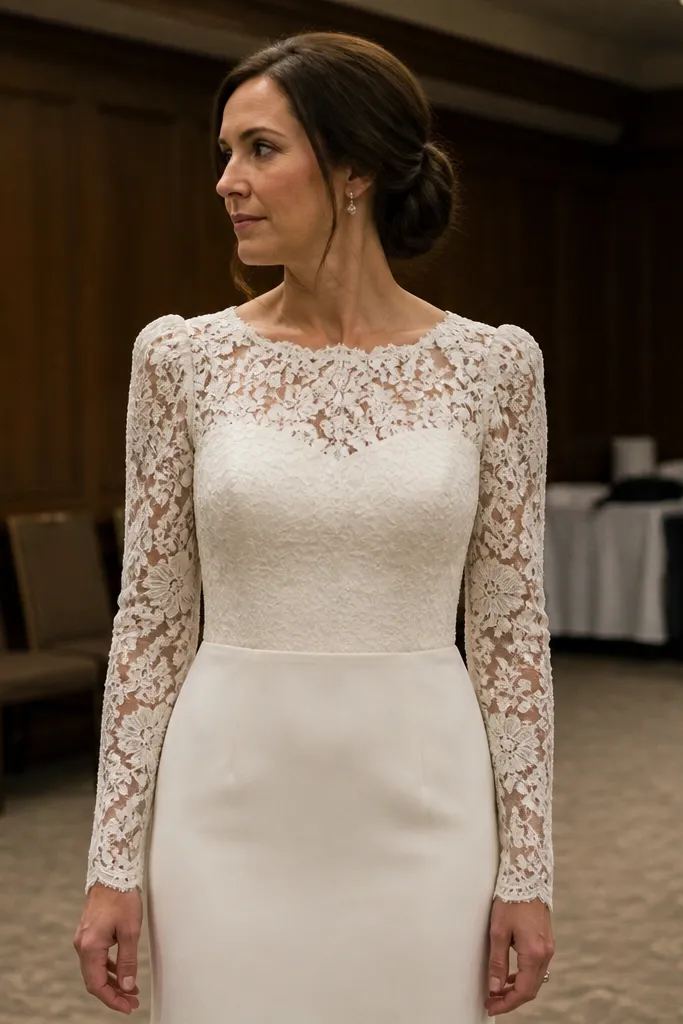
Structured lace sleeves look elegant when the lace is backed and the sleeve has definition. The waist seam keeps proportions balanced, so the top detail doesn’t overpower the dress. This is a great option if you want lace but don’t want the sleeve to feel sheer and fragile. In photos, the sleeve texture reads clearly without turning into a transparent overlay across the entire arm.
Start by choosing lace sleeves with a lining that matches the dress color closely. Then look for a sleeve that ends at the wrist with a shaped cuff seam so it doesn’t look like it was cut from fabric. Finally, make sure the waist seam sits at the narrowest part of your torso — it’s what keeps the lace from feeling heavy.
Quick tipIf you’re doing outdoor photos, choose a lining that dries quickly — lace can get damp and sag in wind.
Skip thisSkip sleeves that are fully unlined and stretched thin; the pattern will warp when tailored.
8. Tulle Flutter Sleeves on a Flowy Skirt
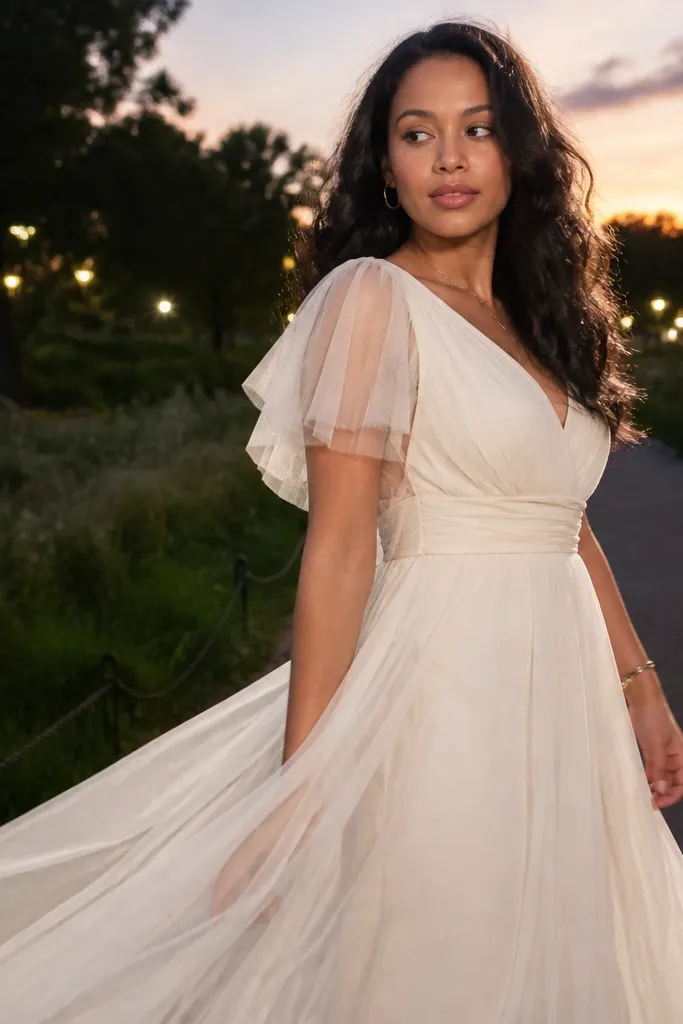
Flutter sleeves are elegant when they’re airy and short, with a soft edge that moves with you. Tulle gives that light, floating look, especially in outdoor photos where the fabric catches the breeze. The skirt should stay flowy but not too voluminous so the sleeves don’t compete for attention. This style is perfect for beachy ceremonies or garden venues where you want romantic movement.
Start by selecting a dress with a lighter skirt fabric like chiffon or soft crepe. Then choose flutter sleeves that attach with minimal bulk at the shoulder seam — thick attachments show in close-ups. Finally, keep the sleeve length around mid-upper arm, so your hands and waist remain visible in photos.
Quick tipPack a small lint roller for tulle — it picks up dust fast during outdoor walks.
Skip thisAvoid long flutter sleeves that reach the elbow; they tangle in wind and look uneven.
9. Bateau Neckline with Lace Sleeve Panels
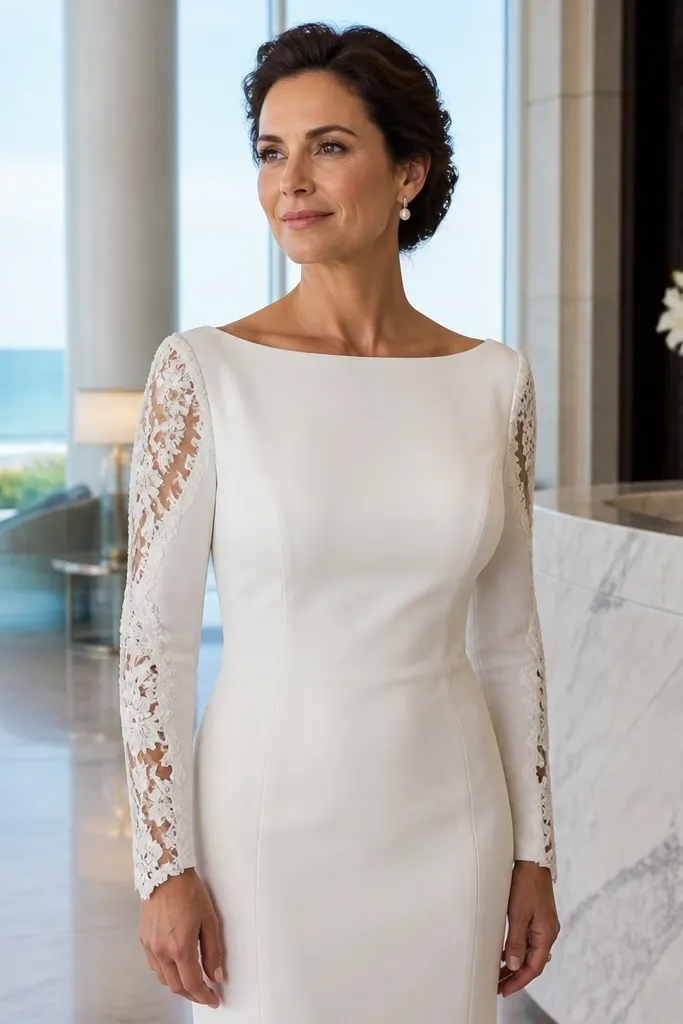
A bateau neckline plus lace sleeve panels creates an elegant, balanced look because both elements have a clean horizontal line. The sleeve panels add coverage while keeping the arm visible through negative space. This combo works especially well if you want a more modest vibe without losing a modern silhouette. In photos, the neckline frames the collarbone while the sleeve panels keep the upper arms elegant and smooth.
Start by choosing a dress where the lace panels are placed in vertical seams rather than random overlays. Then pick a sleeve panel that reaches just past the elbow for a flattering proportion. Finally, tailor the sleeve opening so it doesn’t pull when you lift your arms for photos.
Quick tipIf you plan to wear a necklace, keep it short and simple — the bateau neckline already draws attention.
Skip thisSkip lace panels that are all-over the sleeve without a seam structure; they wrinkle and look baggy.
10. Cap Sleeve with Eyelet Lace Overlay
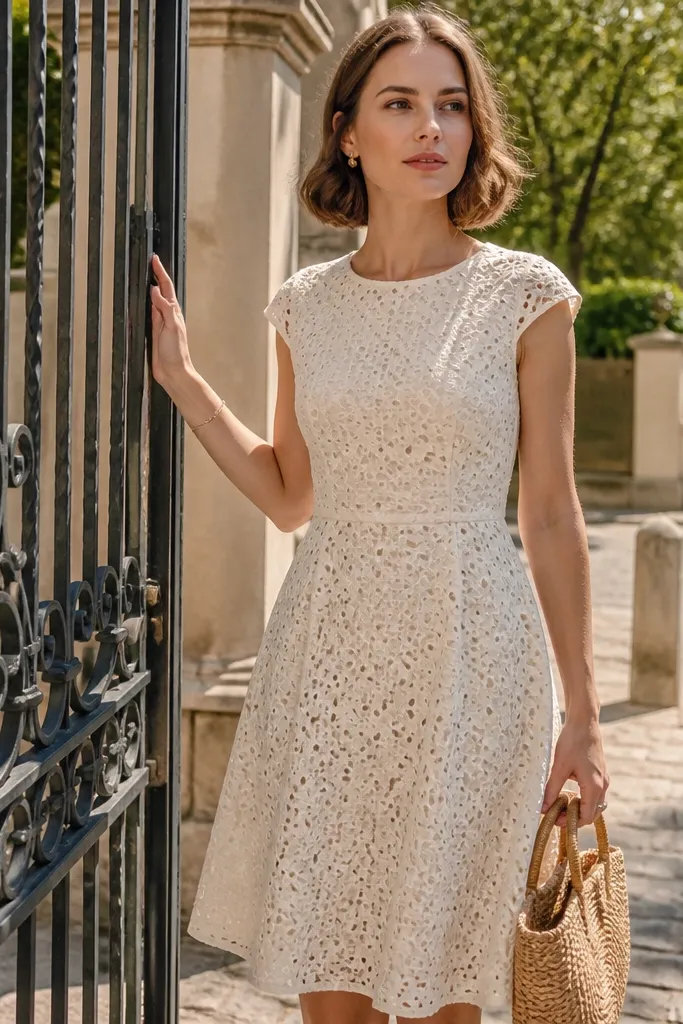
Eyelet lace on cap sleeves looks elegant because the texture is crisp and reads clearly in daylight. It also feels lighter than heavy chantilly lace, which helps the dress look fresh in warm weather. Pair this with a skirt that has movement — even a simple A-line — so the eyelet detail doesn’t feel like a single flat panel. This style is ideal for daytime ceremonies and photo sessions in bright settings.
Start by choosing eyelet lace that matches the dress fabric in undertone, not starkly brighter white. Then keep the sleeve cap small enough to show your shoulder line. Finally, make sure the bodice overlay is not too thick; thick eyelet can create a bulky look under flash.
Quick tipSchedule your outdoor photo window for late afternoon — eyelet texture pops without harsh shadows.
Skip thisAvoid cap sleeves with heavy beading; they look dated fast and snag on veils.
11. Tapered Long Sleeves in Crepe with Lace Cuffs
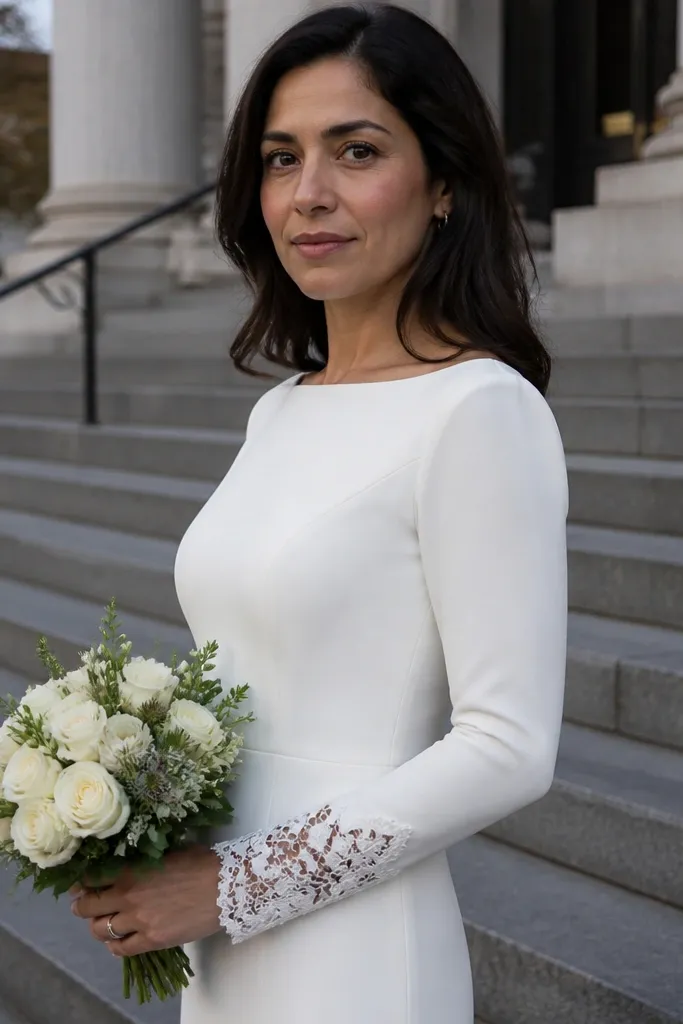
This style is elegant because the sleeve is smooth and tapered through the arm, then gets a lace cuff detail at the wrist. The contrast makes the sleeve feel intentional rather than plain. Crepe holds shape without looking stiff, so it photographs cleanly in full-length images. If you want coverage but hate sleeves that feel bulky, this is the fix.
Start by choosing crepe sleeves that are fitted at the upper arm and taper to the wrist. Then add lace cuffs that sit flat and don’t roll — cuff roll makes photos look sloppy. Finally, confirm the cuff height so it lands above your watch/bracelet line, keeping accessories optional.
Go for a cuff lace that repeats the bodice lace pattern so the outfit looks designed.
Skip cuffs that are too wide; they look like a separate shawl.
12. Statement Lace Sleeve with Scalloped Cuff and Mermaid Skirt
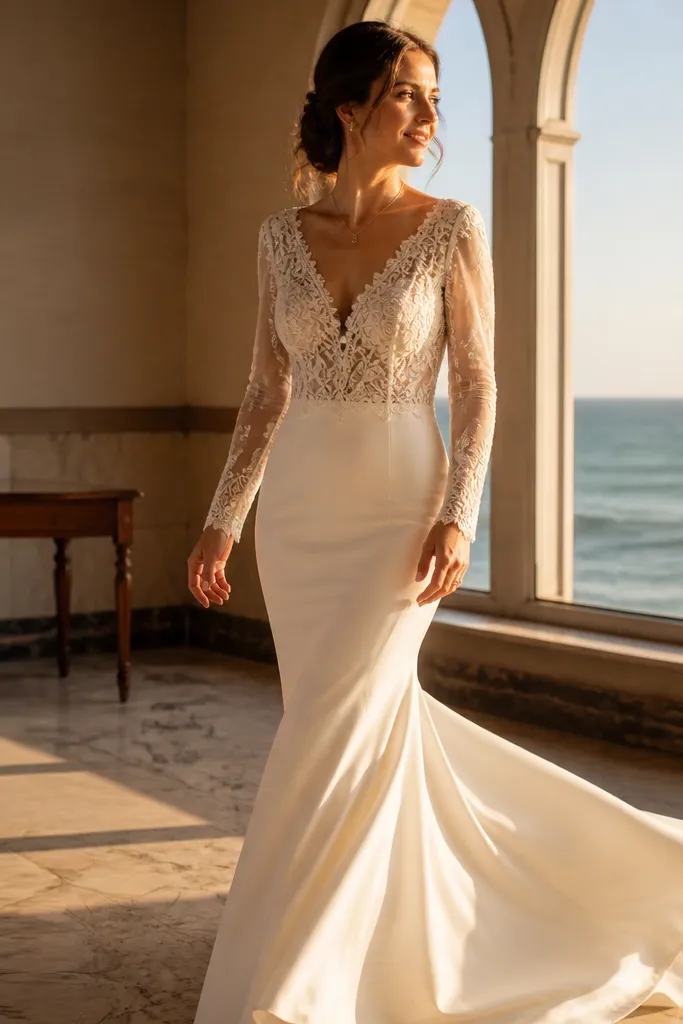
A mermaid silhouette plus a statement lace sleeve looks elegant because it balances drama at the bottom with texture at the top. The scalloped cuff is what makes it photogenic — it creates a clear edge line at the wrist that shows up in close-ups. Choose lace that is dense enough to look rich, but not so heavy that it turns the sleeve into a solid block. This is a great choice for receptions where you’ll pose a lot and want the sleeve to be part of the visual story.
Start by selecting a sleeve that follows your arm line and doesn’t flare at the bicep. Then pick scalloped cuff edges that match the hem scallops on the skirt, if your dress has any. Finally, tailor the sleeve length so the cuff shows when you hold your bouquet — mid-wrist is the sweet spot.
Quick tipIf your skirt has lace, keep the sleeve lace pattern in a similar scale so it doesn’t clash.
Skip thisAvoid sleeves with scallops that are too large — they overpower the delicate wrist area.
13. Off-Shoulder Dress with Detachable Lace Sleeves
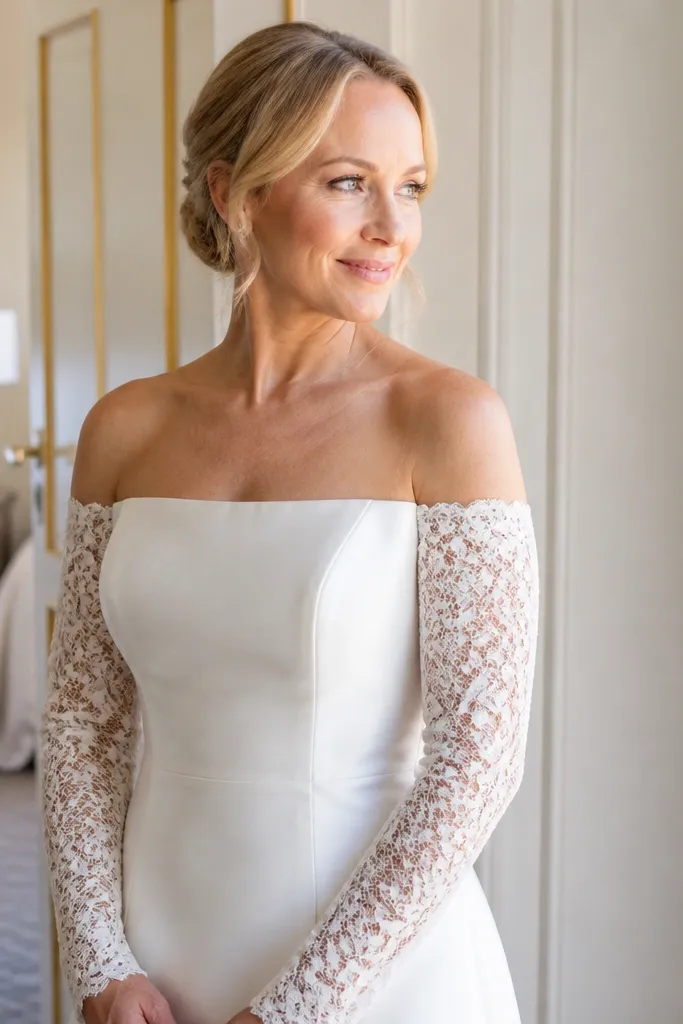
Detachable lace sleeves give you two looks without changing your dress. For an elegant style, the sleeves should attach cleanly at the shoulder with hidden closures so the off-shoulder line stays smooth. This is perfect if you’re worried about weather or want different photo vibes — uncovered shoulders for portraits, sleeves for ceremony vows. In pictures, the transition is controlled and the lace adds softness around your upper arms.
Start with a base dress that has a structured off-shoulder bodice, not a floppy neckline. Then choose detachable sleeves in a matching lace fabric with the same undertone as the bodice embroidery. Finally, practice attaching them before your photo session so the fit stays aligned and you don’t tug the bodice while stressed.
Store detachable sleeves in a garment bag with tissue paper between lace panels to prevent snagging.
Skip detachable sleeves that attach with visible buttons; they show in close-up photos.
14. Half-Lined Lace Sleeves with a Soft V-Neck
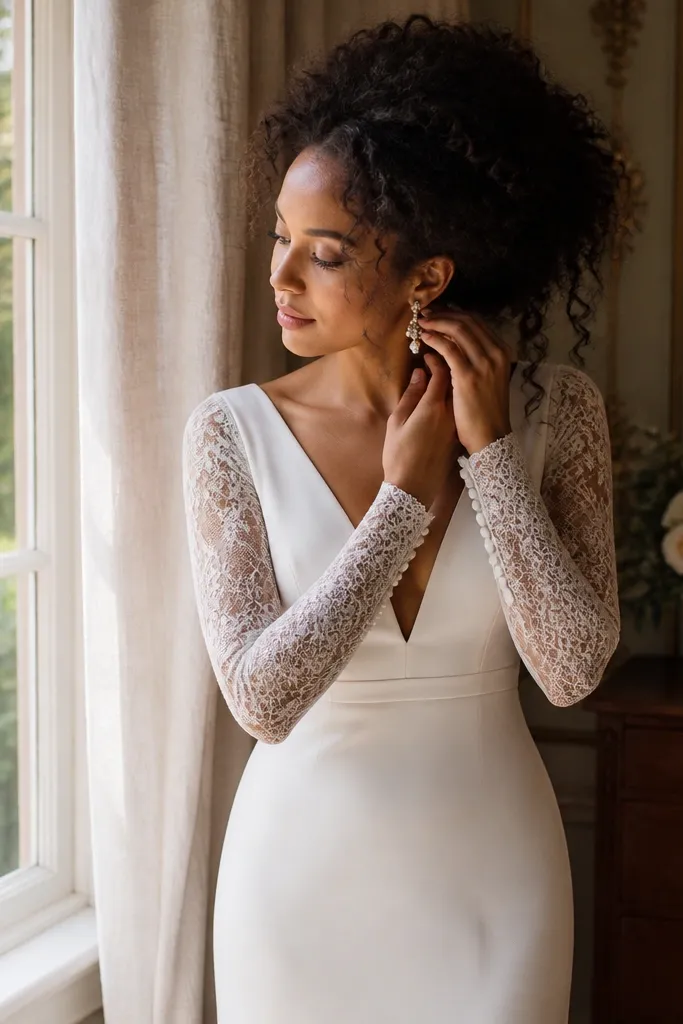
Half-lined lace sleeves look elegant when the sleeve has structure at the forearm but stays airy higher up. A soft V-neck lengthens the torso and keeps the look romantic rather than rigid. This is a good option for brides who want coverage but still want the arm to feel breathable in photos. The half-lining also helps the sleeve lay flat, so lace doesn’t cling and wrinkle when you move.
Start by choosing a sleeve lining that matches your skin tone or the dress undertone, so it doesn’t show through. Then pick a V-neck that is not too deep — you want an elegant frame, not cleavage. Finally, check the sleeve seam placement in a seated position so the lace doesn’t pull across the bicep.
If you’re wearing a veil, keep the V-neck open enough that the lace doesn’t compete with veil lace.
Avoid fully lined lace sleeves; they can feel heavy and look like a jacket.
15. Long Sleeve Tulle Bodice with Lace Sleeve Overlay
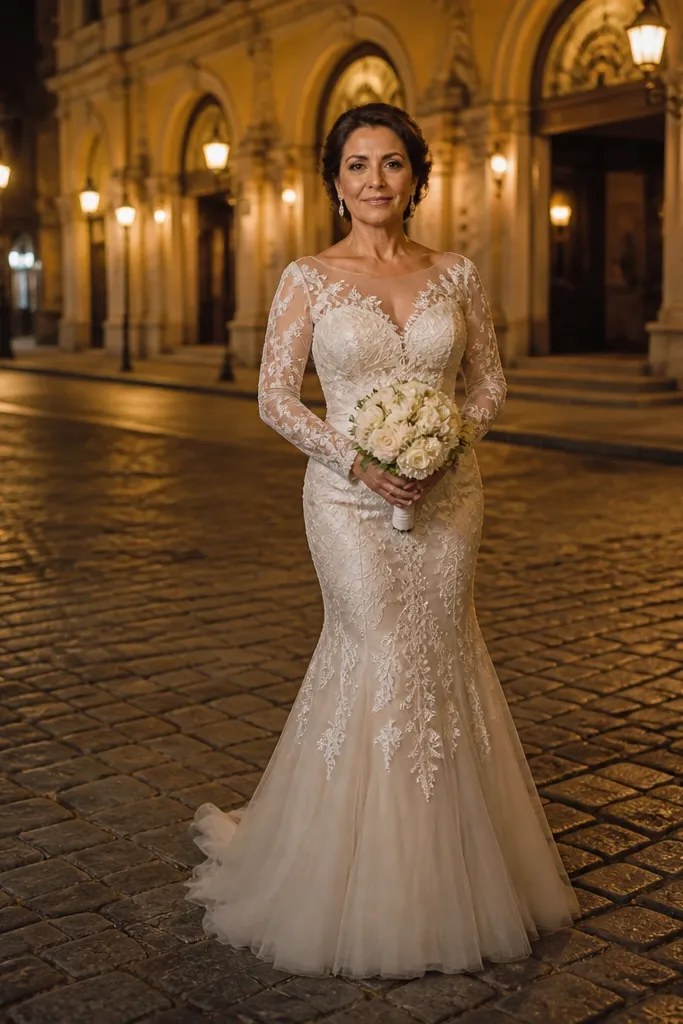
A long sleeve tulle bodice with lace overlay is elegant because the base fabric gives a smooth, light surface and the overlay gives texture. This style photographs like “light-catching” because the tulle shows subtle dimension instead of flat color. Keep the overlay pattern focused around the sleeves and upper bodice so it frames your shape rather than covering everything at once. It’s ideal for evening venues where lighting makes tulle look soft instead of see-through.
Start by selecting a tulle base that has enough opacity at the bodice, so you feel secure in photos. Then choose lace overlay pieces that are sewn with clean edges — sloppy overlay looks patchy in close-ups. Finally, request a sleeve fit that is slightly tapered so it doesn’t billow when you turn toward the camera.
Wear a nude-tone undergarment that matches your skin undertone to prevent tulle highlights from looking uneven.
Skip overly dense all-over lace — it kills the light-catching effect and can feel costume-like.
16. Button-Back Long Sleeves with Lace Trims
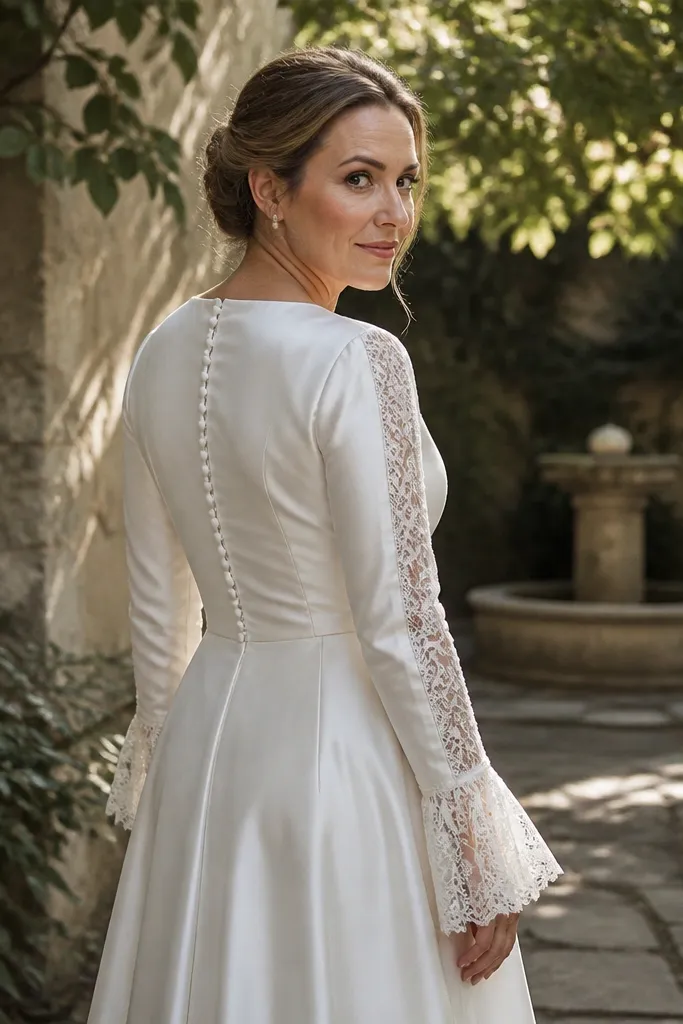
Button-back long sleeves look elegant because the vertical detail guides the eye and makes the back photos as good as the front. Lace trims add softness at the cuffs and down the sleeves without making the dress feel heavy. This is a strong choice if you want ceremony-to-reception coverage and a memorable back view when you walk down the aisle. The key is that the buttons should match the fabric — metal buttons can look harsh in wedding lighting.
Start by choosing fabric-matching buttons or covered buttons so the detail reads refined. Then pick lace trim that ends at the wrist with a neat cuff edge. Finally, tailor the sleeve length so the buttons aren’t pulled tight when your arms hang naturally — tension shows in photos.
Quick tipBring a small steamer for the button area; creases around buttons show up fast in flash.
Skip thisAvoid contrast buttons — they look like a coat and steal attention from your face.
17. Sleeve-Only Lace Appliques on a Simple Crepe Dress
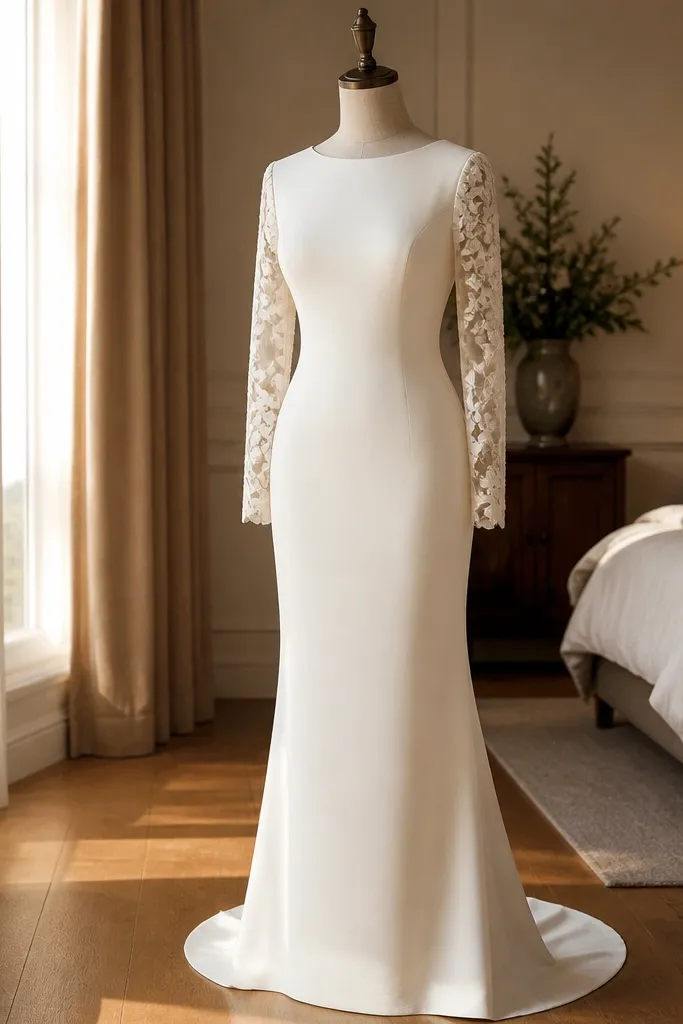
If you want elegant sleeves without a complicated dress, sleeve-only lace appliques are the answer. The simple crepe body keeps everything clean, and the appliques create a focal point where your hands and arms move. This style is photogenic because the lace is concentrated, so it doesn’t blur into the fabric when you’re walking or turning. It’s also a smart option if you plan a minimal veil or sleek hair — the sleeves do the design work.
Start by choosing a crepe dress with a smooth neckline and minimal embroidery. Then select sleeve appliques with a planned pattern — think vertical lines or a clear motif flow from shoulder to cuff. Finally, get the sleeves tailored so the appliques don’t wrinkle across the bicep; pinned seams during fittings reveal problems early.
Quick tipKeep your bouquet stems simple and light-colored so lace doesn’t compete with busy florals.
Skip thisSkip scattered appliques that look random; they read like unfinished embellishment.
18. Sculpted Cap Sleeve with Lace Underlay
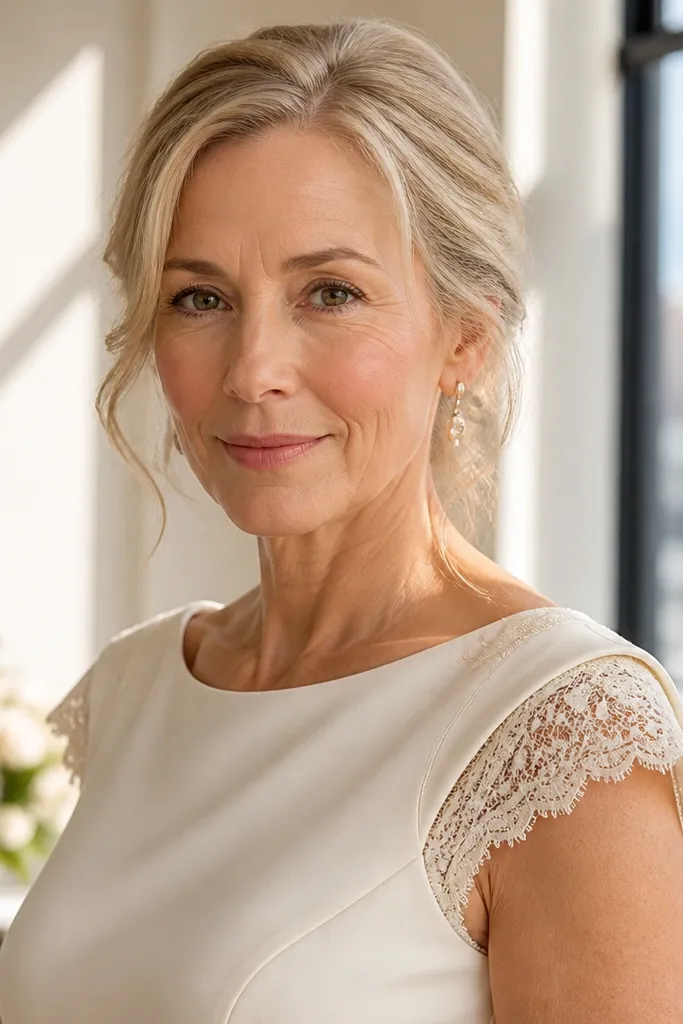
Sculpted cap sleeves with a lace underlay look elegant because the top layer creates a clean frame while the lace adds depth. The underlay helps the sleeve edge look soft rather than flat, which matters in close-up photos. This style is ideal if you want coverage without losing the shoulder line that many elegant dress styles rely on. It also pairs well with simple skirts because the sleeve detail is visually focused.
Start by choosing a cap sleeve that has structure — the sleeve should hold its shape when you rest your arms. Then add lace underlay that peeks at the sleeve edge, not one that covers the whole arm. Finally, tailor the sleeve to avoid gapping under the arm; gapping shows quickly when you lift your hands for pictures.
If you’re wearing short earrings, keep the sleeve edge clean so your face stays the focal point.
Avoid cap sleeves that are too thin and flimsy; they flop and lose the elegant frame.
19. Lace Sleeve with Cutout Veil-Style Mesh Panel
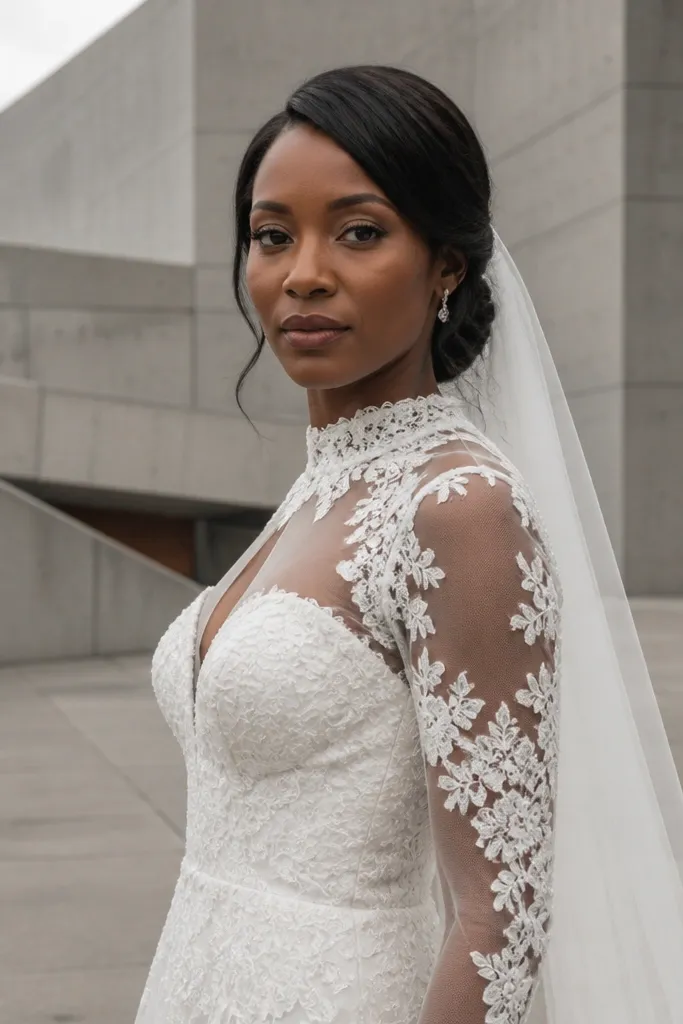
This is the sleeve style for brides who want coverage and a modern, fashion-forward elegance. The mesh cutout panel breaks up the sleeve so the arm looks lighter and more sculpted. Lace does the romantic part; the cutout panel keeps it from feeling old-fashioned. In photos, the contrast between opaque lace and sheer mesh creates crisp lines, especially in side profiles.
Start by choosing a dress with a mesh panel that is backed enough to feel secure — you should not feel exposed. Then pick lace placement that outlines the panel edges so the cutout looks intentional, not like missing fabric. Finally, check how the panel looks when you sit; mesh can shift and if it wrinkles, the cutout reads messy.
Choose a nude undertone mesh if your skin tone is deeper — it hides better under wedding lighting.
Skip cutout panels that are too wide; they look like a design mistake instead of a style choice.
20. Three-Quarter Sleeves in Lace with a Slim Cuff
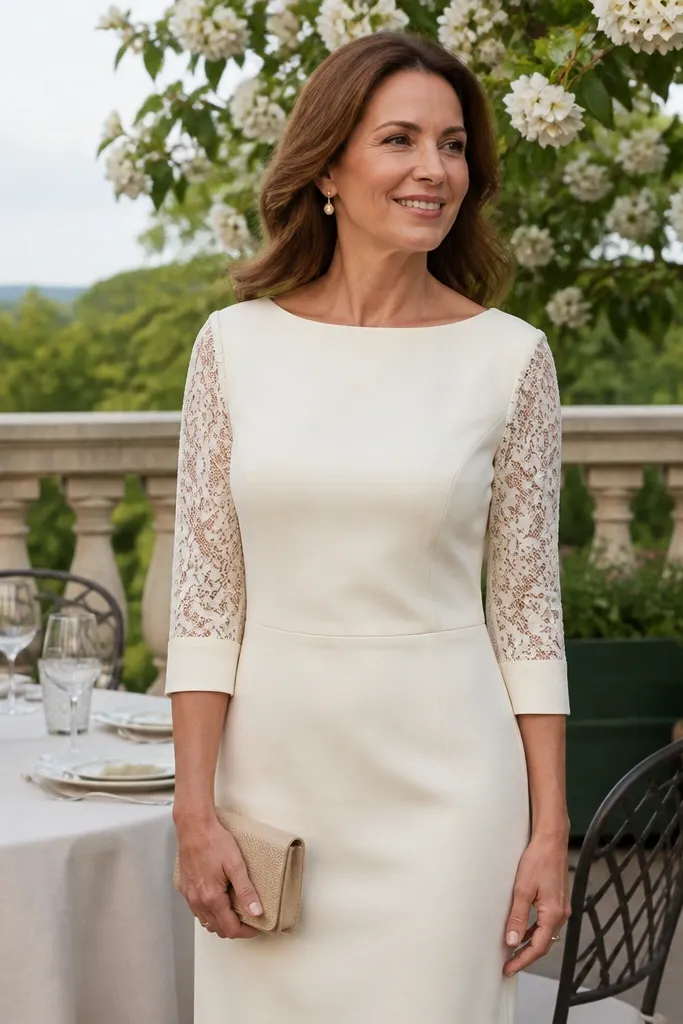
Three-quarter lace sleeves are elegant because they hit the sweet spot between “covered” and “light.” A slim cuff keeps the sleeve looking tailored, which is what makes the whole look read expensive. This style is great for spring and fall weddings where mornings are cool but afternoons warm. It also photographs well because the cuff sits at a natural focal point above the hands.
Start by picking sleeve length that ends just above the wrist bone. Then choose a slim cuff that is fitted, not flared, so it doesn’t billow in motion. Finally, match the lace scale to your dress — small lace works best on clean, simple bodices; larger motifs can overpower minimal designs.
Quick tipIf you wear a watch or bracelet, plan it around the cuff height so it sits above the lace edge.
Skip thisAvoid three-quarter sleeves with wide cuffs; they make the arm look shorter in photos.
21. Long Sleeve Satin with Lace-Edged Collar
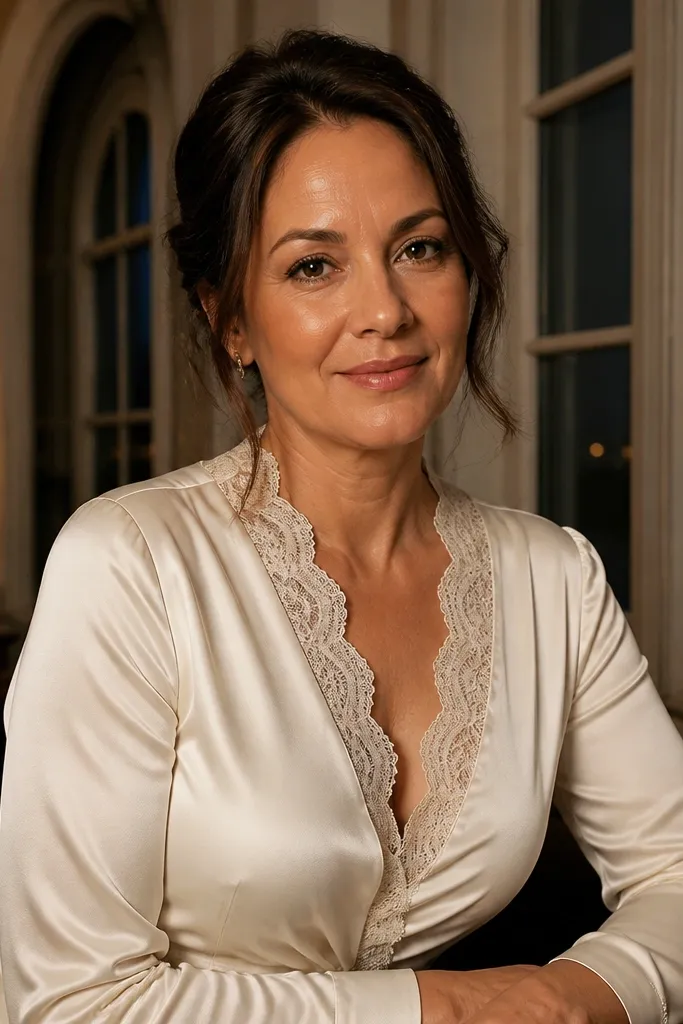
A long sleeve satin dress with a lace-edged collar is elegant because it frames your face while keeping the sleeves smooth and sleek. The collar detail gives you the romance usually reserved for lace sleeves, but without the extra texture across the whole arm. Satin also makes the silhouette look polished in both indoor and outdoor lighting. This is a smart pick if you want an elegant style that still feels modern and clean.
Start with satin that is matte or low-shine so it doesn’t look like evening wear. Then choose a lace-edged collar with a clear edge line that sits flat against your neckline. Finally, tailor the sleeves to the wrist so the fabric doesn’t bunch; bunching shows as bulk in close-ups.
Quick tipKeep hair sleek or low so the lace-edged collar is visible in portraits.
Skip thisSkip shiny satin with a high-contrast lace collar; it can look too formal for a light venue.
22. Cap Sleeve with Beaded Lace Appliques at the Shoulder
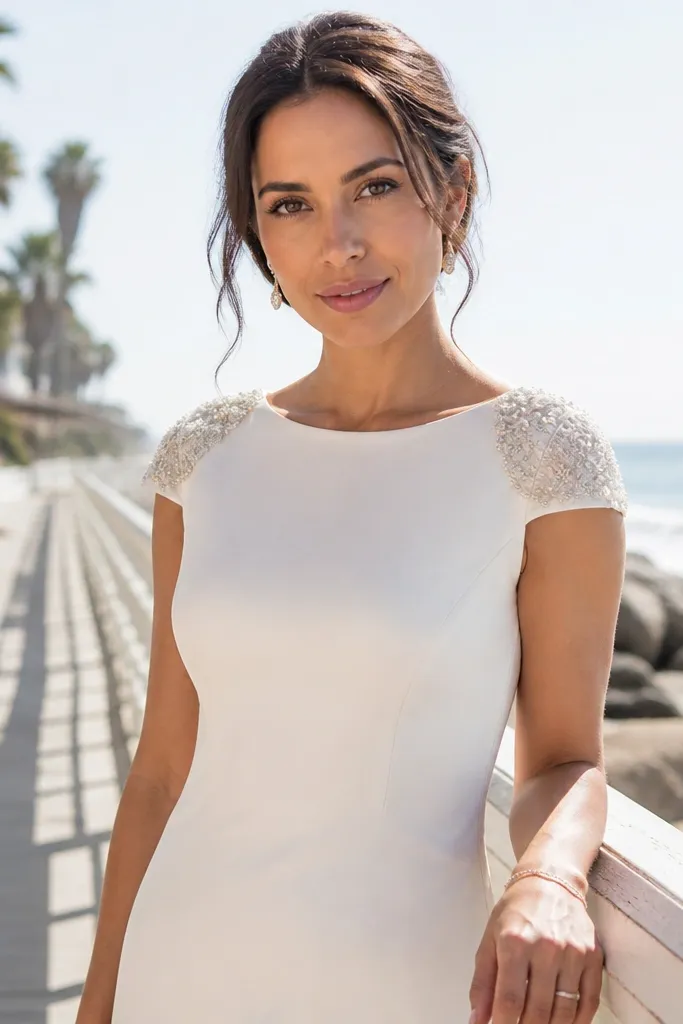
Beaded lace at the shoulder gives you sparkle where it matters — near your face, not across your whole dress. A cap sleeve keeps the look airy, and the bead placement creates a refined glow in photos. This works best if you want an elegant style but don’t want full beading that can look heavy or dated. In bright daylight, shoulder sparkle looks intentional and flattering.
Start by selecting bead placement that stays near the shoulder seam and upper sleeve edge. Then choose a dress fabric that is matte so the beads stand out without looking like sequins everywhere. Finally, confirm the sleeve sits flat; any lifted bead edges can snag on veils or hair.
Quick tipTurn off flash for outdoor portraits if you want the beads to look soft instead of mirror-like.
Skip thisAvoid full-bead sleeves; they read costume fast and make your arms look thicker.
23. Lace Mantilla Sleeve Look with Dramatic Shoulder Coverage
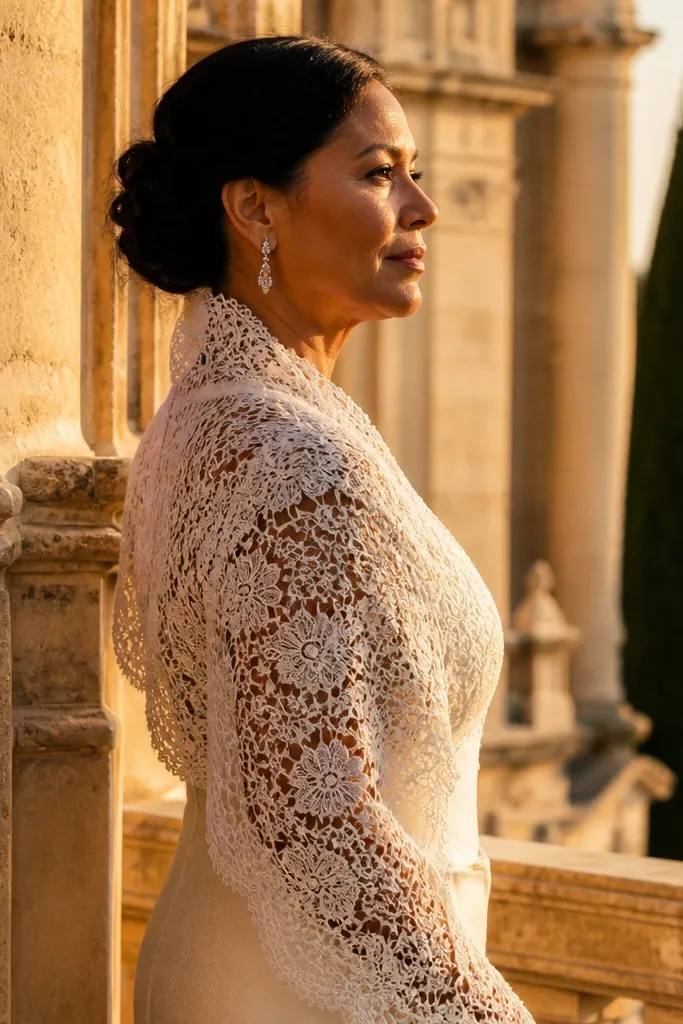
Mantilla-style sleeve coverage looks elegant because it creates a soft, sculpted frame around your shoulders and upper arms. The best versions are lace-forward with a shaped edge that follows your shoulder curve instead of sitting like a shawl. This style is photogenic from the front and the side because the lace drape creates depth. It’s great for brides who want coverage but still want the drama of lace without long tight sleeves.
Start by choosing a sleeve pattern that has structure at the shoulder seam, not one that drapes from the neck. Then pick a lace edge that ends cleanly around mid-upper arm or near the elbow. Finally, tailor the shoulder fit so the lace doesn’t pull when you lift your arms for photos — that pulling shows as wrinkles.
Quick tipPair with a simple veil or no veil so the lace frame stays the main visual element.
Skip thisSkip mantilla sleeves that attach loosely at the neck; they shift and look messy in motion.
24. Long Sleeve Tulle with Floral Appliques and Closed Cuffs
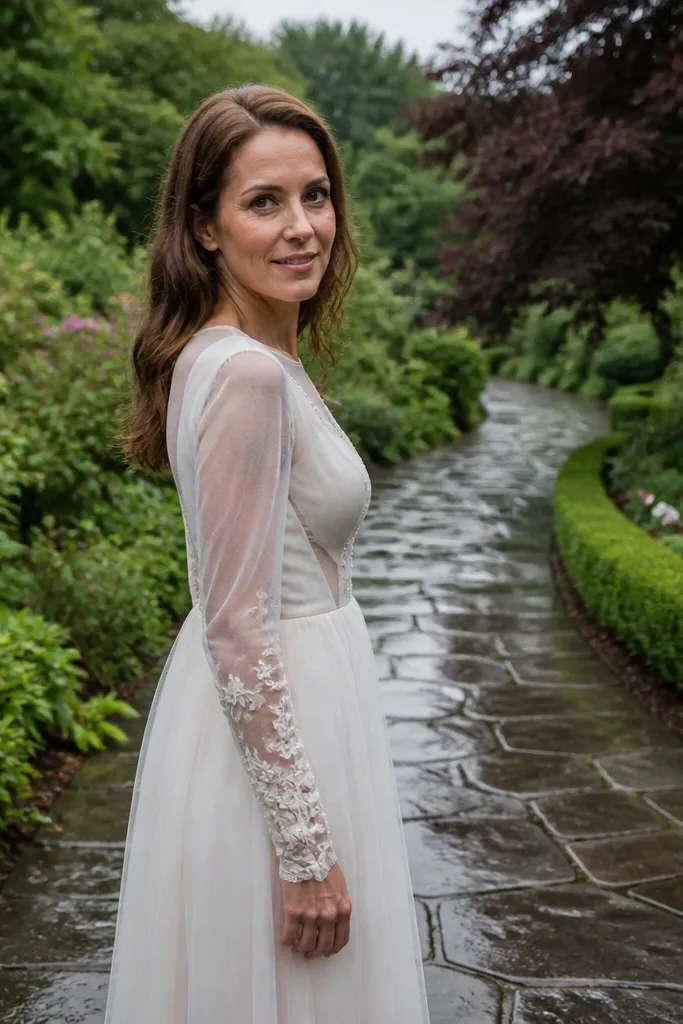
Long sleeve tulle with floral appliques looks elegant when the appliques are spaced so the sleeve stays breathable. Closed cuffs matter because they create a neat finish and stop the tulle from sliding down. Floral placement that clusters near the wrist reads romantic and makes the sleeve feel designed, not random. This style is especially photogenic in evening settings where the tulle catches warmer light.
Start by choosing a tulle base that is lined enough at the bodice so the dress feels secure in photos. Then look for floral appliques that taper from shoulder to cuff, keeping the sleeve visually longer. Finally, ensure the cuff is closed and fitted — open cuffs can twist and show uneven edges in close-ups.
If you’re wearing gloves, skip this sleeve style because it can feel like too much texture at the same spot.
Avoid dense all-over floral appliques on tulle — they look heavy and reduce the elegant light effect.
25. Satin Off-Shoulder Sleeves with Draped Overskirt for a Tea-Length Ceremony
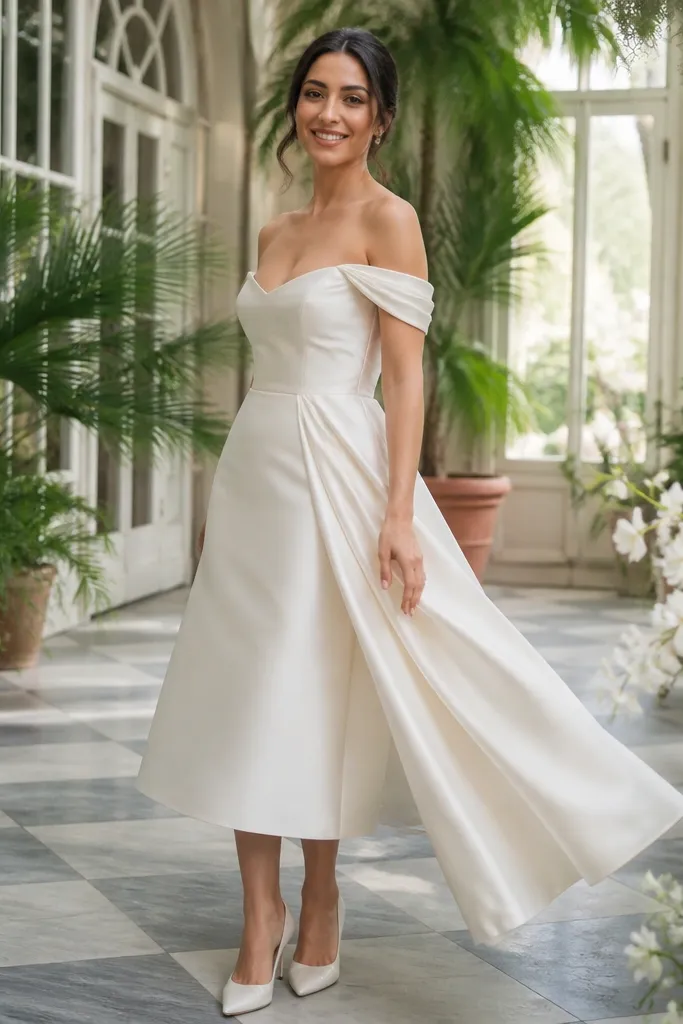
This look is for people who want sleeve coverage but still want the shoulders to feel open and romantic. The satin off-shoulder sleeves sit higher on the arm and frame the neckline, while the draped overskirt creates movement every time you turn. It reads elegant in daylight photos and still looks formal enough for a hotel ballroom if you add a soft veil. It suits brides who like a lighter, more playful silhouette than a full ballgown, especially for spring and early fall ceremonies. If your style is “polished but not heavy,” this is the sleeve-and-skirt combo that photographs the most flattering way.
Step 1 — Choose the location first: book a dress fitting and shoot day in a city with old stone courtyards or covered verandas, because satin looks best with soft shade. Step 2 — Plan the timing: schedule your fitting 6-10 weeks before the wedding and book your travel 3-4 months out for stable pricing. Step 3 — Spend realistically: expect $90-$180 for a local day-use photo spot or studio rental and $1,200-$2,500 for alterations if you’re buying a ready-to-wear base and adding sleeves/overskirt adjustments. Step 4 — Move efficiently: stay near your fitting and the photo location so you don’t burn time commuting between “pretty spots.”
Book your photo location before you finalize the dress — satin drape looks different in bright sun versus shaded stone, and you want the setting to match the fabric.
Skipping a test run with the overskirt pinned at the right height leads to awkward hem shifts in every walking photo.